


In the sweltering summer of 1969, Los Angeles was shaken to its core by a series of brutal murders that would go down in history as one of the most heinous crimes of the 20th century. The Tate-LaBianca murders, orchestrated by the charismatic and manipulative Charles Manson, left a trail of blood and terror in its wake.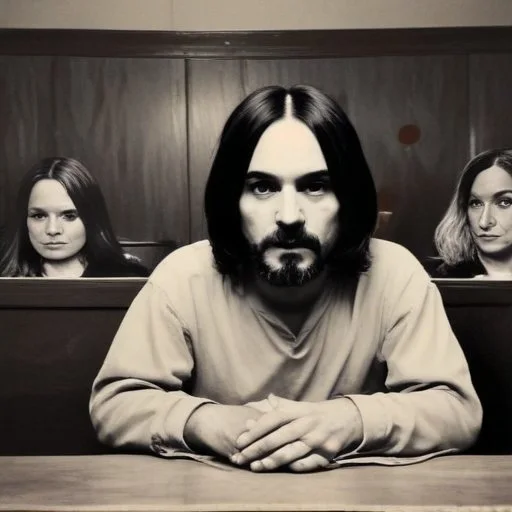
Charles Manson, a charismatic ex-con with a passion for music and a penchant for manipulation, had built a loyal following of young, disillusioned youths who were drawn to his pseudo-hippie ideology. Among his most devoted followers were three young women: Susan Atkins, Patricia Krenwinkel, and Leslie Van Houten.
Together, they formed a tight-knit group known as the Manson Family, with Manson as their leader and guru. The group's motto, "Helter Skelter," was Manson's twisted vision of an impending apocalyptic race war, which he believed could be triggered by a series of random and brutal murders.
On August 9, 1969, the Manson Family carried out the first of two brutal attacks. At the rented mansion of actress Sharon Tate, five people were brutally murdered, including Tate, who was eight months pregnant. The victims were found with gruesome wounds, and the phrase "Pig" was scrawled on the front door in Tate's blood.
The next night, the Manson Family struck again, this time at the home of Leno and Rosemary LaBianca. The couple was stabbed to death, and the phrase "Death to Pigs" was carved into Leno's stomach.
The police investigation was slow and grueling, but a breakthrough came when Susan Atkins, aka "Sexy Sadie," boasted about the murders to a fellow inmate while in jail on an unrelated charge. The evidence mounted, and in 1970, Manson and his followers were arrested and put on trial.
The prosecution presented a strong case, highlighting the defendants' eerie loyalty to Manson and their active participation in the brutal killings. The jury was convinced, and the verdict came: guilty on all counts.
The guilty verdict brought closure to the families of the victims, but the trial's twisted details and the defendants' eerie calmness only added to the public's morbid fascination with the case. The Tate-LaBianca murders marked a turning point in the 1960s counterculture movement, exposing the dark underbelly of the "peace and love" era.
The Manson Family's brutal crimes continue to captivate and horrify to this day. The case has inspired countless books, films, and documentaries, cementing its place in popular culture. But beyond the morbid fascination lies a somber reminder of the destructive power of manipulation and the dangers of blind obedience.
In the end, the Tate-LaBianca murders serve as a haunting testament to the darkest corners of human nature, a chilling reminder that even in the most seemingly peaceful of times, evil can lurk just beneath the surface.
"Helter Skelter" may have been Manson's twisted vision, but in the end, it was his own ego that led to his downfall.
Susan Atkins: The Manson Family's Most Devoted Follower
Susan Atkins, also known as "Sexy Sadie," was one of Charles Manson's most devoted followers. Born in 1948, Atkins grew up in a troubled home, experiencing physical and emotional abuse. She was drawn to Manson's charismatic personality and pseudo-hippie ideology, which promised a sense of belonging and freedom.
Atkins was deeply infatuated with Manson, and her devotion to him was unwavering. She was one of the main perpetrators of the Tate-LaBianca murders, participating in the brutal killing of Sharon Tate and her friends. Atkins' involvement in the murders was a testament to the extent of Manson's control over his followers.
Despite her involvement in the heinous crimes, Atkins remained unrepentant throughout her life, claiming that Manson had "set her free" from the constraints of society. Her unwavering loyalty to Manson was a disturbing reflection of the dangers of blind obedience and the power of charismatic manipulation.

The Tate-LaBianca Murders and the Counterculture Movement
The Tate-LaBianca murders marked a turning point in the 1960s counterculture movement, exposing the dark underbelly of the "peace and love" era. The brutal killings shocked the nation, forcing many to reexamine the ideals of the counterculture movement.
The Manson Family's philosophy, which emphasized a rejection of mainstream values and a return to a more primal, natural state, resonated with many disillusioned youths. However, the group's violent actions revealed the darker aspects of this ideology, highlighting the dangers of unchecked rebellion and the blurring of moral lines.
The Tate-LaBianca murders also had a profound impact on the music industry, as Manson had ties to prominent musicians, including Dennis Wilson of the Beach Boys and Neil Young. The case led to a reevaluation of the celebrity counterculture movement, with many artists distancing themselves from the darker aspects of the era.
The Manson Family's Symbolism and Codes
The Manson Family used a variety of symbols and codes to convey their twisted ideology. One of the most infamous symbols was the "Helter Skelter" scrawl, found at the Tate crime scene. The phrase, taken from a Beatles song, was Manson's twisted vision of an impending apocalyptic race war.
The group also used cryptic messages and codes to communicate with each other. For example, the phrase "Death to Pigs" was carved into Leno LaBianca's stomach, while "Pig" was scrawled on the front door of Sharon Tate's home. These gruesome messages revealed the extent of the Manson Family's depravity and their desire to shock and intimidate.
The symbols and codes used by the Manson Family continue to fascinate and horrify to this day, serving as a chilling reminder of the dangers of manipulation and blind obedience.

The Political and Social Climate of 1969
The Tate-LaBianca murders took place during a time of great social and political upheaval in the United States. The civil rights movement, the anti-war movement, and the women's liberation movement were all gaining momentum, challenging traditional values and authority structures.
The Manson Family's philosophy, which emphasized a rejection of mainstream values and a desire for social change, resonated with many disillusioned youths. However, the group's violent actions revealed the darker aspects of this ideology, highlighting the dangers of unchecked rebellion and the blurring of moral lines.
The Tate-LaBianca murders served as a wake-up call for many Americans, forcing them to reexamine their values and ideals in the face of brutal violence and senseless killing.
The Geopolitical Context of the Tate-LaBianca Murders
The Tate-LaBianca murders took place during a time of great geopolitical tension, with the Cold War and the Vietnam War dominating international headlines. The event was seen by many as a symptom of the social and cultural upheaval of the 1960s, highlighting the darker aspects of American society.
The Manson Family's philosophy, which emphasized a rejection of mainstream values and a desire for social change, resonated with many disillusioned youths. However, the group's violent actions revealed the darker aspects of this ideology, highlighting the dangers of unchecked rebellion and the blurring of moral lines.
The Tate-LaBianca murders served as a wake-up call for many Americans, forcing them to reexamine their values and ideals in the face of brutal violence and senseless killing.