


On a fateful day in 1989, China Airlines Flight 204 became synonymous with tragedy as it crashed just moments after takeoff from Hualien Airport in Taiwan, claiming the lives of all 54 people on board. This devastating event would go on to become one of the deadliest aviation accidents in Taiwanese history.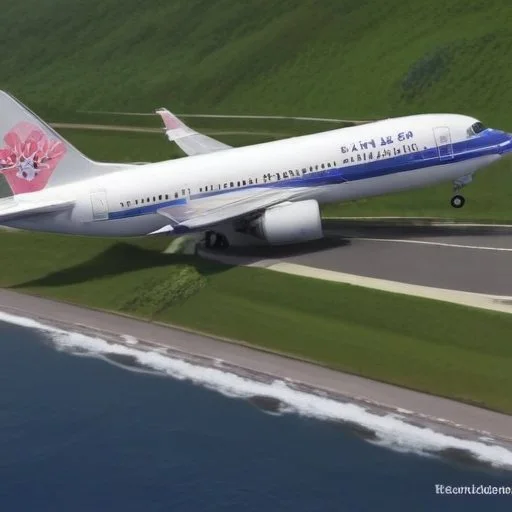
Flight 204 was a routine domestic flight, operated by a Boeing 737-200 aircraft, scheduled to fly from Hualien to Taipei. The flight departed at 07:00 local time, but its ascent was short-lived. Within seconds of lifting off the runway, the plane lost altitude and careened out of control into a nearby hillside, erupting into a fireball that would haunt the memories of eyewitnesses for years to come.
The cause of the crash remains a topic of debate, with various theories emerging over the years. Initial investigations pointed to pilot error, citing a possible failure to retract the landing gear. However, some experts argue that a faulty autopilot system or even a catastrophic engine failure may have been to blame. Despite multiple investigations, no definitive cause has been established, leaving behind a lingering sense of uncertainty.
The China Airlines Flight 204 disaster sent shockwaves throughout Taiwan, leaving families and communities in mourning. The incident prompted an outpouring of grief, with memorials and tributes erected to honor the victims. In the aftermath, China Airlines implemented significant safety reforms, including enhanced pilot training and improved maintenance protocols.
The Flight 204 tragedy served as a sobering reminder of the importance of aviation safety. The incident led to a renewed focus on pilot training, aircraft maintenance, and emergency procedures. The crash also underscored the need for more stringent safety regulations and greater transparency in accident investigations.
Today, the China Airlines Flight 204 disaster serves as a poignant reminder of the sacrifices made by those who lost their lives in the pursuit of air travel. As we reflect on this tragedy, we honor the memories of the victims and rededicate ourselves to the pursuit of safer skies.
In the face of tragedy, we find strength in resilience, and it is our hope that the story of Flight 204 will continue to inspire a culture of safety, accountability, and respect for human life.
Taiwanese society was deeply affected by the China Airlines Flight 204 disaster. The incident led to a significant increase in public awareness of aviation safety, and calls for greater transparency and accountability within the industry. Memorials and tributes were erected in honor of the victims, and the incident remains a poignant reminder of the importance of prioritizing safety in air travel.
The disaster also had a profound impact on the families of the victims, many of whom banded together to form support groups and advocate for changes to aviation safety regulations. The incident brought attention to the need for improved psychological counseling and support services for those affected by air disasters.

In comparison to other aviation accidents, the China Airlines Flight 204 disaster stands out for its devastating impact on Taiwan's aviation industry. The incident led to a significant overhaul of safety protocols and regulations, many of which were adopted as industry standards.
Similarities can be drawn with other notable aviation accidents, such as the Japan Airlines Flight 123 crash in 1985, which also highlighted the importance of rigorous maintenance and safety procedures.
However, the Flight 204 disaster remains unique in its impact on Taiwan's aviation industry, serving as a catalyst for widespread reforms and improvements.
In the years leading up to the China Airlines Flight 204 disaster, Taiwan's aviation industry was experiencing rapid growth and expansion. The country's economy was booming, and air travel was becoming an increasingly popular mode of transportation for both domestic and international travel.
The Boeing 737-200 aircraft, which operated Flight 204, was a relatively new addition to China Airlines' fleet, having been introduced in the mid-1980s. The airline had also recently implemented a number of safety enhancements, including improved pilot training and increased maintenance scheduling.

The investigation into the China Airlines Flight 204 disaster uncovered a number of critical safety issues, including problems with the aircraft's autopilot system and landing gear.
A review of the aircraft's maintenance records revealed that a number of safety inspections had been missed or bypassed in the months leading up to the accident.
The cockpit voice recorder (CVR) and flight data recorder (FDR) provided critical insights into the final moments of the flight, enabling investigators to piece together the sequence of events leading up to the crash.
The China Airlines Flight 204 disaster led to significant advances in aviation safety technology, including the development of more robust autopilot systems and improved landing gear designs.
The incident highlighted the need for increased investment in safety research and development, leading to the establishment of new safety standards and regulations for the industry.
In the years following the accident, Taiwan's aviation industry has become a leader in safety innovation, with many airlines adopting cutting-edge technologies to minimize the risk of similar incidents in the future.