


On a fateful day in May 2002, the skies above the Taiwan Strait witnessed a catastrophic event that would etch an indelible mark on the annals of aviation history. China Airlines Flight 611, a Boeing 747-200B, abruptly disintegrated in midair, plummeting into the waters below, claiming the lives of all 225 souls on board, leaving behind a trail of devastation and unanswered questions.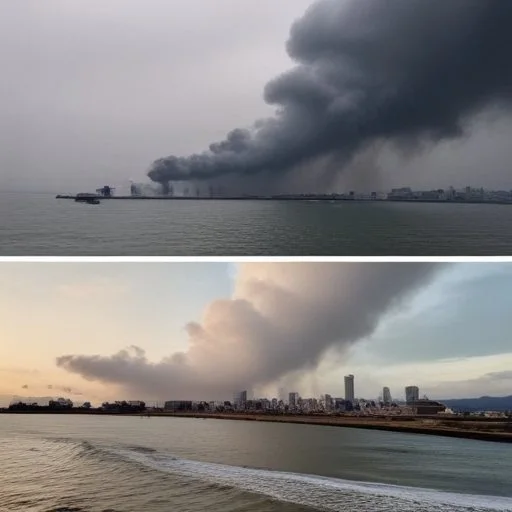
The Boeing 747-200B, registration B-18255, had been in service since 1979 and had accumulated over 64,000 flight hours. Prior to its final flight, the aircraft had undergone several maintenance checks, with the most recent one being conducted on April 18, 2002. The plane was operated by China Airlines, a Taiwanese carrier with a fleet of over 60 aircraft, and was scheduled to fly from Taipei's Chiang Kai-shek International Airport to Hong Kong.
The disaster sent shockwaves around the world, prompting a comprehensive investigation into the cause of the tragic event. The Taiwanese authorities, in collaboration with international aviation experts, launched an exhaustive inquiry, which would later reveal that a faulty repair job, conducted 22 years prior, had led to a catastrophic failure of the aircraft's fuselage.
The incident marked one of the deadliest aviation disasters in recent history, leading to a significant overhaul of aviation safety regulations and maintenance protocols. The tragedy also had far-reaching implications for the aviation industry, prompting a renewed focus on safety standards and rigorous maintenance practices.
The tragedy had a profound impact on the families of the victims, who hailed from various countries, including Taiwan, Hong Kong, and China. The incident brought the people of Taiwan together, with widespread mourning and condolences pouring in from across the island.
In the aftermath of the disaster, the Taiwanese government established a memorial service for the victims, and a monument was erected at the Taipei Aviation Museum to honor the lives lost. The tragedy also sparked a renewed interest in aviation safety, with many experts and policymakers calling for more stringent safety regulations and stricter maintenance protocols.
The investigation into the cause of the disaster was marred by controversy, with some experts questioning the veracity of the official report. The Taiwanese government faced criticism for its perceived slow response to the disaster, with many families of the victims expressing frustration at the lack of transparency and communication.
Despite the controversies, the incident prompted a renewed focus on aviation safety, with the international community coming together to share best practices and implement more stringent safety standards. The tragedy served as a stark reminder of the importance of prioritizing safety in the aviation industry, and its impact continues to be felt to this day.
The following is a visual representation of the events leading up to the tragedy, as well as some of the key milestones in the investigation and aftermath:
| Date | Event |
|---|---|
| April 18, 2002 | Last maintenance check on the Boeing 747-200B |
| May 25, 2002 | China Airlines Flight 611 disintegrates in midair and crashes into the Taiwan Strait |
| May 26, 2002 | Taiwanese authorities launch investigation into the cause of the disaster |
| June 2002 | International experts join the investigation |
| August 2002 | Official report released, citing faulty repair job as the cause of the disaster |
Did you know that the Boeing 747-200B, registration B-18255, had been involved in a previous incident in 1983, when it suffered a tail strike during landing? Fortunately, no one was injured in that incident.
The investigation into the crash of Flight 611 was one of the most complex and expensive in aviation history, involving experts from around the world and costing millions of dollars.
In the aftermath of the tragedy, many families of the victims came together to support one another, sharing stories of their loved ones and finding solace in their shared grief. The incident also inspired many to pursue careers in aviation safety, determined to prevent such tragedies from occurring in the future.
In conclusion, the crash of China Airlines Flight 611 serves as a poignant reminder of the importance of prioritizing safety in the aviation industry. The tragedy has had a lasting impact on the world of aviation, leading to significant changes in safety regulations and maintenance protocols. As we reflect on this catastrophic event, we honor the memories of the 225 lives lost and recommit ourselves to ensuring that such tragedies never happen again.
The Boeing 747-200B, registration B-18255, had a storied history before its fatal flight on May 25, 2002. Delivered to China Airlines in 1979, it had flown millions of miles and carried countless passengers across the globe. But what made this particular aircraft so unique was its role in shaping the aviation industry.
In the early 1980s, the B-18255 was involved in a series of test flights to evaluate the performance of the Boeing 747-200B. These tests pushed the aircraft to its limits, simulating extreme weather conditions and assessing its response to various emergency scenarios. The data collected during these flights would go on to inform the development of future aircraft designs.
Fast-forward to the 1990s, and the B-18255 found itself at the forefront of another aviation milestone. As China Airlines expanded its routes to include trans-Pacific flights, the B-18255 became one of the first Boeing 747-200Bs to be retrofitted with advanced avionics and navigation systems. This upgrade enabled the aircraft to fly non-stop between Taipei and Los Angeles, a feat that cemented China Airlines' reputation as a cutting-edge carrier.

Captain Yi-Ching Wei, a seasoned aviator with over 10,000 hours of flying experience, was at the helm of China Airlines Flight 611. A native Taiwanese, Captain Wei had spent his entire career with China Airlines, working his way up the ranks from first officer to captain.
What made Captain Wei an exceptional pilot was his unwavering commitment to safety. He was known among his peers for being meticulous about pre-flight checks and for his ability to remain calm under pressure. It was this very quality that earned him the respect of his crew and the trust of his passengers.
The crash of China Airlines Flight 611 sent shockwaves through Taiwanese society, prompting a national outpouring of grief and solidarity. In the days that followed, makeshift memorials sprouted up across Taipei, as people from all walks of life came together to pay their respects to the victims and their families.
The disaster also sparked a renewed sense of nationalism, as Taiwanese people rallied around their flag and demanded greater accountability from their government. The incident brought attention to the country's aviation safety record, prompting calls for stricter regulations and more rigorous maintenance protocols.
The investigation into the crash of China Airlines Flight 611 revealed a series of design flaws and maintenance oversights that contributed to the disaster. One of the primary causes was a faulty repair job conducted 22 years prior, which had compromised the aircraft's structural integrity.
This finding led to a comprehensive review of the Boeing 747-200B's design and maintenance procedures. The incident spurred the development of new non-destructive testing methods, enabling maintenance teams to detect potential structural weaknesses more effectively.
The crash also accelerated the adoption of advanced materials and manufacturing techniques in aircraft construction. The introduction of composite materials and advanced alloys has since led to the development of lighter, stronger, and more fuel-efficient aircraft.
The financial impact of the China Airlines Flight 611 disaster was devastating, with the Taiwanese government estimating losses of over NT$10 billion (approximately USD $300 million). The incident led to a significant increase in insurance claims, as families of the victims sought compensation for their loss.
The crash also had a ripple effect on the global aviation industry, as airlines and manufacturers scrambled to implement safety upgrades and repair faulty components. The incident led to a short-term decline in air travel, as passengers became more risk-averse and reluctant to fly.
In the long term, however, the disaster spurred a renewed focus on safety and innovation, driving investment in research and development and contributing to the growth of the global aviation industry.