


On October 15, 2003, China etched its name in the annals of space exploration history by launching Shenzhou 5, its inaugural crewed space mission. This trailblazing achievement marked a significant milestone in China's space program, propelling the nation into the elite club of space-faring nations.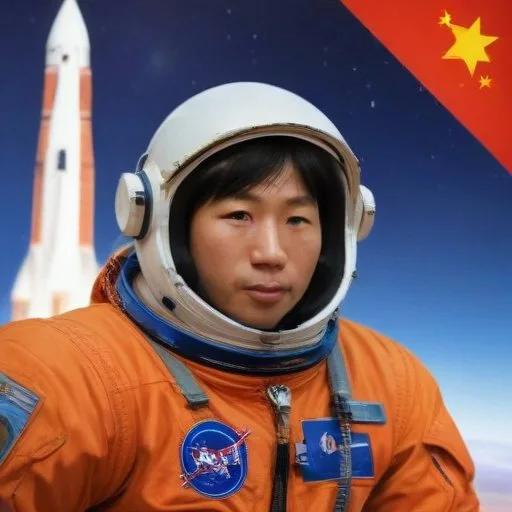
The Shenzhou 5 spacecraft, named after a mythical celestial chariot, was designed to carry China's first astronaut, Yang Liwei, into the vast expanse of space. As the spacecraft soared into the sky, a collective sense of pride and excitement swept across the nation, signaling a new era of exploration and discovery.
Yang Liwei, a decorated People's Liberation Army (PLA) fighter pilot, was chosen from a pool of highly skilled astronauts to spearhead this historic mission. With over 1,500 hours of flight experience under his belt, Yang was the perfect candidate to take China's space program to new heights.
During his 21-hour journey, Yang Liwei orbited the Earth 14 times, reaching a maximum altitude of 343 kilometers. As he gazed out of the spacecraft's window, he marveled at the curvature of the Earth, a sight that few have had the privilege of witnessing.
The Shenzhou 5 spacecraft was a masterpiece of Chinese engineering, boasting cutting-edge technology and advanced systems. Developed by the China Aerospace Science and Technology Corporation, the spacecraft was designed to provide a safe and reliable platform for China's astronauts, paving the way for future crewed missions.
The success of Shenzhou 5 marked a significant shift in China's space policy, from a focus on solo endeavors to a more collaborative approach. The mission sparked a wave of international cooperation, with China engaging in joint projects with space agencies around the world.
Yang Liwei's bravery and pioneering spirit inspired a new generation of Chinese scientists, engineers, and astronauts. His mission paved the way for future crewed missions, including the Shenzhou 6 and Shenzhou 7, which further solidified China's position as a major player in the global space community.
"The vastness of space has always fascinated me. As an astronaut, I feel privileged to be part of this great journey." – Yang Liwei
The success of Shenzhou 5 had a profound impact on Chinese society, inspiring a new generation of young people to pursue careers in science, technology, engineering, and mathematics (STEM). The mission also fostered a sense of national pride, cementing China's status as a rising power in the global community.
China's giant leap into space marked the beginning of a new era of exploration and discovery, solidifying its position as a major player in the global space community. As the nation continues to push the boundaries of space travel, one thing is certain – the sky is no longer the limit.
China's success with Shenzhou 5 was not an isolated incident. It was part of a larger trend of space-faring nations achieving significant milestones. Just two years prior, the Russian space program had successfully launched the International Space Station. Meanwhile, the United States had been conducting crewed missions since the 1960s. China's entry into the elite club of space-faring nations marked a significant shift in the global space landscape, with three major powers now vying for dominance.
In terms of technology, Shenzhou 5 was largely inspired by the Russian Soyuz spacecraft. However, China's engineers had made significant modifications to the design, incorporating advanced life support systems and a more efficient propulsion system. This blend of borrowed technology and indigenous innovation had enabled China to leapfrog other nations and become a major player in the space industry.
Despite these similarities, Shenzhou 5 was distinctly Chinese in character. The spacecraft's name, which means "divine vessel" in Chinese, reflected the nation's rich cultural heritage. The mission's success was hailed as a symbol of China's growing economic and military power, and was seen as a major milestone in the nation's quest for global recognition.

The success of Shenzhou 5 had a profound impact on Chinese society, inspiring a new generation of young people to pursue careers in science, technology, engineering, and mathematics (STEM). The mission's success was hailed as a national triumph, with Yang Liwei being feted as a hero and a role model.
In the years that followed, China witnessed a surge in interest in space exploration, with schools and universities reporting a significant increase in applications for STEM courses. The mission's success had also sparked a national debate about the importance of investing in science and technology, with many calling for increased funding for research and development.
The Shenzhou 5 spacecraft was a testament to China's rapid advances in space technology. The spacecraft's propulsion system, developed by the China Aerospace Science and Technology Corporation, was capable of propelling the spacecraft into orbit and returning it safely to Earth.
The mission's success had also demonstrated China's ability to develop advanced life support systems, capable of sustaining human life for extended periods in space. This technology had far-reaching implications, not only for space exploration but also for terrestrial applications such as environmental monitoring and disaster relief.

The success of Shenzhou 5 had significant philosophical and ideological implications for China. The mission's success was seen as a validation of the Communist Party's focus on science and technology, and was hailed as a major achievement of the party's reform and opening-up policies.
The mission's success had also sparked a national debate about the role of the state in driving innovation and development. Many argued that the mission's success was a testament to the wisdom of the party's policies, while others called for greater investment in basic research and development.
Historians have hailed the Shenzhou 5 mission as a watershed moment in China's space program. The mission's success marked a significant shift in China's space policy, from a focus on solo endeavors to a more collaborative approach.
Scholars have also noted the parallels between China's space program and the Apollo program of the 1960s. Both programs were driven by a sense of national pride and a desire for global recognition, and both marked a significant milestone in the development of space exploration.