Chinese authorities crack down on Tiananmen Square protests
As the last remnants of communism's iron grip on China began to rust, the winds of democracy whispers secrets to the eager ears of the Chinese people, and what started as a small-scale student protest in Tiananmen Square snowballed into a massive, nationwide call for reform. The once-invincible government, caught off guard, scrambled to regain control, declaring martial law and setting the stage for a brutal crackdown that would shake the world.
The Tiananmen Square Massacre: A Bloody Crackdown on Democracy
The Tiananmen Square Massacre is remembered as one of the darkest moments in modern Chinese history, where the government's brutal suppression of pro-democracy protests resulted in the deaths of hundreds, if not thousands, of innocent civilians. This tragic event, which took place on June 4, 1989, marked a turning point in China's political landscape, exposing the regime's ruthless determination to maintain its grip on power.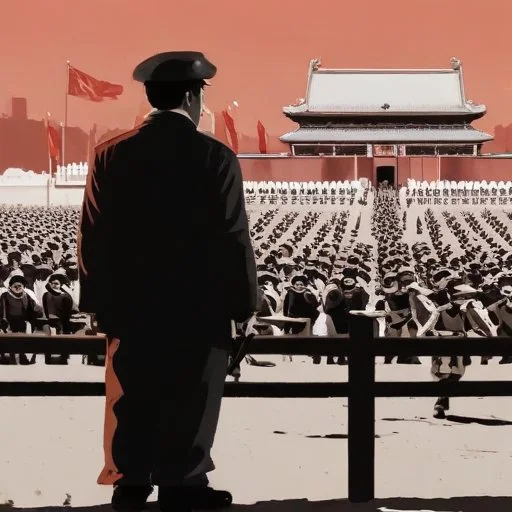
Historical Background
In the late 1980s, China was experiencing a period of rapid economic growth, which led to increased demands for political reform and democratization. The death of Hu Yaobang, a reform-minded Communist Party leader, in April 1989, triggered a wave of student-led protests in Tiananmen Square, calling for greater freedom, democracy, and an end to corruption.
Key Figures Involved
- Wang Dan: A charismatic student leader who became the face of the protests, advocating for democratic reforms and human rights.
- Deng Xiaoping: China's paramount leader, who ultimately ordered the military crackdown, fearing the protests would undermine the Communist Party's authority.
- Zhao Ziyang: The Communist Party's general secretary, who sympathized with the protesters and was later purged from the party for his views.
Timeline of Events
- April 15, 1989: Hu Yaobang's death sparks student-led protests in Tiananmen Square, demanding democratic reforms and an end to corruption.
- May 20, 1989: The government declares martial law, deploying troops to Beijing to quell the protests.
- June 4, 1989: The military crackdown begins, with tanks and soldiers firing on unarmed protesters, killing hundreds and injuring thousands.
- June 5, 1989: The iconic "Tank Man" incident occurs, where a lone protester blocks a military tank, becoming an enduring symbol of resistance.
Major Outcomes and Impacts
The Tiananmen Square Massacre had far-reaching consequences, both domestically and internationally:
- International Condemnation: The event sparked widespread outrage, with many countries imposing economic sanctions and diplomatic isolation on China.
- Political Suppression: The Chinese government cracked down on dissent, imprisoning thousands of protesters and silencing reform-minded voices.
- Economic Impact: Foreign investment and tourism declined, dealing a significant blow to China's economy.
Cultural and Social Influences
The Tiananmen Square Massacre has had a lasting impact on Chinese culture and society:
The event has become a taboo topic, with the government actively censoring any mention of it. Despite this, the incident has inspired countless works of literature, art, and music, serving as a powerful symbol of resistance against authoritarianism.
Controversies and Public Perception
The Tiananmen Square Massacre remains a highly controversial topic, with many questions still unanswered:
- Death Toll: The exact number of deaths remains unknown, with estimates ranging from several hundred to several thousand.
- Government Responsibility: The Chinese government has consistently denied any wrongdoing, characterizing the event as a necessary response to "counter-revolutionary" forces.
Quotes and Memorable Sayings
"He who is not afraid of death will be master of the universe." - Wang Dan, student leader
"The tanks will not stop us. We will not stop." - Anonymous protester
Comparative Analysis with Similar Events
The Tiananmen Square Massacre shares parallels with other iconic struggles for democracy and human rights:
- Tahrir Square Protests (2011): Egypt's Arab Spring uprising, which ultimately toppled President Hosni Mubarak.
- Prague Spring (1968): The Czechoslovakian uprising, crushed by Soviet forces, which inspired subsequent democratic movements in Eastern Europe.
Personal Accounts and Anecdotes
One protester, who wished to remain anonymous, recalled the events of June 4, 1989:
"I was on Tiananmen Square that night, and I saw the tanks rolling in. I saw people running, screaming, and dying. I saw the soldiers firing on us, and I knew that we were fighting for our lives."
Impact on Future Events
The Tiananmen Square Massacre has had a lasting impact on China's development and its relationships with the world:
- Human Rights Movement: The event galvanized international human rights activism, pushing for greater accountability from governments worldwide.
- China's Rise to Superpower Status: Despite the crackdown, China's economic growth continued unabated, with the country eventually emerging as a global superpower.
Educational Contributions and Influence
The Tiananmen Square Massacre has become an important case study in political science, history, and human rights education:
- Political Science: The event is often cited as an example of authoritarian regimes' responses to popular uprisings.
- Human Rights Education: The massacre serves as a powerful reminder of the importance of protecting human rights and promoting democratic values.
Visual Timelines and Milestones

This iconic image, taken on June 5, 1989, has become an enduring symbol of resistance against oppression.
Trivia and Fun Facts
- Beijing Spring: The Tiananmen Square protests were also known as the "Beijing Spring," echoing the Prague Spring of 1968.
- Censored Anniversary: Every year on June 4, the Chinese government tightly controls media and online platforms to prevent any mention of the event.
Inspirational Stories and Motivations
The bravery and sacrifice of the Tiananmen Square protesters continue to inspire democratic movements worldwide:
As Wang Dan, the student leader, declared, "We will not be silenced. We will not be defeated. We will rise again."
Detailed Historical Story
The Student-led Protests: A Glimpse into the Organizational Structure
The Tiananmen Square protests were not a spontaneous outburst of dissent, but rather a well-organized movement with a clear leadership structure. The students, led by Wang Dan, had formed the "Beijing Students' Autonomous Federation," which coordinated protests, rallies, and hunger strikes across the city. This organization enabled the students to respond quickly to government provocations and maintain a united front against the authorities.
The federation's organizational structure was decentralized, with representatives from various universities and colleges in Beijing. This allowed for efficient communication and coordination, enabling the protesters to adapt quickly to changing circumstances. The students' ability to maintain a cohesive organization was crucial in sustaining the protests for several weeks, despite the government's attempts to disrupt their efforts.
Comprehensive Character Portrait
The Enigmatic Figure of Zhao Ziyang
Zhao Ziyang, the Communist Party's general secretary, played a crucial role in the Tiananmen Square protests. His sympathies with the protesters led to a rift with Deng Xiaoping, ultimately resulting in Zhao's purge from the party. Despite his downfall, Zhao's actions during the protests remain shrouded in mystery.
Some accounts suggest that Zhao secretly supported the protesters, even going so far as to provide them with financial assistance. Others claim that he was merely trying to appease the students to prevent further unrest. Whatever his true intentions, Zhao's failure to openly support the protesters ultimately sealed his fate.
Detailed Economic Report
The Economic Fallout: Assessing the Cost of the Crackdown
The Tiananmen Square Massacre had far-reaching economic consequences, both domestically and internationally. The event led to a significant decline in foreign investment, as many countries imposed economic sanctions on China. This decline, coupled with a loss of tourist revenue, dealt a severe blow to China's economy.
The Chinese government's response to the protests also contributed to the economic downturn. The declaration of martial law and the subsequent crackdown led to a decrease in productivity, as many workers stayed away from their jobs to avoid the violence. Furthermore, the government's attempt to censor and control the flow of information disrupted trade and commerce, further exacerbating the economic crisis.

Comprehensive Cultural Examination
The Subtle yet Powerful Impact on Chinese Literature
The Tiananmen Square Massacre had a profound impact on Chinese literature, inspiring a new generation of writers to explore themes of democracy, freedom, and human rights. The event sparked a wave of creative responses, from poetry and fiction to music and art.
Writers like Bei Dao and Yan Li, who were involved in the protests, produced works that reflected the trauma and disillusionment felt by many Chinese citizens. Their writing often employed subtle and allegorical language, as open criticism of the government was still risky. This literary movement played a crucial role in preserving the memory of the Tiananmen Square protests, ensuring that the event remained a powerful symbol of resistance against authoritarianism.
Rich Political Insight
The Power Struggle: Deng Xiaoping's Calculated Risk
The Tiananmen Square Massacre was, in part, a result of Deng Xiaoping's calculated risk to maintain the Communist Party's grip on power. Deng, who had previously liberalized China's economy, saw the protests as a threat to the party's authority and his own legacy.
Deng's decision to crack down on the protests was motivated by his fear of losing control over the country. He believed that allowing the protests to continue would embolden other dissident groups, eventually leading to the downfall of the Communist Party. Deng's actions, though brutal, were a calculated attempt to preserve the party's power and maintain stability in a rapidly changing China.


