


Vasco da Gama's groundbreaking voyage around the treacherous Cape of Good Hope, marking the first navigation from Europe to Asia via the Indian Ocean, finally came to an end on September 9, 1499, as the weary explorer set foot back in Lisbon. This remarkable feat not only cemented da Gama's status as a national hero but also bridged the gap between East and West, ushering in a new era of maritime exploration and global commerce.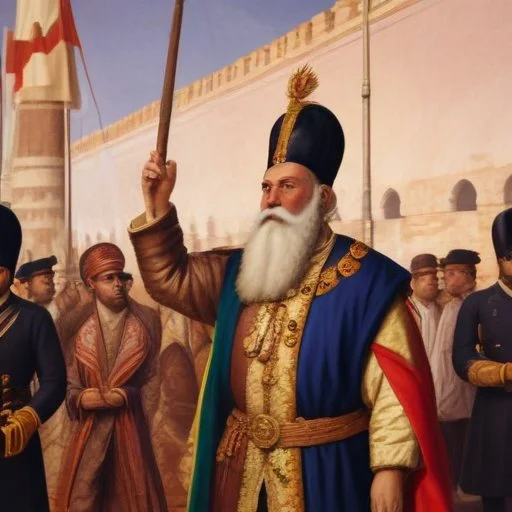
Da Gama's odyssey began on July 8, 1497, when he set sail from Lisbon with a fleet of four ships, driven by King Manuel I's ambition to establish a direct trade route with the spice-rich kingdoms of Asia. The arduous journey took da Gama and his crew through uncharted waters, battling scorching heat, turbulent seas, and treacherous coastal routes.
On November 22, 1497, da Gama successfully navigated the Cape of Good Hope, overcoming a daunting navigational challenge that had thwarted previous attempts by European explorers. This breakthrough marked a crucial milestone in the journey, as da Gama's fleet entered the Indian Ocean and charted a course for the western coast of India.
The news of da Gama's triumphant return sent shockwaves of excitement through Lisbon, as the city's inhabitants gathered to welcome their national hero. The festivities began on September 9, 1499, with a grand procession through the city streets, accompanied by fanfare, music, and chanting crowds.
King Manuel I, eager to acknowledge da Gama's extraordinary achievement, bestowed upon him the title of "Dom" and granted him a generous pension. The King also commissioned a grand monument in da Gama's honor, solidifying his legacy in the annals of Portuguese history.
Da Gama's historic journey opened up new trade routes, facilitating the exchange of goods, ideas, and cultures between Europe and Asia. This new maritime highway enabled the Portuguese to establish a monopoly on the spice trade, propelling Portugal to the forefront of international commerce and cementing its status as a global power.
Vasco da Gama's remarkable journey serves as a testament to human ingenuity, perseverance, and exploration. His trailblazing feat continues to inspire generations, underscoring the importance of pushing boundaries, challenging the unknown, and striving for greatness.
Vasco da Gama's voyage was not just a navigational feat, but also a testament to the Portuguese navigational skills and cartography. The "roteiro", a navigational guide, was instrumental in da Gama's success. This manuscript, created by the Portuguese navigators, provided detailed instructions on navigation, Pilotage, and cartography, which helped da Gama to navigate the treacherous waters.
The "roteiro" was a culmination of centuries of knowledge and experience gained by the Portuguese explorers. It included information on ocean currents, wind patterns, and astronomical observations, making it an indispensable tool for da Gama's voyage.
Vasco da Gama's personality and character played a significant role in his success. He was known for his tenacity, bravery, and strategic thinking. These traits helped him to overcome the challenges he faced during his voyages, including mutinies, harsh weather conditions, and conflicts with native populations.
Da Gama's leadership skills and ability to adapt to new situations were also crucial in maintaining the morale of his crew and achieving his objectives. His strong sense of determination and ambition drove him to push beyond the boundaries of what was thought possible.
The cultural impact of Vasco da Gama's voyage was significant, as it established a direct link between Europe and Asia. This connection facilitated the exchange of ideas, cultures, and values between the two continents.
The voyage also led to the transfer of crops, plants, and animals between Europe and Asia, which had a profound impact on the cuisine and agriculture of both regions. Spices, textiles, and other luxury goods became widely available in Europe, leading to a significant increase in trade and commerce.
Vasco da Gama's voyage had a profound economic impact on Portugal and Europe as a whole. The establishment of a direct trade route with Asia led to a significant increase in trade and commerce, making Portugal a major economic power.
The voyage also led to the establishment of new industries, such as shipbuilding and navigation, which created new employment opportunities and contributed to the growth of the Portuguese economy. The influx of spices, textiles, and other luxury goods also led to the growth of the retail and hospitality industries.
Vasco da Gama's voyage took place during a time of intense geopolitical rivalry in Europe. The Portuguese, Spanish, and other European powers were competing for dominance in the Age of Exploration.
The success of da Gama's voyage gave Portugal a significant advantage in this rivalry, as it established a direct trade route with Asia and provided access to the lucrative spice markets. This led to a shift in the balance of power in Europe, with Portugal emerging as a major player in international politics.