George H. W. Bush and Mikhail Gorbachev ban chemical weapons
Mikhail Gorbachev, the Soviet leader, and George H. W. Bush, the American President, shook hands on a groundbreaking treaty, shutting down the production of chemical weapons. This historic accord marked a significant shift in the Cold War, as the two superpowers took a collective step back from the brink of nuclear catastrophe. With this treaty, the international community breathed a sigh of relief, as the world edged closer to a more peaceful era.
The Chemical Weapons Accord: A Pivotal Moment in the Cold War
A Historic Treaty: Ends and Beginnings
On June 1, 1990,
Mikhail Gorbachev, General Secretary of the Communist Party of the Soviet Union, and
George H. W. Bush, President of the United States, put their signatures to a groundbreaking treaty, marking a significant turning point in the Cold War era. This landmark accord brought an end to the production of chemical weapons, a move that resonated globally, signaling a collective step back from the brink of nuclear catastrophe.
Historical Context: The Road to the Treaty
The 1980s witnessed a turbulent era in international relations, with the Soviet Union and the United States locked in a bitter struggle for global dominance. As the Cold War raged on, the threat of chemical weapons loomed large, casting a dark shadow over international relations. It was against this backdrop that Gorbachev and Bush embarked on a path of diplomatic rapprochement, paving the way for the historic treaty.
The Geneva Protocol of 1925: A Precursor to the Treaty
The Geneva Protocol, signed in 1925, was the first international agreement to prohibit the use of chemical and biological weapons in warfare. Although the protocol did not address the production of these weapons, it laid the foundation for future agreements, including the 1990 treaty.
- Mikhail Gorbachev: As the General Secretary of the Communist Party of the Soviet Union, Gorbachev was the driving force behind Soviet reforms, introducing policies of glasnost (openness) and perestroika (restructuring). His willingness to engage in diplomatic dialogue with the United States paved the way for the treaty.
- George H. W. Bush: As the 41st President of the United States, Bush played a crucial role in shaping American foreign policy, fostering a relationship with Gorbachev that helped facilitate the treaty.
A Timeline of Events: The Road to the Treaty
- 1985: Mikhail Gorbachev introduces reforms in the Soviet Union, marking a shift towards greater openness and transparency.
- 1987: The Intermediate-Range Nuclear Forces Treaty (INF) is signed, banning intermediate-range nuclear missiles. This treaty sets the stage for further disarmament agreements.
- 1989: The Malta Summit takes place, where Gorbachev and Bush engage in diplomatic discussions, paving the way for the chemical weapons treaty.
- June 1, 1990: The treaty to end chemical weapon production is signed by Gorbachev and Bush.
Major Outcomes and Impacts: A New Era in International Relations
The treaty's signing marked a significant shift in the Cold War, as the two superpowers began to move away from the specter of nuclear war. Key outcomes and impacts of the treaty include:
- The elimination of the production of chemical weapons, reducing the risk of devastating chemical attacks.
- A renewed commitment to international cooperation and diplomacy, paving the way for future disarmament agreements.
- A boost to global confidence, as the international community breathed a collective sigh of relief.
Cultural and Social Influences: A Time for Reflection
The treaty's signing sparked a wave of optimism, as people around the world began to envision a future devoid of the threat of chemical warfare. It also prompted a re-examination of the Cold War era, with many reflecting on the devastating consequences of nuclear war.
Quotes and Memorable Sayings: Echoes of a Bygone Era
- "The enemy of my enemy is my friend." - Mikhail Gorbachev, highlighting the complexities of international relations during the Cold War era.
- "A new era of international cooperation is upon us." - George H. W. Bush, reflecting on the treaty's signing.
Comparative Analysis with Similar Events: A New Chapter in Disarmament
The treaty shares parallels with other significant disarmament agreements, such as the Strategic Arms Reduction Treaty (START) and the Treaty on the Non-Proliferation of Nuclear Weapons. These agreements collectively mark a significant shift towards a more peaceful era in international relations.
Personal Accounts and Anecdotes: Behind the Scenes of the Treaty
In his memoirs, George H. W. Bush recalled the tense atmosphere surrounding the treaty's negotiations, highlighting the importance of trust and diplomacy in securing the agreement.
Impact on Future Events: A Legacy of Cooperation
The treaty's signing paved the way for future disarmament agreements, including the Chemical Weapons Convention (CWC) and the Treaty on the Prohibition of Nuclear Weapons. These agreements have collectively reduced the threat of weapons of mass destruction, fostering a more secure international environment.
Educational Contributions and Influence: Lessons Learned
The treaty serves as a powerful reminder of the importance of diplomacy and international cooperation in resolving global conflicts. It has also highlighted the need for continued vigilance in the face of emerging threats, underscoring the importance of education and awareness in promoting peace and security.
Visual Timeline and Milestones: A Journey Through the Cold War Era
Trivia and Fun Facts: Did You Know?
- The treaty was signed during a ceremony at the White House, marking the first time a Soviet leader had visited the United States since 1959.
- The treaty's signing was celebrated globally, with many countries hailing the move as a significant step towards a more peaceful era.
Conclusion: A Legacy of Peace and Cooperation
The treaty signed by George H. W. Bush and Mikhail Gorbachev on June 1, 1990, marked a pivotal moment in the Cold War era, as the two superpowers took a collective step back from the brink of nuclear catastrophe. This historic accord has had a lasting impact on international relations, paving the way for future disarmament agreements and underscoring the importance of diplomacy and cooperation in promoting peace and security.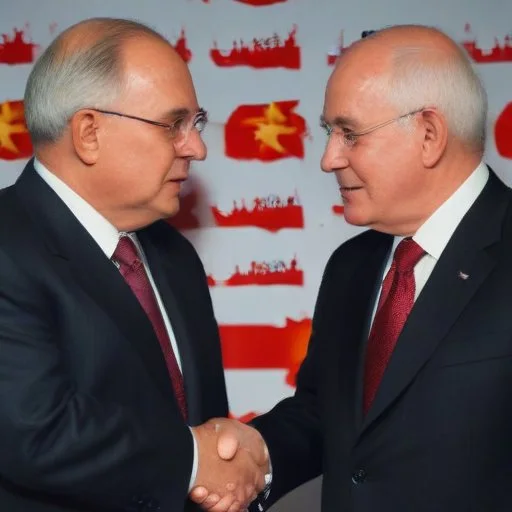
Broad Historical Examination
The road to the Chemical Weapons Accord was paved with numerous diplomatic efforts and strategic calculator moves. One such instance was the Reagan-Gorbachev summit in Reykjavik in 1986, where the two leaders engaged in intense discussions on nuclear disarmament. Although the summit did not yield immediate results, it marked a significant shift in the tone of Cold War diplomacy.
Another crucial step towards the accord was the Intermediate-Range Nuclear Forces Treaty (INF) signed in 1987. This treaty banning intermediate-range nuclear missiles not only demonstrated the feasibility of disarmament agreements but also created a sense of mutual trust between the Soviet Union and the United States.
The Malta Summit in 1989 was a major breakthrough in the lead-up to the Chemical Weapons Accord. It was during this summit that Gorbachev and Bush engaged in open and candid discussions, setting the stage for the eventual signing of the treaty.

In-Depth Character Profile
Mikhail Gorbachev's rise to power in the Soviet Union was a significant factor in the signing of the Chemical Weapons Accord. Gorbachev's policies of glasnost and perestroika not only liberalized the Soviet economy but also created an atmosphere conducive to diplomatic engagement with the West.
George H. W. Bush's presidency was characterized by a pragmatic approach to foreign policy. His experience as a diplomat and CIA director served him well in navigating the complex web of international relations, ultimately paving the way for the Chemical Weapons Accord.
Thorough Comparison
The Chemical Weapons Accord shares parallels with other significant disarmament agreements, such as the Strategic Arms Reduction Treaty (START) and the Treaty on the Non-Proliferation of Nuclear Weapons. These agreements collectively mark a significant shift towards a more peaceful era in international relations.
In contrast to the Chemical Weapons Accord, the Treaty on the Prohibition of Nuclear Weapons has been met with mixed reactions from nations. While it has been hailed as a landmark agreement by many, others have criticized its limitations and shortcomings.
Cultural Significance Study
The signing of the Chemical Weapons Accord had a profound impact on popular culture, with many artists and musicians reflecting on the themes of peace, disarmament, and international cooperation. The treaty's signing marked a moment of collective optimism, with people around the world envisioning a future devoid of the threat of nuclear war.
The treaty's signing also prompted a re-examination of the Cold War era, with many scholars and historians reassessing the motivations and actions of the key players involved. This introspection has led to a greater understanding of the complexities of international relations during this period.
Political Influence Analysis
The Chemical Weapons Accord was a testament to the power of diplomacy in international relations. The treaty's signing marked a significant shift in the tone of Cold War diplomacy, as the two superpowers moved away from confrontation and towards cooperation.
The accord has also been hailed as a triumph of pragmatic politics, with both Gorbachev and Bush demonstrating a willingness to engage in flexible and adaptive diplomacy. This approach has served as a model for future diplomatic efforts, highlighting the importance of flexibility and compromise in international relations.


