


In 1991, the Warsaw Pact, a military alliance of Soviet-aligned communist states, held its final meeting in Prague, officially dissolving the organization that had defined the Cold War era. This marked a historic turning point, as communist regimes across Eastern Europe teetered on the brink of collapse, paving the way for a new era of independence and self-determination.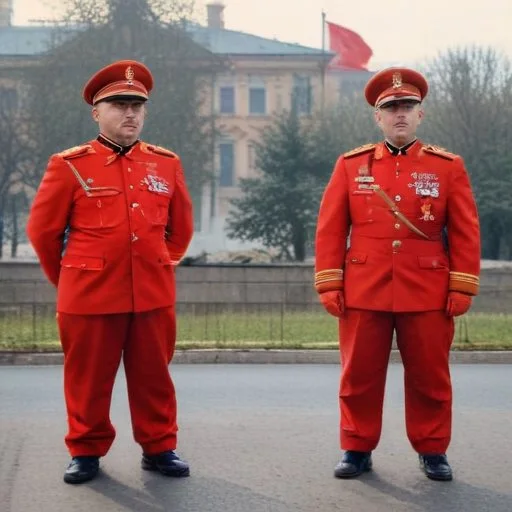
Formed in 1955, the Warsaw Pact was created in response to the formation of NATO, with the Soviet Union as its leading member. The alliance was designed to counterbalance Western military power and maintain Soviet influence over Eastern Europe. Member states included Poland, Czechoslovakia, East Germany, Hungary, Romania, Bulgaria, and Albania.
In the late 1980s, the Soviet Union, under the leadership of Mikhail Gorbachev, introduced reforms aimed at democratizing the Soviet system. These reforms, known as glasnost and perestroika, weakened the grip of communist rule, creating an opportunity for Eastern European states to break free from Soviet dominance.
As protests and demonstrations swept across Eastern Europe, member states began to assert their independence, leading to the withdrawal of Soviet troops and the eventual collapse of communist regimes. By the summer of 1990, the Warsaw Pact had lost its purpose, and its member states were forging their own paths.
In July 1991, the Warsaw Pact member states gathered in Prague for their final meeting. The atmosphere was tense, but the outcome was clear: the alliance was no more. In a symbolic act, the Warsaw Pact's military structure was dismantled, marking the end of an era and paving the way for a new era of cooperation and regional integration.
For those who lived under communist rule, the fall of the Warsaw Pact was a moment of liberation. As one Czech citizen recalls, "I remember the sense of hope and excitement as we gathered in Wenceslas Square, waving our national flags and celebrating our newfound freedom."
The dissolution of the Warsaw Pact marked a significant turning point in modern history, paving the way for a new era of cooperation and regional integration. As we reflect on this momentous event, we are reminded of the power of freedom and the resilience of the human spirit.
In the years that followed, Eastern European states continued to evolve, with many joining the European Union and NATO. The legacy of the Warsaw Pact serves as a reminder of the importance of cooperation and the enduring power of human freedom.
The dissolution of the Warsaw Pact was not a sudden event, but rather the culmination of a series of events that began to unfold in the late 1980s. As the Soviet Union's grip on Eastern Europe began to loosen, nationalist movements and democratic reforms began to gain momentum. In Poland, the Solidarity movement, led by Lech Walesa, had been gaining strength since the early 1980s, and by the late 1980s, it had become a powerful force for change.
In Hungary, the reformist government of Miklos Nemeth had begun to introduce democratic reforms, and in 1989, the country held its first free elections since the 1940s. Meanwhile, in Czechoslovakia, a wave of popular protests and demonstrations, known as the Velvet Revolution, swept across the country, leading to the downfall of the communist government.
As the communist regimes in Eastern Europe began to crumble, the Warsaw Pact's military structure became increasingly irrelevant. The Soviet Union, under Mikhail Gorbachev, was no longer willing to prop up the ailing communist regimes, and the Warsaw Pact's purpose was effectively rendered obsolete.
Mikhail Gorbachev, the Soviet leader who introduced reforms aimed at democratizing the Soviet system, was a key figure in the demise of the Warsaw Pact. His policies of glasnost and perestroika created an opportunity for Eastern European states to break free from Soviet dominance.
Gorbachev's reforms were driven by a desire to revitalize the Soviet economy and to increase transparency and accountability within the Soviet system. However, his reforms also had the unintended consequence of empowering nationalist movements and democratic reformers across Eastern Europe.
Despite his role in the collapse of the Warsaw Pact, Gorbachev remains a complex and controversial figure. While he is credited with helping to bring an end to the Cold War, he is also criticized for his handling of the Soviet economy and his failure to stem the tide of nationalist sentiment in the Soviet republics.
The dissolution of the Warsaw Pact marked a significant shift in the balance of power in Europe. The collapse of the communist regimes in Eastern Europe created a power vacuum that was quickly filled by the European Community, which would later become the European Union.
In contrast to the Warsaw Pact, which was a military alliance dominated by the Soviet Union, the European Community was a supranational organization that emphasized economic cooperation and integration. The collapse of the Warsaw Pact paved the way for Eastern European states to join the European Community, further weakening the Soviet Union's influence in the region.
The dissolution of the Warsaw Pact also marked a significant shift in the global balance of power, as the Soviet Union's influence began to wane. The United States, which had been a rival superpower to the Soviet Union during the Cold War, emerged as the dominant world power in the aftermath of the Warsaw Pact's collapse.
The dissolution of the Warsaw Pact had a profound impact on popular culture in Eastern Europe. The collapse of communist regimes created a sense of liberation and freedom, which was reflected in the music, art, and literature of the time.
In Poland, the rock band Solidarity, named after the nationalist movement, became a symbol of resistance and defiance against the communist regime. In Czechoslovakia, the Velvet Revolution of 1989 inspired a new generation of artists and musicians, who celebrated the country's newfound freedom.
The fall of the Warsaw Pact also led to a cultural renaissance in Eastern Europe, as artists and writers were finally able to express themselves freely. The works of authors such as Vaclav Havel and Milan Kundera, who had been suppressed under communist rule, were finally able to reach a wider audience.
The dissolution of the Warsaw Pact marked a significant turning point in the history of international relations. The collapse of the communist regimes in Eastern Europe created a new era of cooperation and integration, as countries began to look beyond their Cold War alliances.
The end of the Warsaw Pact also marked a significant shift in the Soviet Union's foreign policy, as the country began to focus on domestic reforms and economic cooperation with the West. The Soviet Union's decreased influence in Eastern Europe created an opportunity for the United States and the European Community to establish a new presence in the region.
The dissolution of the Warsaw Pact also had significant implications for international security, as the threat of nuclear war and military conflict began to recede. The end of the Cold War marked a new era of diplomacy and cooperation, as countries began to work together to address global challenges and promote peace and stability.