


The Allied invasion of Normandy, codenamed Operation Overlord, remains the largest seaborne invasion in history, with nearly 160,000 troops crossing the English Channel on June 6, 1944. This pivotal event, commonly referred to as D-Day, marked a crucial turning point in World War II, as the Allies launched a massive assault on Nazi-occupied France, paving the way for the liberation of Western Europe.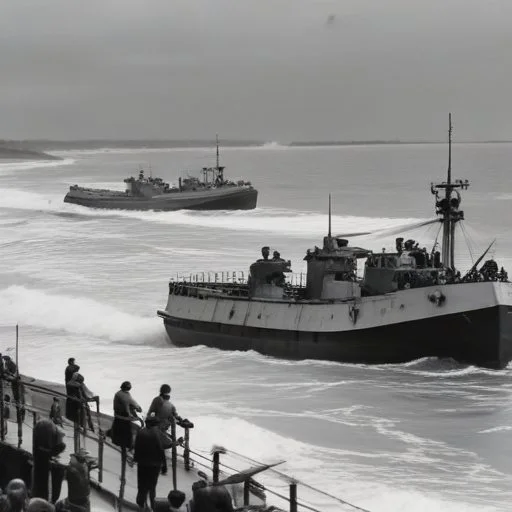
The Allied forces had been preparing for this moment for months, following a series of strategic battles and diplomatic maneuvers. The invasion was initially planned for June 5, but unfavorable weather conditions forced a 24-hour delay. As the clock ticked closer to dawn on June 6, the fate of millions of lives hung in the balance.
Under the cover of darkness, a 5,000-vessel armada, comprising warships, troop transports, and landing craft, set sail from Portsmouth and other English ports. As the first light of dawn crept over the horizon, the Allied forces approached the five landing beaches, codenamed Utah, Omaha, Gold, Juno, and Sword. The German defenses, although formidable, were eventually breached, allowing the troops to establish a foothold on French soil.
The success of Operation Overlord marked a significant shift in the balance of power in Europe, as the Allies gained a crucial foothold on the continent. The invasion paved the way for the liberation of Western Europe, the defeat of Nazi Germany, and the eventual end of World War II.
The D-Day invasion had a profound impact on the cultural and social fabric of Europe and beyond. It marked a turning point in the war, and its significance has been commemorated in countless films, books, and works of art.
"Soldiers, Sailors, and Airmen of the Allied Expeditionary Force! You are about to embark upon the Great Crusade, toward which we have striven these many months. The free men of the world are marching together to Victory!" - General Dwight D. Eisenhower, Supreme Allied Commander
The Allied victory on D-Day paved the way for the eventual defeat of Nazi Germany and the end of World War II. The operation's success demonstrated the power of combined military forces and served as a model for future large-scale military operations.
The bravery and sacrifice of the Allied troops on D-Day were recognized with numerous awards and honors, including the Medal of Honor, the Distinguished Service Cross, and the Legion of Merit.
The heroism and sacrifice of the soldiers who stormed the beaches of Normandy on D-Day continue to inspire generations, serving as a testament to the power of human courage and determination in the face of overwhelming adversity.
As the clock struck midnight on June 5, 1944, the Allied forces were on high alert. The largest seaborne invasion in history was about to unfold, and the fate of millions hung in the balance. General Dwight D. Eisenhower, the Supreme Allied Commander, had made the difficult decision to delay the operation by 24 hours due to adverse weather conditions.
In the hours leading up to the invasion, the atmosphere was tense. The troops were briefed on their objectives, and last-minute checks were conducted on equipment and supplies. The sounds of engines roaring, gunfire, and explosions filled the air as the Allied forces prepared to set sail for Normandy.
Meanwhile, the German High Command was caught off guard, unaware of the impending invasion. The Allies had implemented a sophisticated deception plan, Operation Fortitude, which had led the Germans to believe that the main attack would come in the Pas-de-Calais region. The element of surprise was crucial, and the Allies were determined to capitalize on it.
General Bernard Montgomery, Commander of the British 21st Army Group, played a crucial role in the planning and execution of Operation Overlord. His remarkable military acumen and tactical genius helped shape the Allied strategy, ultimately paving the way for the D-Day invasion.
Montgomery's leadership style was characterized by meticulous attention to detail and a relentless drive for precision. He was instrumental in developing the plan to breach the German defenses, using a combination of airborne troops, naval gunfire, and armored units to break through the enemy lines.
The five landing beaches, codenamed Utah, Omaha, Gold, Juno, and Sword, presented distinct challenges to the Allied forces. Utah Beach, with its relatively flat terrain and limited German defenses, was the most favorable for an amphibious landing.
In contrast, Omaha Beach, with its steep bluffs and heavily fortified German positions, proved to be a bloody and brutal battleground. The casualties were high, and the Allies struggled to establish a foothold. Gold, Juno, and Sword beaches, situated between the two extremes, presented a mix of challenges, with varying degrees of German resistance and treacherous terrain.

The D-Day invasion marked the beginning of the liberation of France, a country that had been under German occupation for four long years. As the Allies advanced across the country, they brought with them a sense of freedom and hope, revitalizing the French people and paving the way for a cultural rebirth.
The liberation of Paris, in particular, was a significant milestone. The City of Light, once the epicenter of European culture, was restored to its former glory, as the Allies and the French Resistance joined forces to drive out the German occupiers.
Operation Overlord took place against the backdrop of a rapidly shifting global landscape. The Soviet Union, under the leadership of Joseph Stalin, was making significant gains on the Eastern Front, putting pressure on Germany from the east.
In this context, the Allied invasion of Normandy was a strategic masterstroke, as it forced Germany to divert resources from the Eastern Front to defend its western borders. The D-Day invasion effectively created a two-front war, weakening Germany's ability to resist the Allied advance.