


In the summer of 1940, Lithuania's brief flirtation with democracy came to a brutal end as Soviet forces, backed by a secret pact with Nazi Germany, orchestrated a bloodless coup that would install a communist government in the Baltic nation. The rigged election of July 14, 1940, marked the beginning of a new era of Soviet dominance in Lithuania, one that would last for nearly five decades.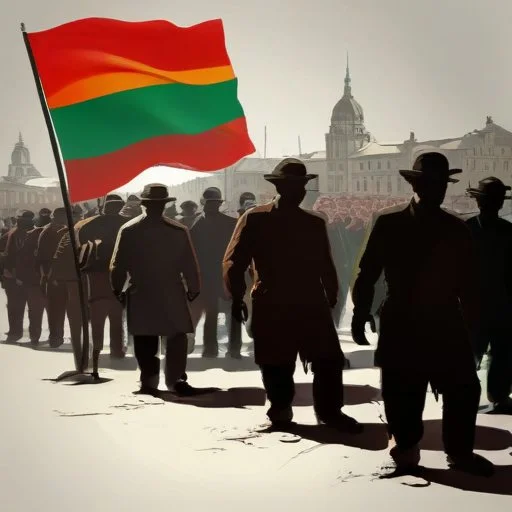
Lithuania's independence, declared in 1918, was always precarious, sandwiched as it was between the rival powers of Germany and the Soviet Union. The interwar period saw Lithuania struggling to maintain its sovereignty, with frequent border disputes and diplomatic tensions with its neighbors.
The Molotov-Ribbentrop Pact, signed on August 23, 1939, sealed Lithuania's fate. The secret protocol dividing Eastern Europe into Soviet and Nazi spheres of influence paved the way for Soviet annexation. In October 1939, the Soviet Union, citing a threat to its national security, demanded that Lithuania allow the establishment of Soviet military bases on its territory. The writing was on the wall.
The Soviet-backed Lithuanian Communist Party, led by Antanas Sniečkus, orchestrated a farcical election on July 14, 1940. The only candidates allowed to run were those approved by the Soviet authorities, and the electorate was limited to those deemed "loyal" to the Soviet cause. The results were a foregone conclusion: the communist slate swept the election, with Sniečkus installed as the new leader of Lithuania.
The installation of a communist government in Lithuania marked the beginning of a reign of terror. The new regime brutally suppressed dissent, disbanded opposition parties, and nationalized industries. The once-independent nation was reduced to a mere vassal state, with its economy and politics dictated by Moscow.
The Soviet annexation of Lithuania had far-reaching consequences, including:
The communist regime in Lithuania had a profound impact on the nation's culture and society. The once-vibrant cultural scene was stifled, with artists and intellectuals forced to conform to Soviet ideology. The Catholic Church, a pillar of Lithuanian identity, was brutally suppressed, with many clergy arrested, exiled, or executed.
The Soviet annexation of Lithuania remains a contentious issue to this day, with many Lithuanians viewing it as a brutal occupation and a denial of their nation's sovereignty. The rigged election of 1940 is seen as a sham, and the subsequent communist regime as a puppet government beholden to Moscow.
Here is a brief timeline of the key events leading up to the installation of a communist government in Lithuania:
The Soviet annexation of Lithuania serves as a stark reminder of the dangers of totalitarianism and the importance of defending democracy and sovereignty. As the world continues to grapple with the challenges of globalization and great power rivalry, the story of Lithuania's struggles serves as a timely reminder of the importance of protecting national independence and promoting democratic values.
The journey to Lithuania's annexation was a complex and multifaceted one, marked by a series of diplomatic and strategic maneuvers. The Molotov-Ribbentrop Pact, signed in August 1939, was a turning point in this process, as it effectively divided Eastern Europe into Soviet and Nazi spheres of influence. Lithuania, caught in the middle, was forced to navigate this treacherous landscape, with its fate ultimately sealed by the Soviet Union's demand for military bases on its territory.
The subsequent ultimatum, issued on June 15, 1940, marked the beginning of the end for Lithuania's independence. The Soviet Union, determined to bring the Baltic nation under its control, would stop at nothing to achieve its goal. The rigged election of July 14, 1940, was merely the final nail in the coffin, as the communist slate swept the vote and Antanas Sniečkus was installed as the new leader of Lithuania.

Antanas Sniečkus, the Soviet-backed leader of the Lithuanian Communist Party, was a key figure in the annexation of Lithuania. Born in 1903, Sniečkus rose through the ranks of the communist party, becoming its leader in 1940. His role was crucial in the rigged election of July 14, 1940, as he was the face of the communist slate and the eventual winner of the vote.
Despite his position as the head of the new government, Sniečkus was little more than a puppet leader, beholden to Moscow for his power. His role was to implement Soviet policy in Lithuania, suppressing dissent and opposition, and ensuring the country's complete subjugation to the Soviet Union.
The Soviet annexation of Lithuania had a profound impact on the country's cultural scene. The once-vibrant cultural landscape was stifled, as artists and intellectuals were forced to conform to Soviet ideology. The Catholic Church, a pillar of Lithuanian identity, was brutally suppressed, with many clergy arrested, exiled, or executed.
The Sovietization of Lithuania's culture was a deliberate attempt to erase the nation's unique identity and replace it with a Soviet-friendly alternative. This cultural repression had a lasting impact on Lithuania, stifling creativity and innovation, and silencing the country's cultural voice.
The communist regime that took hold in Lithuania in 1940 was characterized by its brutal suppression of dissent and opposition. The new government, led by Antanas Sniečkus, was determined to crush any resistance to Soviet rule, using tactics such as imprisonment, exile, and execution to maintain control.
The regime's iron grip on Lithuania was reinforced by the Soviet Union's military presence, which ensured that any opposition was quickly and brutally crushed. This repressive atmosphere stifled political debate and freedom of expression, reducing Lithuania to a mere vassal state, with its economy and politics dictated by Moscow.
The Baltic region, comprising Lithuania, Latvia, and Estonia, has long been a hotbed of geopolitical rivalry, with various empires and powers vying for control of this strategically located region. The Soviet Union's annexation of Lithuania in 1940 was merely the latest chapter in this ongoing struggle for dominance.
The region's unique geography, bordering the Baltic Sea and sandwiched between Germany and the Soviet Union, made it a coveted prize for powerful nations. The Molotov-Ribbentrop Pact, which divided Eastern Europe into Soviet and Nazi spheres of influence, was a key factor in Lithuania's annexation, highlighting the country's vulnerability to the whims of great powers.