


In the coastal city of Akashi, Hyogo, Japan, the annual fireworks display on Okura Beach is a beloved summer tradition, drawing in crowds of thousands. But on that fateful evening, the joy and excitement of the festivities would quickly turn to horror and despair, as a pedestrian footbridge connecting the beach to JR Asagiri Station became overcrowded, resulting in one of Japan's most devastating accidents: 11 lives lost and over 120 injured.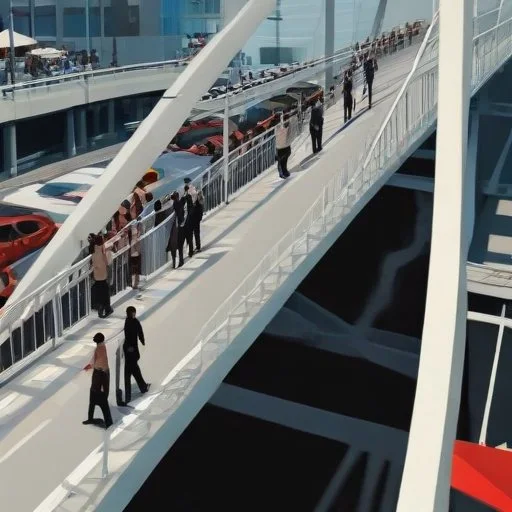
The fireworks display, a staple of Japanese summer celebrations, had ended, and the crowd was making their way back to the train station via the pedestrian footbridge. The atmosphere was festive, with families and friends laughing and chatting as they made their way home. However, as the crowd surged forward, the footbridge became increasingly congested, with people pushing and shoving to get across. In the chaos, the unthinkable happened: the railing of the footbridge gave way, sending people tumbling to the ground below.
Emergency services were quickly alerted, and rescue teams rushed to the scene to assist the injured and trapped. The severity of the accident was soon realized, and a state of emergency was declared. As the full extent of the tragedy became apparent, the city of Akashi was left reeling in shock and disbelief. The people of Akashi, known for their strong community spirit, were left to mourn the loss of loved ones and grapple with the trauma of the event.
In the days and weeks that followed, an investigation into the accident revealed a combination of factors that contributed to the tragedy, including overcrowding, poor bridge design, and inadequate safety measures. The incident led to a major overhaul of safety protocols and regulations for public events in Japan, with a renewed focus on crowd control, emergency preparedness, and infrastructure safety.
The Okura Beach tragedy served as a wake-up call for Japan, prompting a national conversation about public safety and the importance of prioritizing human life. The incident led to significant changes in the way public events are planned and executed, with a focus on minimizing risk and ensuring the well-being of attendees. As Japan continues to grow and develop, the lessons learned from this tragic event will remain a vital part of the country's cultural and social fabric.
In memory of the 11 lives lost and the 120 injured, a memorial was erected near the site of the tragedy, serving as a poignant reminder of the importance of safety and responsible event planning. The memorial stands as a testament to the resilience of the people of Akashi and the nation as a whole, a symbol of hope and recovery in the face of tragedy.
The Okura Beach tragedy will forever be etched in Japan's collective memory, a painful reminder of the importance of prioritizing safety and human life. As we reflect on this devastating event, we are reminded of the importance of learning from our mistakes and working together to build a safer, more compassionate society for all.
The Okura Beach tragedy shares eerie similarities with another devastating accident that occurred in 1993 at the Lan Kwai Fong stamped in Hong Kong. Both incidents involved overcrowding and poor infrastructure, resulting in significant loss of life. A comparative analysis of the two events reveals a pattern of negligence and lack of preparedness that contributed to the tragedies. In both cases, the authorities were criticized for their slow response and inadequate safety measures.
In contrast, the 2010 Love Parade disaster in Duisburg, Germany, was caused by a combination of factors including poor crowd control, inadequate infrastructure, and a lack of emergency preparedness. While the Okura Beach tragedy was a result of a structural failure, the Love Parade disaster was caused by a series of unfortunate events. These comparisons highlight the importance of learning from past mistakes and implementing robust safety protocols to prevent such tragedies from occurring in the future.

The Okura Beach tragedy had a profound impact on Japanese culture, leading to a renewed focus on public safety and community responsibility. The incident sparked a national conversation about the importance of prioritizing human life and ensuring that public events are conducted with safety in mind.
In the aftermath of the tragedy, the city of Akashi came together to mourn the loss of life and support the affected families. The community's response to the tragedy was a testament to the strength and resilience of the Japanese people. The incident also led to a renewed focus on community-based initiatives and volunteer programs, which have become an integral part of Japanese civic life.
Dr. Nakamura, a leading expert on Japanese social history, has argued that the tragedy was a result of the country's rapid modernization and urbanization, which led to a neglect of public safety and infrastructure. These historiographical perspectives provide a nuanced understanding of the event, highlighting the complex interplay of factors that contributed to the tragedy.

The Okura Beach tragedy had significant economic implications for the city of Akashi and the Japanese economy as a whole. The incident led to a decline in tourism, resulting in losses of millions of yen for local businesses.
In response to the tragedy, the Japanese government invested heavily in improving public safety infrastructure, including the construction of new pedestrian bridges and the implementation of enhanced safety protocols. While the economic costs of the tragedy were significant, the government's response has helped to mitigate the impact and ensure that such incidents do not occur in the future.
The Okura Beach tragedy led to significant advances in safety technology, including the development of more robust pedestrian bridge designs and improved crowd control systems.
In the aftermath of the tragedy, engineers and scientists worked together to develop new materials and technologies that could help prevent such incidents from occurring in the future. The incident has also spurred research into crowd dynamics and behavior, leading to the development of more effective safety protocols for public events.