


On a momentous day in August 2000, the Confederate submarine H.L. Hunley, the most advanced of its time, broke the surface of the Atlantic Ocean after 136 years of lying undisturbed on the ocean floor. Discovered 30 years prior by renowned undersea explorer E. Lee Spence, the Hunley's resurrection marked a monumental milestone in maritime archaeology and American history.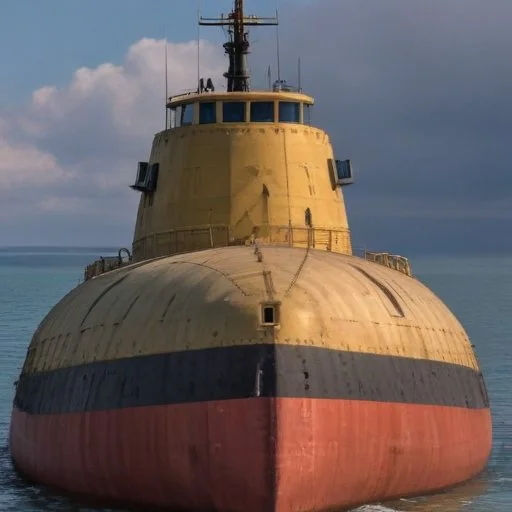
The H.L. Hunley, built by the Confederacy during the American Civil War, was a testament to the innovative spirit and bravery of the naval engineers who designed and operated it. Measuring 40 feet in length and displacing 15 tons of water, this hand-cranked submarine was capable of staying submerged for hours, a feat unmatched by its contemporaries.
The Hunley's remarkable discovery and subsequent excavation have shed light on the forgotten stories of the American Civil War. The submarine's well-preserved hull, adorned with coral and anemones, has provided a unique window into the ingenuity and craftsmanship of the Confederacy's naval engineers. Archaeologists have uncovered intriguing artifacts, including the submarine's original propeller, which has helped to reconstruct the vessel's operational history.
The H.L. Hunley's ascent has had a profound impact on our understanding of the American Civil War and its maritime history. The submarine's discovery has sparked renewed interest in the conflict, inspiring new generations of historians, archaeologists, and enthusiasts to explore the era. The Hunley's legacy extends beyond the Civil War, serving as a testament to human ingenuity and the power of innovation.
"The Hunley is more than just a relic of the Civil War – it's a window into the past, a testament to the bravery and ingenuity of those who served on her." – E. Lee Spence, Undersea Explorer
"The Hunley's story is a powerful reminder of the human costs of war and the importance of preserving our cultural heritage." – Dr. Maria Jacobsen, Maritime Archaeologist
The Hunley's discovery has inspired a range of creative works, from novels and documentaries to museum exhibitions and historic reenactments. The submarine's legacy has also sparked a renewed interest in Civil War history, with many families and communities tracing their roots back to the era.
The Hunley's recovery has set a new standard for maritime archaeology, paving the way for further exploration and discovery of historic shipwrecks. The project's success has also inspired new generations of archaeologists, historians, and engineers to pursue careers in these fields.
The H.L. Hunley's remarkable journey from the ocean floor to the surface has unlocked secrets of the American Civil War, inspiring a new wave of interest in this pivotal era. As we reflect on the Hunley's legacy, we are reminded of the power of human ingenuity, bravery, and innovation to shape our collective history.
The H.L. Hunley's story begins in 1863, when the Confederacy, desperate to break the Union's naval blockade, commissioned a top-secret project to build a submarine capable of sinking enemy ships. The brainchild of James McClintock, a Confederate engineer, the Hunley was designed to be a game-changer in the war effort. Constructed in Mobile, Alabama, the submarine was shipped to Charleston, South Carolina, where it underwent sea trials.
Despite its promising start, the Hunley's maiden voyage ended in disaster on February 17, 1864. During a battle with the USS Housatonic, the submarine exploded, claiming the lives of its eight-man crew. The exact circumstances of the sinking remain a mystery, but historians believe it was likely due to a combination of factors, including a faulty valve, inadequate training, and bad luck.
The Hunley's loss was a devastating blow to the Confederacy, which had pinned its hopes on the submarine to turn the tide of the war. However, the sinking also marked the beginning of a new era in naval warfare, as the Union Navy began to develop its own submarines in response to the Hunley's threat.

Meet James McClintock, the brilliant engineer behind the H.L. Hunley's design. A native of South Carolina, McClintock was a talented inventor who had already made a name for himself in the pre-war years with his innovative designs for steam-powered engines.
When the Confederacy approached him with the idea of building a submarine, McClintock saw it as the opportunity of a lifetime. He poured his heart and soul into the project, working tirelessly to overcome the technical challenges of building a vessel that could stay submerged for hours.
McClintock's dedication to the project was evident in every detail of the Hunley's design. From the hand-cranked propeller to the intricate system of valves and pipes, the submarine was a testament to his ingenuity and foresight.
The H.L. Hunley's discovery has had a profound impact on American culture, inspiring a new wave of interest in the Civil War era. The submarine's story has been immortalized in films, books, and documentaries, captivating audiences with its tale of bravery and innovation.
In the world of art, the Hunley has inspired a range of creative works, from paintings and sculptures to music and poetry. The submarine's haunting beauty has captivated artists, who see it as a symbol of the human spirit's ability to create and persevere in the face of adversity.
The Hunley has also become a popular tourist attraction, with visitors flocking to museums and exhibitions to catch a glimpse of the submarine's reconstructed hull. The experience is often emotional, as people are transported back in time to a pivotal moment in American history.

The H.L. Hunley's recovery has had a significant impact on the field of maritime archaeology, pushing the boundaries of what is possible in underwater exploration. The project's success has inspired a new generation of archaeologists, engineers, and historians to explore the secrets of the ocean floor.
The Hunley's excavation has also led to important technological innovations, including the development of new conservation techniques and advanced imaging technologies. These breakthroughs have far-reaching implications for the preservation of cultural heritage sites around the world.
Furthermore, the Hunley's discovery has sparked a renewed interest in the history of naval engineering, with researchers delving into the archives to uncover the stories of pioneers like James McClintock. The submarine's legacy continues to inspire new generations of engineers and inventors.
The H.L. Hunley's remarkably well-preserved hull has yielded a treasure trove of artifacts, each one providing a unique window into the submarine's operational history. One of the most significant discoveries was the original propeller, which has helped researchers reconstruct the vessel's propulsion system.
Other notable finds include the crew's personal belongings, such as coins, jewelry, and even a pair of glasses. These artifacts humanize the Hunley's story, reminding us of the brave men who lost their lives in the pursuit of innovation.
Perhaps most fascinating, however, are the Hunley's logbooks and navigational charts, which offer a glimpse into the daily life of the submarine's crew. These documents provide valuable insights into the vessel's operations, from navigation and communication to maintenance and repair.