


The Constitution of Japan, also known as the Shinkunpompu, marks a pivotal moment in Japanese history, as Emperor Hirohito's seal of approval on November 3, 1946, ushers in a new era of democracy, pacifism, and international cooperation. This watershed moment sees Japan shed its militaristic past, embracing instead a commitment to human rights, gender equality, and the renunciation of war.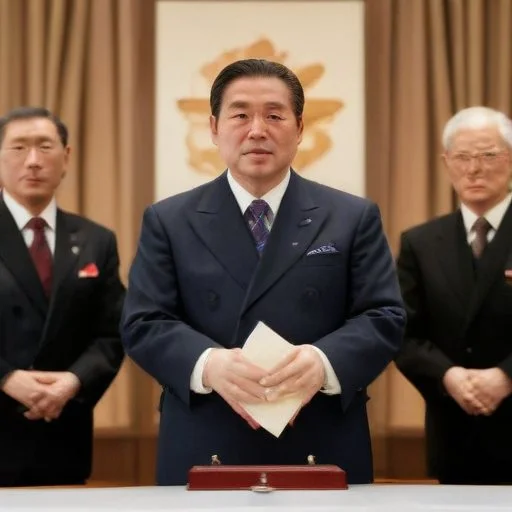
In the aftermath of World War II, Japan lies defeated, its economy in shambles, and its people struggling to come to terms with the devastation. The Allied Powers, led by the United States, seek to reform Japan's political and social structures, paving the way for a more democratic and peaceful nation. This sets the stage for the creation of a new constitution, one that would redefine Japan's role in the international community.
The Constitution of Japan enshrines several key principles, including:
The adoption of the Constitution of Japan marks a significant cultural and social shift, as the nation sheds its militaristic past and embracing a more democratic and peaceful identity. This newfound commitment to pacifism and human rights shapes Japan's role in the international community, earning the country a reputation as a champion of peace and cooperation.
The Constitution of Japan has faced criticism and controversy over the years, with some arguing that it was imposed upon Japan by the Allied Powers, rather than being a truly indigenous creation. Others have debated the constitution's effectiveness in promoting peace and human rights, sparking ongoing discussions about its relevance and impact.
"We, the Japanese people, desire peace for all time and are deeply conscious of the high ideals controlling human relationship, and we have determined to preserve our security and existence, trusting in the justice and faith of the peace-loving peoples of the world." - Preamble to the Constitution of Japan
Comparing Japan's post-war constitutional reform to other countries', such as Germany's Grundgesetz, reveals a unique approach to rebuilding a nation. Japan's constitution emphasizes pacifism and human rights, reflecting the country's determination to distance itself from its militaristic past and forge a new path forward.
Kijūrō Shidehara, chairman of the Constitutional Commission, recalled the drafting process as "a moment of great historical significance, where Japan embarked on a journey to reclaim its place in the world, as a beacon of peace and democracy."
The Constitution of Japan has had a profound impact on the country's future, shaping its foreign policy, national identity, and commitment to human rights. This legacy continues to inspire future generations, solidifying Japan's position as a leader in international cooperation and peace-building initiatives.
The drafting of Japan's post-war constitution was a complex and nuanced process, involving intense negotiations between Japanese officials and the Allied Powers. One of the key challenges faced by the Constitutional Commission was reconciling the country's imperial past with its newfound commitment to democracy and pacifism. This tension was evident in the debates surrounding the role of the Emperor, with some arguing that Hirohito's presence was essential for national unity, while others saw him as a symbol of Japan's militaristic past.
Despite these challenges, the Commission persevered, driven by a shared vision of a more peaceful and equitable Japan. The drafting process was a true collaborative effort, with input from a diverse range of stakeholders, including women's groups, labor unions, and religious organizations. This inclusive approach helped to ensure that the final document reflected the aspirations and values of the Japanese people, rather than simply imposing Western-style democracy on the country.

Kijūrō Shidehara, the chairman of the Constitutional Commission, was a key figure in the drafting of Japan's post-war constitution. A highly respected lawyer and politician, Shidehara brought a wealth of experience and knowledge to the process. His commitment to democratic values and human rights helped to shape the constitution's core principles, and his diplomatic skills were instrumental in securing the support of the Allied Powers.
Shidehara's leadership was instrumental in navigating the complex negotiations between the Japanese government and the Allied Powers. His ability to build consensus and find common ground helped to ensure that the constitution was adopted with broad support, both domestically and internationally. Today, Shidehara is remembered as a champion of democracy and human rights, and his legacy continues to inspire future generations of Japanese leaders.
A comparative analysis of Japan's post-war constitution with other countries' reveals a unique approach to rebuilding a nation. Unlike Germany's Grundgesetz, which emphasized the importance of individual rights and liberties, Japan's constitution placed a strong emphasis on pacifism and international cooperation. This reflects the country's determination to distance itself from its militaristic past and forge a new path forward.
This approach was shaped by Japan's historical context, including the devastating impact of World War II and the country's subsequent occupation by the Allied Powers. The constitution's focus on pacifism and cooperation was seen as essential for rebuilding trust with the international community and ensuring Japan's long-term security. Today, Japan's unique constitutional model serves as a beacon of hope for other countries seeking to transition from conflict to peace.

The adoption of Japan's post-war constitution had a profound impact on the country's cultural and social landscape. The document's emphasis on human rights, gender equality, and pacifism helped to redefine Japan's national identity, moving away from a militaristic past and towards a more peaceful and democratic present.
This shift was evident in the country's post-war literature and art, which often explored themes of peace, reconciliation, and social justice. The constitution's ideals also influenced Japan's education system, with a greater emphasis placed on promoting democratic values and human rights from an early age. Today, Japan's cultural landscape continues to reflect the values enshrined in its constitution, with a strong focus on promoting peace, tolerance, and mutual understanding.
The Constitution of Japan has had a profound impact on the country's political landscape, shaping its foreign policy, national identity, and commitment to human rights. The document's emphasis on pacifism and international cooperation has influenced Japan's approach to global affairs, with a strong focus on multilateralism and diplomacy.
The constitution's principles have also shaped Japan's domestic politics, with a strong emphasis on democratic values and human rights. The document's provisions for representative government, separation of powers, and an independent judiciary have helped to ensure that power is exercised in a transparent and accountable manner. Today, Japan's political landscape continues to evolve, but the constitution's core principles remain a cornerstone of the country's democratic system.