


The Convention Parliament's declaration in 1688 that James II's flight to France constituted an abdication of the throne marked a seismic shift in British politics, paving the way for the Glorious Revolution and a Protestant-dominated era. This watershed event, sparked by the last Roman Catholic British monarch's hasty departure, would have far-reaching consequences for the nation's future.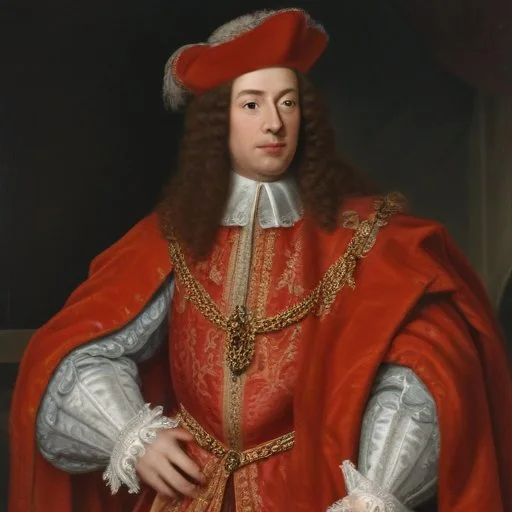
In the late 17th century, England was grappling with the delicate balance of power between the monarchy and Parliament. The Restoration of the monarchy in 1660 had seen Charles II, James's brother, return to the throne, followed by James's own accession in 1685. However, James's Catholic faith and perceived absolutist tendencies had created tensions with the predominantly Protestant Parliament and population.
James II, the last Roman Catholic British monarch, played a central role in the events leading up to his abdication. Other key figures included William III of Orange, who would eventually assume the throne alongside his wife Mary, and prominent Parliamentarians such as John Locke and Gilbert Burnet, who played crucial roles in shaping the Convention Parliament's decision.
The Convention Parliament's declaration had far-reaching consequences, including:
The abdication of James II and the subsequent Glorious Revolution had significant cultural and social implications, including:
Gilbert Burnet, a prominent Parliamentarian and historian, recorded that James II's flight to France was met with widespread jubilation, with Londoners celebrating in the streets and bonfires burning across the city.
The abdication of James II and the Glorious Revolution set a precedent for the role of Parliament in shaping British politics, influencing future events such as the American Revolution and the evolution of British democracy.
The Convention Parliament's declaration that James II's flight to France constituted an abdication marked a pivotal moment in British history, paving the way for a Protestant-dominated era and shaping the course of British politics for centuries to come. This event, sparked by the complex interplay of religious, political, and social factors, continues to resonate in British history and beyond.
William III of Orange, also known as the " Stadtholder" of the Dutch Republic, emerged as an unlikely hero in the Glorious Revolution. Born in 1650, William was a seasoned military leader and politician who had long been opposed to James II's Catholicism and absolutist tendencies.
William's role in the Glorious Revolution was pivotal, as he was invited by the Immortal Seven to invade England and assume the throne. His military expertise and Protestant faith made him an attractive alternative to James II, and he was able to rally support among the English people.
Despite his prominent role in the Revolution, William III was not without his own flaws. He was known to be stern and authoritarian, and his rule was marked by controversy and opposition. However, his commitment to Protestantism and the abolition of absolute monarchy made him a hero to many, and his legacy continues to be felt in British politics today.

The Glorious Revolution took place during a time of great geopolitical upheaval in Europe. The English monarchy was not the only institution facing challenges, as the French monarchy was also grappling with its own internal conflicts and external threats.
The rise of Louis XIV of France, who had been a longtime rival of William III, created tension between the two nations. James II's Catholicism and perceived absolutism had led to concerns that England would fall under French influence, which added to the sense of urgency among the English people.
The Glorious Revolution was, in part, a response to these geopolitical pressures. By establishing a Protestant monarchy and limiting the power of the king, the English people aimed to ensure their independence and sovereignty in the face of French and Catholic threats.
The Glorious Revolution was, at its heart, a political revolution that sought to redefine the relationship between the monarchy and Parliament. The event marked a significant shift in power from the former to the latter, as Parliament asserted its authority over the throne.
The Revolution was made possible by the emergence of a new political class, comprised of wealthy merchants, gentry, and nobles who were committed to the principles of Protestantism and parliamentary sovereignty.
The Glorious Revolution set a precedent for future political developments in Britain, establishing Parliament as a powerful force in British politics and paving the way for the evolution of British democracy.

The Glorious Revolution had a profound impact on English culture, as it marked a significant turning point in the nation's religious, artistic, and literary development.
The Revolution led to a resurgence in Protestant values and ideals, which had a lasting impact on English identity and culture. The event also paved the way for the emergence of a new literary and artistic movement, characterized by works such as John Locke's Two Treatises of Government.
The Glorious Revolution also had an impact on the English language, as it contributed to the development of a distinctively English vocabulary and style that reflected the nation's Protestant and parliamentary heritage.
Historians have long debated the significance and meaning of the Glorious Revolution, with some viewing it as a pivotal moment in the development of British democracy and others seeing it as a more nuanced and complex event.
Whig historians, such as Thomas Babington Macaulay, have traditionally viewed the Revolution as a heroic struggle for liberty and democracy, while revisionist historians have emphasized the more ambiguous and contingent nature of the event.
Recent historiographical developments have highlighted the importance of understanding the Glorious Revolution within its broader geopolitical and cultural context, acknowledging the complex interplay of factors that contributed to this pivotal moment in British history.