


The coronation of Queen Elizabeth II at Westminster Abbey on June 2, 1953, was a groundbreaking event that not only marked the formal investiture of the young monarch but also made history as the first British coronation and one of the first major international events to be televised, captivating a global audience of millions.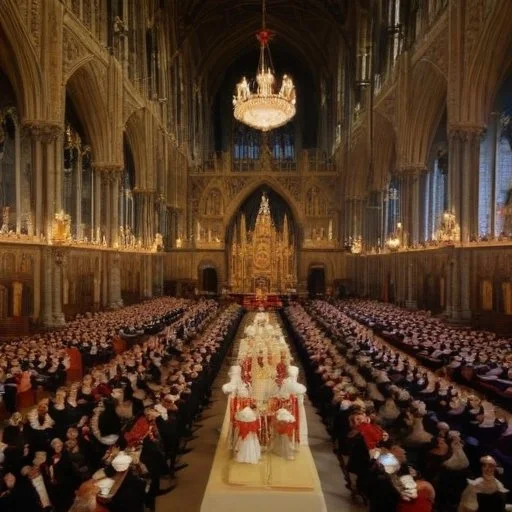
Following the death of her father, King George VI, in 1952, Princess Elizabeth ascended to the throne, becoming the Queen of the United Kingdom and the Commonwealth. In the months leading up to the coronation, the Queen's coronation committee worked tirelessly to plan the elaborate ceremony, with Buckingham Palace and the government investing extensively in television infrastructure to ensure a seamless broadcast.
The Queen's coronation committee faced opposition from traditionalists who feared that televising the ceremony would compromise its dignity and solemnity. However, the Queen herself was keen on sharing the event with her people, and the committee ultimately decided to proceed with the broadcast, paving the way for a new era of royal pageantry and accessibility.
On the day of the coronation, Westminster Abbey was transformed into a majestic setting, with dignitaries from around the world and members of the royal family in attendance. At 11:15 am, the Queen, dressed in her coronation gown and accompanied by Prince Philip, made her way to the Abbey's altar, where she was crowned by the Archbishop of York.
The coronation's televised broadcast had far-reaching consequences, transforming the way people engaged with the monarchy and shaping the course of television history.
The coronation reflected the mood and aspirations of post-war Britain, with the Queen's youth and vitality symbolizing a new era of hope and optimism.
"Throughout all my life and with all my heart I shall strive to be worthy of your trust," Queen Elizabeth II declared in her coronation oath, capturing the essence of her commitment to her people and her role as monarch.
The coronation of Queen Elizabeth II marked a significant departure from previous coronations, which were largely private affairs. The decision to televise the ceremony set a new precedent, paving the way for future royal events to be broadcast to a global audience.
In her coronation diary, the Queen recalled the moment when she was crowned, describing it as "a wonderful, wonderful moment, with the light flooding into the Abbey and the congregation rising to their feet."
The coronation's televised broadcast had a profound impact on the way future royal events were planned and executed, influencing the way the royal family interacted with the public and shaping the course of television history.
The coronation's production team received numerous awards and accolades, including a BAFTA TV Award for Best Outside Broadcast.
The coronation's broadcast provided a unique educational opportunity, allowing people around the world to learn about British history, culture, and traditions.
The Queen's commitment to duty and her dedication to her people served as an inspiration to millions, cementing her role as a symbol of national identity and unity.
In conclusion, the coronation of Queen Elizabeth II at Westminster Abbey was a groundbreaking event that not only marked a new era in television history but also served as a testament to the power of shared experience and national pride.
The coronation of Queen Elizabeth II had a profound impact on British culture, symbolizing a new era of hope and renewal in post-war Britain. The event's televised broadcast helped to bring people together, providing a shared experience and a sense of national pride.
The coronation also helped to promote British identity and culture around the world, showcasing the country's rich heritage and traditions to a global audience. The event's pomp and circumstance were seen as a testament to Britain's continued relevance in the modern world.
In the years following the coronation, British culture experienced a surge in popularity, with increased interest in British music, film, and literature. The event also helped to boost British tourism, with visitors from around the world flocking to London to experience the city's rich history and culture.

Princess Elizabeth, later Queen Elizabeth II, was a strong advocate for the coronation's televised broadcast. Her decision to share the event with her people reflected her commitment to modernizing the monarchy and making it more accessible to the public.
The Queen's coronation oath, in which she pledged to serve her people and devote herself to their welfare, demonstrated her dedication to her role as monarch. Her reign has been marked by a strong sense of duty and a deep commitment to the British people.
The coronation of Queen Elizabeth II marked a significant milestone in the development of television technology. The event's televised broadcast required the installation of hundreds of TV cameras and transmitters, paving the way for future live broadcasts of major events.
The coronation's broadcast also marked the first time that a major international event was transmitted via satellite, allowing people around the world to watch the event in real-time. This technological innovation paved the way for future global broadcasts of major events.

Historians have long debated the significance of the coronation of Queen Elizabeth II, with some viewing it as a symbol of British continuity and tradition, while others have seen it as a bold step towards modernity and progress.
Some historians have argued that the coronation marked a turning point in British history, signaling a shift away from the country's imperial past and towards a more modern, inclusive identity. Others have seen the event as a reaffirmation of British traditions and values.
The coronation of Queen Elizabeth II was documented in a range of artifacts, including photographs, film footage, and news articles. These artifacts provide a unique window into the event and its significance, offering insights into the people, places, and cultural context of the time.
The Queen's coronation gown, designed by Norman Hartnell, is one of the most iconic artifacts from the event. The gown's intricate design and symbolism reflect the pomp and circumstance of the coronation, as well as the Queen's role as a symbol of national identity and unity.