


On May 8, 1984, Corporal Denis Lortie, a Canadian Forces soldier, committed one of the most heinous acts of violence in Canadian history, storming into the Quebec National Assembly and opening fire, killing three people and wounding 13 others. However, amidst the chaos and devastation, a hero emerged: René Jalbert, the Sergeant-at-Arms of the Assembly, who calmly and bravely ended the carnage, earning him the prestigious Cross of Valour.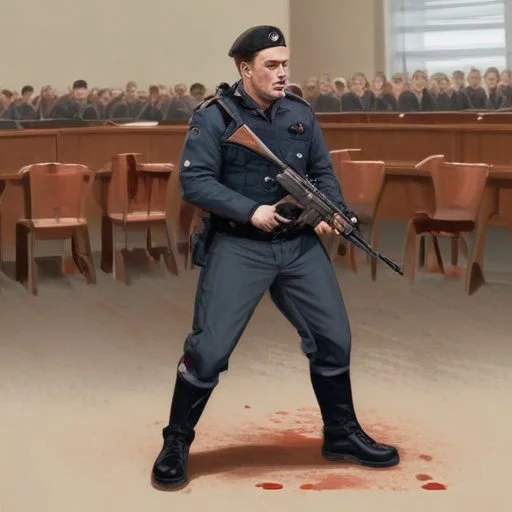
In the weeks leading up to the shooting, Corporal Lortie had become increasingly disillusioned with the Canadian government and the Quebec separatist movement. His anger and frustration grew to a boiling point, culminating in the devastating attack on the National Assembly.
At around 9:45 am, Corporal Lortie, armed with a submachine gun, entered the National Assembly building, making his way to the legislative chamber. Without warning, he opened fire, shooting indiscriminately at the people in the chamber. Panic and chaos erupted as people scrambled to escape.
In the midst of the chaos, René Jalbert, the Sergeant-at-Arms of the Assembly, sprang into action. With unwavering bravery, he approached Corporal Lortie, speaking calmly and reassuringly to him, slowly gaining his trust. Jalbert's heroic actions eventually led to Lortie surrendering, ending the carnage.
The shooting had a profound impact on Canada and Quebec, sparking widespread shock, outrage, and grief. The incident led to a major overhaul of security measures in government buildings across the country. René Jalbert's heroism was recognized with the awarding of the Cross of Valour, Canada's highest honor for bravery.
The Cross of Valour, established in 1972, is awarded to individuals who have demonstrated exceptional courage and bravery in the face of danger. René Jalbert's selfless act on that fateful day earned him this prestigious honor, solidifying his place in Canadian history as a hero.
The Quebec National Assembly shooting serves as a painful reminder of the devastating consequences of unchecked anger and frustration. It also highlights the importance of heroism, courage, and selflessness in the face of tragedy. The bravery and quick thinking of René Jalbert saved countless lives that day, inspiring generations to come.
The Quebec National Assembly shooting was a dark day in Canadian history, but it also showcased the best of humanity. René Jalbert's heroism will always be remembered as a shining example of courage and sacrifice, serving as a beacon of hope in the face of tragedy.
René Jalbert, the humble Sergeant-at-Arms, was born on February 21, 1929, in Quebec City. Little did the world know that this unassuming individual would one day etch his name in Canadian history as a hero. Before the fateful day of May 8, 1984, Jalbert had served in the Canadian Army during the Korean War and later worked as a police officer in Quebec City.
His quiet demeanor and kind nature belied a steely resolve, which would ultimately prove crucial in defusing the crisis. Jalbert's bravery that day was not just a one-off act; it was a testament to his character, honed through years of public service and a deep commitment to protecting others.
Early Life and CareerJalbert's early life was marked by a strong sense of duty and service. After completing his education, he enlisted in the Canadian Army, serving in the Korea War. Upon his return, he joined the Quebec City Police Force, where he spent over a decade serving and protecting the community.

The Quebec National Assembly shooting was not an isolated incident; it was part of a larger narrative of political tensions and social unrest in Quebec during the 1980s. The province was grappling with issues of identity, language, and separatism, which had been simmering for decades.
In the years leading up to the shooting, Quebec had witnessed a series of protests, rallies, and heated debates about its place within Canada. The Parti Québécois, a pro-independence party, had won a majority government in 1976, leading to a rise in nationalist sentiment.
The Quiet RevolutionThe 1960s and 1970s had seen a significant shift in Quebec's social and cultural landscape, dubbed the Quiet Revolution. This period saw a decline in the influence of the Catholic Church and a rise in secularism, accompanied by a growing sense of Quebec nationalism.
The shooting had a profound impact on Canadian culture, sparking a national conversation about gun violence, security, and the role of the government in protecting its citizens. The incident led to a significant shift in public opinion, with many calling for stricter gun control laws and increased funding for mental health services.
The Quebec National Assembly shooting also influenced Canadian art and literature, inspiring numerous works of fiction and non-fiction that explored themes of tragedy, heroism, and social unrest.
The Ripple EffectIn the aftermath of the shooting, Canadian artists, writers, and musicians began to reflect on the incident, using their work to process the trauma and emotions that followed. This creative outpouring helped to cement the shooting's place in Canadian cultural consciousness.

The Cross of Valour, awarded to René Jalbert, is one of the most prestigious honors in Canada, reserved for acts of exceptional bravery and selflessness. The medal itself is a striking example of craftsmanship, featuring a silver cross with a maple leaf at its center.
The documentation surrounding the shooting, including police reports, eyewitness accounts, and newspaper clippings, provides a rich archive of primary sources for historians and researchers.
Primary SourcesThe Quebec National Assembly's archives house a wealth of primary sources related to the shooting, including photographs, videos, and audio recordings. These artifacts offer a unique window into the events of that day, providing valuable insights for those seeking to understand the tragedy and its aftermath.
The Quebec National Assembly shooting occurred against the backdrop of a changing global landscape, marked by rising nationalism, social unrest, and Cold War tensions. The incident was closely watched by international leaders, who saw parallels between Quebec's struggle for autonomy and similar movements around the world.
The shooting also highlighted the need for increased security cooperation between governments, as concerns about terrorism and political violence grew in the wake of the incident.
The International ResponseIn the aftermath of the shooting, world leaders and diplomats reached out to Canada, offering condolences and support. The incident served as a stark reminder of the need for global cooperation in addressing the root causes of political violence and extremism.