


When the Soyuz TM-20 spacecraft touched down on the steppes of Kazakhstan on March 22, 1995, it marked the triumphant return of Cosmonaut Valeri Polyakov, who had etched his name in the annals of space exploration history by spending an unprecedented 438 days in space. This monumental feat not only broke the previous record but also paved the way for future long-duration space missions.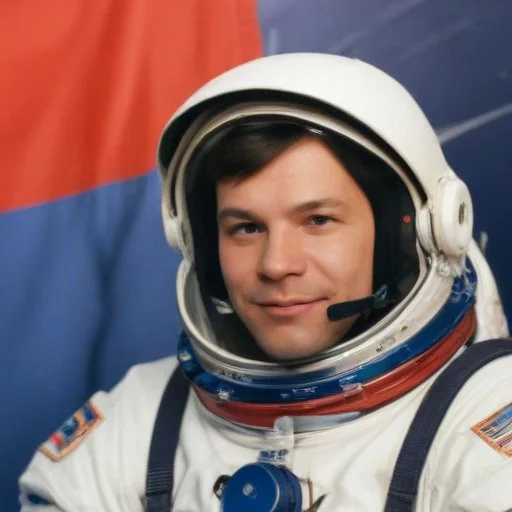
Valeri Polyakov, a Russian physician and cosmonaut, was born on April 27, 1942, in Tula, Russia. Growing up, Polyakov was fascinated by the mysteries of the universe and the human body. He pursued higher education in medicine, eventually specializing in cardiology. It was during this time that he became intrigued by the effects of space travel on the human body, a curiosity that would drive his career as a cosmonaut.
In the early 1990s, the Soviet space program was in the midst of a new era, with the Mir Space Station serving as a hub for scientific research and exploration. Polyakov's mission, codenamed "Mir-18," was designed to test the limits of human endurance in space and gather vital data on the effects of prolonged space travel.
On January 8, 1994, Polyakov launched into space aboard the Soyuz TM-18 spacecraft, accompanied by cosmonauts Viktor Afanasyev and Yury Usachov. Over the next 14 months, Polyakov conducted extensive scientific research, including experiments on the human cardiovascular system, sleep patterns, and the psychological effects of isolation. He also performed numerous spacewalks, totaling over 19 hours, to maintain the station's exterior and conduct repairs.
Polyakov's record-breaking mission not only demonstrated humanity's ability to adapt to the harsh conditions of space but also provided invaluable insights for future long-duration missions. His findings have contributed significantly to the development of countermeasures for space-related health issues, such as muscle atrophy and vision impairment.
After a grueling 438 days in space, Polyakov safely returned to Earth, greeted by a hero's welcome. His remarkable achievement was met with international acclaim, solidifying his place in the pantheon of space exploration legends.
Polyakov's trailblazing mission has inspired generations of scientists, engineers, and astronauts. His contributions to the field of space medicine have paved the way for longer, more complex missions, such as the International Space Station program. Today, as humanity looks to venture beyond the bounds of our planet, Polyakov's remarkable achievement serves as a beacon of hope and determination.
| Spaceflight Statistics: | Duration: 437 days, 17 hours, 58 minutes |
| Orbits: | Over 7,000 orbits of the Earth |
| Distance Traveled: | Approximately 187 million miles (301 million kilometers) |
As we gaze up at the endless horizon, we are reminded of the boundless potential of human exploration and the indomitable spirit of pioneers like Valeri Polyakov, who dared to push the limits of what is thought possible.
Valeri Polyakov was born into a family of modest means, where education was highly valued. His parents, Vladimir and Lyubov, encouraged his curiosity and thirst for knowledge from a young age. Polyakov's fascination with the universe began at the age of 10, when he gazed up at the starry night sky and wondered about the mysteries of space.
As a child, Polyakov devoured books on astronomy and physics, often spending hours in the local library. He was especially drawn to the works of Konstantin Tsiolkovsky, a Russian scientist and philosopher who is considered one of the founding fathers of modern astronautics.
Polyakov's early inspiration would eventually drive his career choices, leading him to pursue a degree in medicine and later, to become a cosmonaut.

The Mir Space Station, where Polyakov spent most of his record-breaking 438 days, was a marvel of Soviet engineering. The station was equipped with cutting-edge life support systems, solar panels, and communication equipment, allowing it to sustain human life for extended periods.
The Soyuz TM-18 spacecraft, which carried Polyakov to the Mir Station, was also a technological feat. The spacecraft's advanced navigation system and precision propulsion allowed it to dock seamlessly with the station, ensuring a safe and efficient transfer of personnel and cargo.
The success of Polyakov's mission relied heavily on the development of advanced technologies, including Russia's first digital computer, which processed vast amounts of data and enabled real-time communication with mission control.
Polyakov's groundbreaking achievement was not solely driven by scientific curiosity; it was also underpinned by a profound philosophical curiosity about humanity's place in the universe.
In an interview, Polyakov reflected on the existential implications of his mission, stating, "When you're in space, you realize how small and insignificant we are in the grand scheme of things. Yet, at the same time, you're reminded of humanity's incredible potential and capacity for discovery."
Polyakov's words underscore the profound philosophical implications of space exploration, highlighting the tension between human vulnerability and human ingenuity.
Polyakov's mission generated an enormous amount of scientific data, which has contributed significantly to our understanding of the human body in space. His research on cardiovascular health, sleep patterns, and psychological effects of isolation has informed the development of countermeasures for space-related health issues.
The data collected during Polyakov's mission has also shed light on the effects of microgravity on the human body, including muscle atrophy, vision impairment, and bone loss.
Today, researchers continue to build upon Polyakov's findings, advancing our understanding of the human body in space and paving the way for longer, more complex space missions.
The early 1990s, when Polyakov embarked on his record-breaking mission, was a time of significant geopolitical upheaval. The Soviet Union was in the midst of collapse, and the international community was grappling with the implications of a new world order.
In this context, Polyakov's mission took on symbolic significance, representing a rare moment of cooperation between Russia and the United States. The mission was a testament to the power of scientific collaboration in transcending national boundaries and ideological differences.
The success of Polyakov's mission marked a turning point in the history of space exploration, demonstrating that even in the most turbulent of times, humanity can come together to achieve greatness.