


The Crimean War, a conflict that ravaged the Crimean Peninsula from 1853 to 1856, is remembered for the unlikely alliance between France and Britain as they declared war on Russia, marking a pivotal moment in European history. This brutal conflict, which claimed thousands of lives, was sparked by Russia's refusal to withdraw its troops from the Danubian Principalities, threatening the balance of power in the region.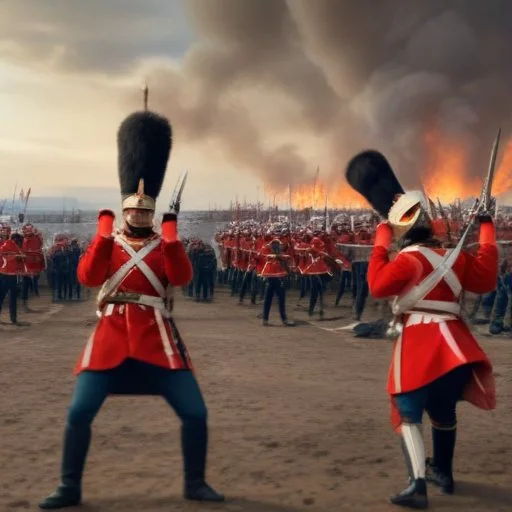
In the early 19th century, Europe was a tangled web of alliances and rivalries. The Concert of Europe, established at the Congress of Vienna in 1815, aimed to maintain a delicate balance of power among the great nations. However, by the 1850s, tensions were simmering beneath the surface. The Ottoman Empire, once a formidable power, was in decline, and Russia sought to capitalize on this weakness.
Russia's ambitions in the Danubian Principalities, located at the mouth of the Danube River, sparked concerns in Britain and France. The two nations, traditionally rivals, put aside their differences to form an unlikely alliance against the common threat of Russian expansionism.
The road to war was paved with a series of events that escalated tensions between Russia and the Ottoman Empire:
The Crimean War was shaped by a cast of influential figures, each playing a crucial role in the conflict:
The Crimean War marked a turning point in modern warfare, introducing new technologies and tactics that would shape future conflicts:
The war witnessed the first widespread use of:
The war also led to significant reforms in military tactics, medical care, and international relations, setting the stage for the modern era of warfare.
Florence Nightingale's pioneering work in the Crimean War led to a fundamental shift in the way soldiers were treated. Her emphasis on sanitation, hygiene, and compassionate care transformed the face of military medicine, earning her the nickname "The Lady with the Lamp."
Nightingale's work inspired a new generation of nurses, establishing nursing as a respected profession. Her legacy continues to inspire humanitarian work and medical innovation to this day.
The Crimean War was marked by controversy and public outcry, particularly in Britain. The war was fought far from home, and the public grew weary of the lengthy and bloody conflict.
Criticisms of the war effort, led by figures like Florence Nightingale, exposed the poor conditions and inadequate care given to wounded soldiers. The British government faced intense scrutiny, leading to significant reforms in military logistics and care.
The Crimean War had a profound impact on modern Europe, shaping the continent's power dynamics and paving the way for future conflicts:
The war:
The Crimean War serves as a poignant reminder of the devastating consequences of imperial ambition and the importance of diplomacy in preventing conflict. As the world continues to navigate complex global politics, the lessons of this brutal war remain as relevant today as they were over 150 years ago.
The Crimean War took place in a complex geopolitical context, with multiple empires vying for power and influence in Europe and beyond. The declining Ottoman Empire, once a dominant force, was being challenged by European powers seeking to expand their territories and spheres of influence. The Russian Empire, under Tsar Nicholas I, was eager to gain control of the strategic Crimean Peninsula and access to the Black Sea.
The war was also influenced by the rise of nationalism across Europe, as various ethnic and linguistic groups sought to assert their identities and independence. The conflict ultimately contributed to the redrawing of the European map, with the unification of Italy and Germany and the decline of the Ottoman and Russian Empires.

Florence Nightingale, the "Lady with the Lamp," is often credited with revolutionizing military medicine during the Crimean War. However, her humanitarian work was not limited to the war effort. Prior to the conflict, Nightingale had traveled to Germany to study hospital administration and sanitation, equipping her with the knowledge and skills to make a significant impact in the Crimean Peninsula.
Nightingale's work at the British military hospital in Scutari, Turkey, is legendary. She improved sanitation, hygiene, and patient care, significantly reducing mortality rates among wounded soldiers. Her selflessness and compassion earned her the nickname "The Lady with the Lamp," as she made rounds at night, checking on patients with a lantern in hand.
The Crimean War had significant environmental consequences, including deforestation and soil erosion. The construction of roads, railways, and fortifications led to widespread environmental degradation, as natural habitats were destroyed to accommodate military infrastructure.
The war also resulted in the destruction of agricultural land, as fertile areas were converted into military camps and battlegrounds. The environmental impact of the war was compounded by the use of heavy artillery, which led to soil pollution and contamination.
The Crimean War marked a significant turning point in the development of military technology. The introduction of the telegraph enabled rapid communication between commanders and governments, revolutionizing military logistics and strategy.
The war also saw the widespread use of railways for military transportation, allowing for the rapid deployment of troops and supplies. The development of rifled artillery and the introduction of steam-powered warships further accelerated the modernization of warfare.
The Crimean War was a pivotal moment in the development of modern diplomacy and international relations. The war marked a shift towards greater diplomatic cooperation, as European powers sought to mitigate the risks of conflict and maintain a delicate balance of power.
The war led to the establishment of the Congress System, which aimed to promote collective security and prevent future conflicts through diplomacy and negotiation. The Congress System's emphasis on coalition building and collective decision-making set a precedent for modern international relations.