


The city of Zagreb, the capital of Croatia, was left reeling after the Army of the Republic of Serb Krajina launched a brutal and unprovoked attack, firing cluster bombs that killed seven innocent civilians and wounded over 175 others. This senseless act of violence, which occurred during the Croatian War of Independence, would go on to become one of the most tragic and devastating events in the country's history.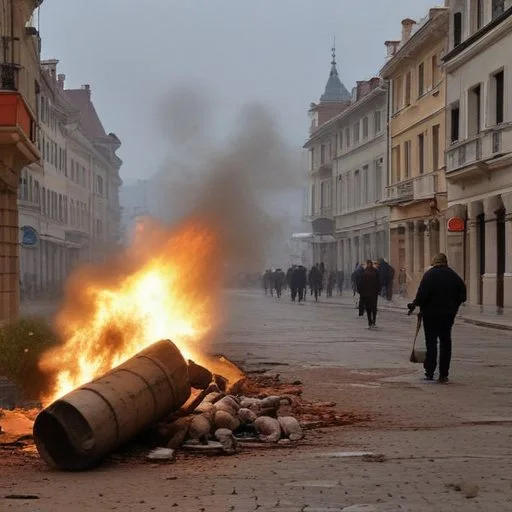
The Croatian War of Independence, which lasted from 1991 to 1995, was a brutal conflict that pitted the Croatian government against the Serb forces, who were seeking to create an independent state within Croatia. The war was marked by numerous atrocities and human rights violations, but the cluster bomb attack on Zagreb would be one of the most egregious examples of the conflict's devastating impact on civilians.
On a fateful day, the Army of the Republic of Serb Krajina, led by Milan Martić, launched a surprise attack on Zagreb, firing cluster bombs that rained down on the city's streets. The bomblets, which were designed to cause maximum damage, exploded in mid-air, sending shrapnel flying in all directions. The attack caught civilians off guard, and many were killed or injured as they went about their daily lives.
The attack sent shockwaves throughout Croatia and the international community, sparking widespread outrage and condemnation. The Croatian government, led by President Franjo Tuđman, vowed to take swift action to bring those responsible to justice, while international leaders called for an end to the senseless violence.
The cluster bomb attack on Zagreb had a profound impact on the city and the people of Croatia. The attack left deep psychological scars, and many survivors still bear the physical wounds of that fateful day. However, the attack also brought the Croatian people together, galvanizing a sense of national unity and resolve to rebuild and move forward.
In the years that followed, Croatia would go on to rebuild and flourish, becoming a thriving democracy and a member of the European Union. However, the memory of that tragic day would never be forgotten, serving as a poignant reminder of the devastating consequences of war and the importance of promoting peace and understanding.
The victims of the cluster bomb attack on Zagreb will never be forgotten. Their memory lives on in the hearts of the Croatian people, and their sacrifice will always be remembered as a testament to the enduring human spirit.
"We will never forget the innocent lives lost that day, but we will also never forget the strength and resilience of our people in the face of adversity." - Franjo Tuđman, President of Croatia
The Croatian War of Independence was a culmination of centuries-long tensions between Croats and Serbs in the region. The roots of the conflict can be traced back to the 19th century, when Croatia was part of the Austro-Hungarian Empire and later became part of Yugoslavia after World War I.
With the death of Yugoslavian leader Josip Broz Tito in 1980, nationalist sentiments began to rise in Croatia, leading to demands for greater autonomy and eventually independence. The Serbian nationalist movement, led by Slobodan Milošević, responded with force, sparking a brutal conflict that would last for four years.
Martić's passion for Serbian nationalism was matched only by his ruthlessness, earning him the nickname "The Butcher of the Krajina." His army was responsible for some of the worst atrocities committed during the war, including the cluster bomb attack on Zagreb.
The cluster bomb attack on Zagreb was not only a devastating loss of life, but also a cultural tragedy. Many of the city's historic buildings and cultural institutions were damaged or destroyed in the attack, leaving a lasting impact on the city's cultural identity.
The international community was quick to condemn the cluster bomb attack on Zagreb, with leaders from around the world denouncing the act as a "war crime" and a "grave violation of human rights."
Despite the widespread outrage, the international response to the attack was slow to materialize. It would take several months for the United Nations to impose economic sanctions on Serbia, and even longer for the international community to take concrete action to end the conflict.
The cluster bomb attack on Zagreb had a devastating impact on the city's economy. The attack caused widespread destruction of infrastructure, including buildings, roads, and utilities, which would require millions of dollars to repair.
The attack also had a significant impact on the country's tourism industry, which was a major contributor to Croatia's economy. The attack led to a sharp decline in tourist arrivals, causing a ripple effect throughout the economy.