


In a momentous occasion, Crown Prince Harald of Norway assumed the throne, becoming King Harald V, following the demise of his father, King Olav V. This transition marked a significant shift in Norway's monarchical dynamics, as the 54-year-old King pledged to modernize the monarchy while honoring the country's rich heritage.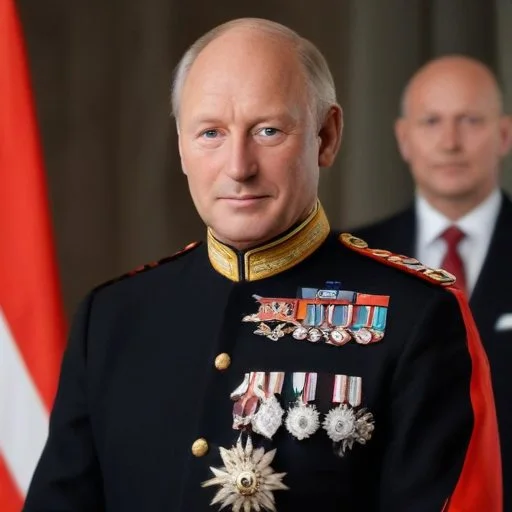
King Olav V, the second son of King Haakon VII and Maud of Wales, reigned from 1957 to 1991. During his tenure, Norway experienced significant economic growth, and the King played a vital role in maintaining the country's neutrality during the Cold War. Crown Prince Harald was born on February 21, 1937, and was next in line to the throne. As the King's health began to decline, the Crown Prince prepared to assume the responsibilities of the monarch.
The ascension of King Harald V marked a significant shift in Norway's monarchical dynamics. He pledged to modernize the monarchy, making it more accessible to the people, while maintaining the country's rich heritage. His reign has seen significant economic growth, with Norway becoming one of the wealthiest countries in the world.
King Harald V has been instrumental in preserving Norway's cultural heritage, supporting institutions such as the Norwegian Folk Museum and the National Gallery. He has also been a strong advocate for the preservation of Norway's cultural traditions, including the country's language and folk music.
"I will continue to work for the unity and stability of our country, and to promote the welfare of all its citizens." - King Harald V, during his coronation ceremony.
King Harald V's upbringing was marked by a strong sense of duty and responsibility. As the Crown Prince, he was exposed to the intricacies of state affairs from a young age, and was groomed to take on the responsibilities of the monarch.
King Harald V's reign has set a precedent for modernization and accessibility in the Norwegian monarchy. His legacy will continue to shape the country's monarchical dynamics, ensuring that the institution remains relevant and connected to the people.
King Harald V's ascension to the throne marked a significant turning point in Norway's monarchical history. As he continues to reign, his legacy will be shaped by his commitment to modernization, cultural preservation, and the welfare of his people.
Historians have long debated the significance of King Harald V's ascension to the throne in 1991. Some argue that it marked a significant turning point in Norway's monarchical history, while others view it as a natural continuation of the country's royal lineage. However, most agree that King Harald V's commitment to modernization and cultural preservation has had a lasting impact on Norway's monarchical dynamics.
One notable historiographical perspective is that of Norwegian historian, Tor Bomann-Larsen, who argues that King Harald V's reign represents a "third way" between tradition and modernity. This perspective suggests that the King's efforts to balance preservation and innovation have enabled the monarchy to remain relevant in a rapidly changing world.

Crown Princess Märtha Louise, King Harald V's daughter, has played an important role in supporting her father's efforts to modernize the monarchy. Born in 1971, she has been involved in various charitable and cultural activities, earning her a reputation as a compassionate and engaged member of the royal family.
As a character study, Crown Princess Märtha Louise's life and career offer valuable insights into the challenges and opportunities faced by women in modern monarchies. Her experiences also highlight the importance of balancing royal duties with personal interests and passions.
King Harald V's reign has coincided with a period of significant economic growth in Norway. The country's GDP has more than doubled since he assumed the throne, driven largely by its vast oil reserves and strategic investments in the energy sector.
One notable economic impact of the King's reign has been the growth of Norway's sovereign wealth fund, which has become one of the largest in the world. This fund has enabled the government to invest in key sectors, such as healthcare and education, and has helped to ensure the country's long-term financial stability.

King Harald V has been a strong advocate for the preservation of Norway's cultural heritage, including its language, music, and art. He has supported numerous cultural institutions, such as the National Gallery and the Norwegian Folk Museum, and has worked to promote Norwegian culture abroad.
One notable cultural impact of the King's reign has been the revitalization of Norway's folk music tradition. The King's support for folk musicians and cultural festivals has helped to ensure the continued popularity of this unique and important aspect of Norwegian cultural heritage.
King Harald V's reign has been marked by a commitment to political stability and cooperation. He has worked closely with Norway's government to promote national unity and has played an important role in fostering relations with other European countries.
One notable political impact of the King's reign has been his efforts to promote Nordic cooperation and integration. The King has worked with other Nordic monarchies to strengthen regional ties and has played an important role in promoting Norway's interests within the European Union.