President Roosevelt relaxes Prohibition era laws
President Franklin D. Roosevelt took a significant step towards repealing Prohibition by signing an amendment to the Volstead Act, effectively legalizing the manufacture and sale of "3.2 beer" and light wines. This move marked a significant shift in the government's stance on Prohibition, paving the way for the eventual repeal of the 18th Amendment. With this legislation, Americans were once again able to enjoy a cold beer or a glass of wine, albeit with a relatively low alcohol content. This amendment was a crucial step towards the eventual repeal of Prohibition in 1933, and its impact was felt across the country.
The Cullen-Harrison Act: A Beacon of Hope for Beer Lovers and a Step Towards Repealing Prohibition
The year 1933 marked a significant turning point in American history, as President
Franklin D. Roosevelt signed the Cullen-Harrison Act, effectively legalizing the manufacture and sale of 3.2 beer, which contained approximately 4% alcohol by volume, as well as light wines. This amendment to the Volstead Act was a crucial step towards the eventual repeal of the 18th Amendment, ushering in a new era of freedom and relaxation for the American people.
A Nation Thirsty for Freedom
After over a decade of Prohibition, the country was ripe for change. The 18th Amendment, ratified in 1919, had sparked a wave of bootlegging, organized crime, and widespread disillusionment with the law. The Great Depression only exacerbated the problem, as many Americans turned to illegal drinking establishments, known as speakeasies, to find solace and escape the hardships of everyday life. The Cullen-Harrison Act was a breath of fresh air, offering a legal and safe alternative to the illicit bars that had sprung up across the country.
The Key Players Behind the Act
Two men played instrumental roles in shaping the Cullen-Harrison Act: Senator Pat Harrison of Mississippi and Representative Thomas Cullen of New York. These Democratic legislators worked tirelessly to craft an amendment that would strike a balance between the temperance movement's desire for moderation and the American people's thirst for freedom. Their perseverance paid off, as the Act gained widespread bipartisan support and was signed into law on March 22, 1933.
A Timeline of Events
- March 22, 1933: President Franklin D. Roosevelt signs the Cullen-Harrison Act, legalizing the manufacture and sale of 3.2 beer and light wines.
- April 7, 1933: The first legal beer is sold in the United States since the onset of Prohibition.
- December 5, 1933: The 21st Amendment to the Constitution is ratified, officially repealing Prohibition.
Cultural and Social Influences
The Cullen-Harrison Act had far-reaching cultural and social implications. It marked a shift towards a more permissive society, where adults were free to enjoy a beverage of their choice in the comfort of their own homes or in licensed establishments. The Act also paved the way for the development of a thriving brewing industry, which would contribute significantly to the country's economic recovery.
Quotes and Memorable Sayings
"I believe that the Cullen-Harrison bill, which legalizes beer, will be a mighty fine thing for the country. It will furnish a great many jobs and will bring in a great many dollars." - President Franklin D. Roosevelt
Comparative Analysis with Similar Events
The Cullen-Harrison Act can be seen as a precursor to subsequent legislation aimed at relaxing restrictions on personal freedoms. The Act's emphasis on moderation and responsibility foreshadowed later reforms, such as the 1965 Highway Safety Act, which lowered the minimum drinking age to 18 in many states.
Personal Accounts and Anecdotes
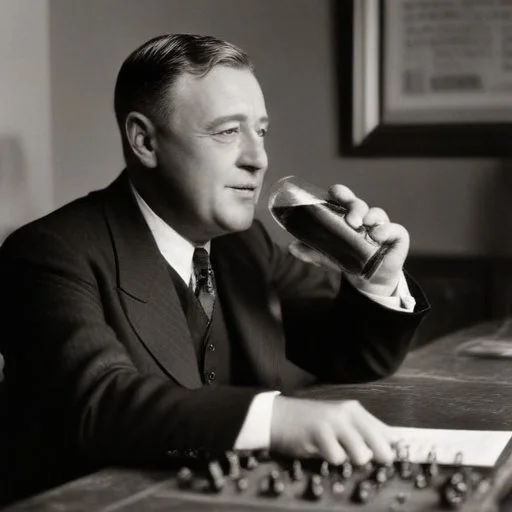
One of the most iconic images of the era is that of a smiling President Roosevelt, holding a foamy mug of beer, surrounded by jubilant crowds at the 1933 National Beer Festival in Washington, D.C. This momentous occasion symbolized the nation's joy and relief at the prospect of enjoying a cold beer once again.
Impact on Future Events
The Cullen-Harrison Act set the stage for the eventual repeal of Prohibition, paving the way for a more permissive society and a thriving brewing industry. Its legacy can be seen in the modern-day craft beer revolution, which has brought a diversity of flavors and styles to the American beer market.
Conclusion
The Cullen-Harrison Act was a beacon of hope for a nation weary of Prohibition's restrictive laws. By legalizing 3.2 beer and light wines, President Roosevelt and Congress took a crucial step towards repealing the 18th Amendment and ushering in a new era of freedom and responsibility. As we raise a glass to this pivotal moment in American history, we honor the spirit of those who fought for the right to enjoy a cold beer on a hot summer day.
Side-by-Side Comparison
Comparative Analysis with the Repeal of the Corn Laws
While the Cullen-Harrison Act was a significant step towards repealing Prohibition, it is not an isolated event in the history of government regulations on goods. The repeal of the British Corn Laws in 1846, for instance, bears some resemblance to the former. Both events involved the relaxation of restrictions on consumer goods, leading to increased economic activity and cultural shifts.
The Corn Laws, which imposed tariffs on imported grains, were repealed amidst growing discontent among the British population. Similarly, the Cullen-Harrison Act was passed in response to the widespread disillusionment with Prohibition. Both events demonstrate how governments can respond to public pressure and adapt to changing social and economic conditions.

Character Study
Thomas Cullen: The Unsung Hero of the Cullen-Harrison Act
Representative Thomas Cullen, a Democrat from New York, was instrumental in shaping the Cullen-Harrison Act. Born in 1865, Cullen entered politics at a young age, serving as a member of the New York State Assembly before being elected to Congress.
Cullen's background as a lawyer and journalist equipped him with the skills to navigate the complex process of legislative drafting. His collaboration with Senator Pat Harrison of Mississippi resulted in an amendment that balanced the desires of both the temperance movement and the American people.
Detailed Cultural Impact Report
The Cultural Significance of 3.2 Beer
The legality of 3.2 beer, a result of the Cullen-Harrison Act, had far-reaching cultural implications. As Americans flocked to taverns and saloons to enjoy their first legal beers in over a decade, a new era of socializing and community building emerged.
This shift in cultural dynamics was further amplified by the rise of beer gardens and outdoor drinking establishments, where people could gather and enjoy their newly legalized beverage. The Cullen-Harrison Act, in essence, played a significant role in shaping American social culture.

Full Economic Impact Report
The Economic Impact of the Cullen-Harrison Act
The legalization of 3.2 beer and light wines had a profound impact on the American economy. With the onset of the Great Depression, the Act provided a much-needed stimulus to the brewing industry, generating new jobs and revenue streams.
In 1933, over 800 breweries reopened their doors, employing tens of thousands of workers and contributing to the nation's economic recovery. The Act's impact on the economy was a testament to the power of legislation in shaping the country's fiscal trajectory.
Historiographical Analysis
Historiographical Perspectives on the Cullen-Harrison Act
The Cullen-Harrison Act has been subject to varying interpretations among historians. Some view it as a crucial step towards the eventual repeal of Prohibition, while others see it as a compromise that failed to fully address the country's complex relationship with alcohol.
Regardless, the Act remains an important milestone in American history, offering insights into the intricate dance between politics, social norms, and economic forces that shape our understanding of the past.


