


Cyclone Idai is known for its catastrophic landfall near Beira, Mozambique, unleashing torrential rains and furious winds that left a trail of destruction, resulting in over 1,000 deaths and displacing hundreds of thousands of people.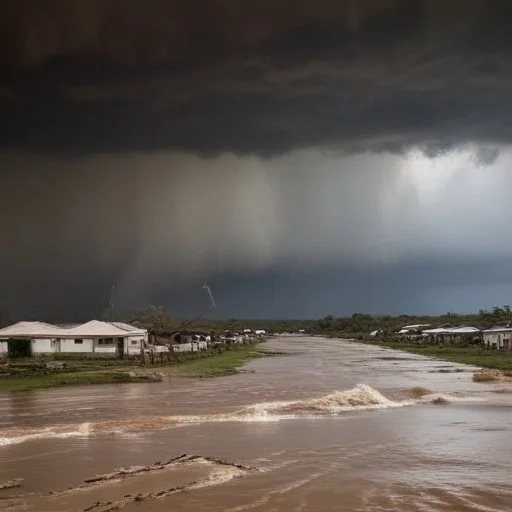
This powerful cyclone made landfall on March 15, 2019, bringing with it a storm surge that submerged entire villages and cities, transforming the usually vibrant port city of Beira into a massive lake.
The storm's fury was felt most intensely in Beira, where buildings were submerged under a sea of brown waters, and the city's infrastructure was severely damaged. The cyclone's powerful winds and rains caused widespread devastation, with entire neighborhoods reduced to rubble.

The impact of Cyclone Idai was not limited to Mozambique. Neighboring countries, including Zimbabwe and Malawi, also felt the storm's wrath, with widespread flooding and damage reported across the region.
The international community responded quickly to the disaster, with aid pouring in from around the world. Organizations such as the Red Cross, UNICEF, and Doctors Without Borders worked tirelessly to provide assistance to those affected.

Cyclone Idai's devastating impact will be felt for years to come. The storm has highlighted the need for improved disaster preparedness and infrastructure in Mozambique, and has sparked a renewed focus on climate change and its effects on vulnerable communities.
In the aftermath of the storm, the global community has come together to support the people of Mozambique, Zimbabwe, and Malawi, and to rebuild and restore the affected regions.
As the world moves forward from this devastating event, we remember the lives lost and the families affected by Cyclone Idai. May their memory serve as a reminder of the power of nature and the importance of global solidarity in the face of disaster.

The devastating impact of Cyclone Idai on Mozambique's economy was immediate and far-reaching. The storm damaged or destroyed over 80% of the country's crops, leading to a significant decline in agricultural production.
The cyclone also severely disrupted the country's transportation infrastructure, with many roads and bridges destroyed or damaged, causing a spike in transportation costs and disrupting supply chains.
According to the World Bank, the total damage and losses caused by Cyclone Idai were estimated to be around $2 billion, with the agricultural sector being the hardest hit.
Rebuilding efforts are ongoing, with a focus on improving disaster resilience and supporting small-scale farmers.
Cyclone Idai's impact on Mozambique's cultural heritage was immense. Many cultural artifacts and historical sites were damaged or destroyed, including the iconic Macuti Lighthouse in Beira.
However, in the aftermath of the storm, the people of Mozambique showed remarkable cultural resilience. Communities came together to rebuild and restore their cultural heritage, with many local artisans and artists creating works that reflected the storm's impact.
The cyclone also sparked a renewed sense of national pride and identity, as Mozambicans from all walks of life came together to support each other and rebuild their communities.Cyclone Idai was not an isolated event, but rather part of a larger pattern of natural disasters that have shaped Mozambique's history.
The country has a long history of cyclones and flooding, with some of the most devastating storms occurring in the 1950s and 1960s.
Historians argue that Cyclone Idai was a wake-up call for the government and international community to take more proactive measures to address the root causes of vulnerability and disaster risk in Mozambique.
By examining the historical context of Cyclone Idai, we can gain a deeper understanding of the complex factors that contribute to disaster risk and vulnerability in Mozambique.
Cyclone Idai's environmental impact was catastrophic, with widespread flooding and damage to ecosystems across the region.
The storm caused significant soil erosion, landslides, and flooding, which led to the loss of biodiversity and habitat destruction.
The cyclone also highlighted the need for more sustainable and environmentally-friendly practices in Mozambique, including improved waste management and reduced deforestation. Rising temperatures and changing weather patterns are expected to increase the frequency and severity of natural disasters in Mozambique, making environmental resilience a critical priority.
Cyclone Idai had significant political implications for Mozambique, with the government facing criticism for its response to the disaster.
President Filipe Nyusi's government was accused of being slow to respond to the crisis, leading to widespread anger and frustration among affected communities.
The cyclone also highlighted the need for greater transparency and accountability in disaster response and management in Mozambique. The government has since taken steps to improve its disaster response, including establishing a new National Disaster Management Agency.