


Vclav Havel, a celebrated Czech writer, philosopher, and dissident, made history on December 29, 1989, when he was elected as the first post-communist President of Czechoslovakia. This pivotal moment marked the end of decades-long communist rule and the beginning of a new chapter in the country's fight for democracy and freedom.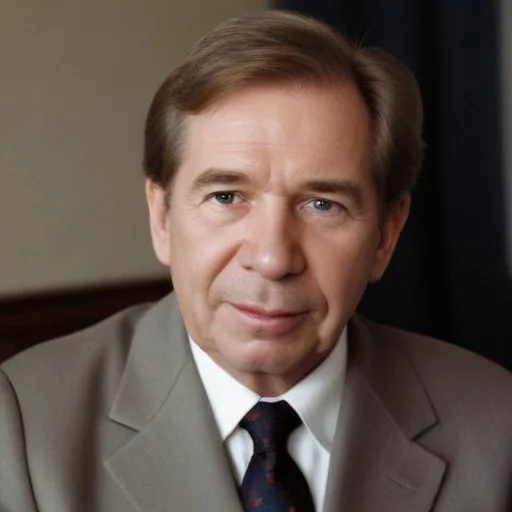
Vclav Havel was not a career politician, but rather a passionate writer and thinker who had spent years advocating for human rights and democracy. His involvement in the dissident movement had earned him several prison sentences, including a four-year term from 1979 to 1983. Despite these challenges, Havel remained a beacon of hope for the Czech people, inspiring a generation to demand change.
Alexander Dubcek, a Slovak politician, played a crucial role in the Velvet Revolution, as did other key figures like Jiri Dienstbier, a journalist and dissident. The collective efforts of these individuals, along with Havel's leadership, paved the way for a peaceful transition to democracy.
Havel's presidency had far-reaching consequences, including:
Havel's presidency was marked by a renewed emphasis on artistic and cultural expression, as well as a deepening of social connections between the Czech and Slovak people. His commitment to human rights and democracy inspired a new generation of Czechs and Slovaks, shaping the country's cultural and social landscape.
Vclav Havel's words continue to inspire and motivate, including:
"The Power of the Powerless" is not just a phrase, but a reality that can change the course of history.
Havel's courage and leadership were recognized internationally, earning him numerous awards, including the Prix des Dissidents (1985), the Presidential Medal of Freedom (1993), and the Gandhi Peace Prize (2003).
Vclav Havel's election as the first post-communist President of Czechoslovakia was a testament to the power of the human spirit and the unwavering pursuit of democracy and freedom. His legacy continues to inspire generations, serving as a beacon of hope for those fighting against oppression and tyranny worldwide.
Alexander Dubcek, a Slovak politician, played a crucial role in the Velvet Revolution, serving as the General Secretary of the Communist Party of Czechoslovakia from 1968 to 1969. His reforms, known as the Prague Spring, aimed to democratize the communist regime, but were eventually crushed by Soviet forces. Despite this setback, Dubcek remained a key figure in the dissident movement, working closely with Vclav Havel to bring about democratic change.
Dubcek's involvement in the Velvet Revolution was instrumental in its success, as he helped to galvanize support among the Slovak population. His influence extended beyond Czechoslovakia, inspiring democratic movements across Eastern Europe.

In the late 1980s, Czechoslovakia was ripe for revolution. The communist regime, in power since 1948, was facing increasing opposition from the population, who were growing tired of the lack of freedoms and economic stagnation. The appointment of Mikhail Gorbachev as Soviet leader in 1985 marked a significant shift in the region's political climate, as his policies of glasnost and perestroika encouraged democratization and reform.
The Velvet Revolution, sparked by student protests in November 1989, capitalized on this shift, with Vclav Havel and other dissidents seizing the opportunity to demand change. The regime's inability to respond effectively to the protests created a power vacuum, allowing Havel and his supporters to negotiate a peaceful transition to democracy.
The Velvet Revolution had a profound impact on Czechoslovakia's cultural landscape. With the end of censorship and repression, artists, writers, and musicians were finally able to express themselves freely. The era saw a flourishing of creativity, as individuals explored new themes and styles, reflecting the country's newfound democratic values.
The revolution also sparked a renewed interest in Czech and Slovak heritage, as people sought to reconnect with their cultural roots. This led to a revival of traditional folk music, art, and literature, which were celebrated and shared with the international community.

The Velvet Revolution was a truly grassroots movement, driven by ordinary citizens from all walks of life. Students, workers, intellectuals, and artists came together to demand change, united by their desire for democracy and freedom.
The revolution's success was largely due to its ability to mobilize and engage the broader population, creating a sense of collective purpose and solidarity. This was achieved through a range of tactics, including mass protests, strikes, and civil disobedience, which ultimately forced the regime to negotiate a peaceful transition.
The Velvet Revolution had significant economic implications for Czechoslovakia. The end of communist rule led to the introduction of market-oriented reforms, which aimed to stimulate growth and attract foreign investment.
The revolution also led to the privatization of state-owned enterprises, the decentralization of economic decision-making, and the establishment of a new legal framework for business. These changes helped to create a more dynamic and competitive economy, paving the way for the country's integration into the European Union and NATO.