


The United States Constitutional Convention, a pivotal event in American history, commenced on May 25, 1787, after an 11-day delay, marking a crucial turning point in the country's development. This convention, held in Philadelphia, is renowned for drafting the United States Constitution, a cornerstone document that has governed the nation for over two centuries.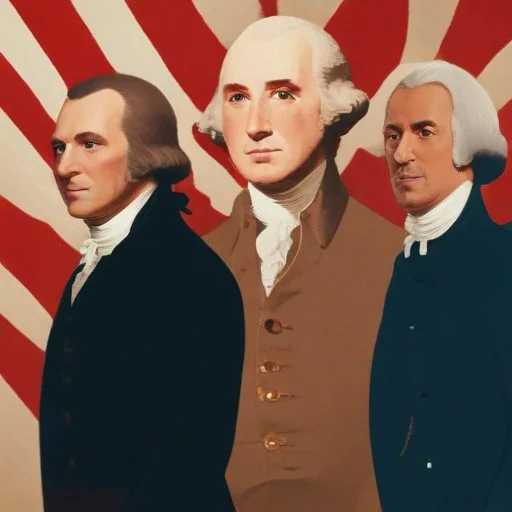
In the aftermath of the American Revolutionary War, the newly independent nation struggled to establish a functional government. The Articles of Confederation, adopted in 1781, proved inadequate, and the need for a stronger central authority became increasingly apparent. In response, the Continental Congress called for a constitutional convention to revise the Articles, but the gathering ultimately drafted a new framework for government.
A distinguished group of visionaries, including James Madison, Alexander Hamilton, and George Washington, played instrumental roles in shaping the Constitution. Madison, often referred to as the "Father of the Constitution," was instrumental in drafting the document, while Hamilton's nationalist views significantly influenced the Convention's debates. Washington, as the presiding officer, brought gravity and credibility to the proceedings.
The Constitutional Convention's most significant achievement was the creation of the United States Constitution, a document that has endured for over two centuries. The Constitution established a federal system of government, divided power among three branches, and enshrined individual rights and freedoms. Its ratification in 1788 paved the way for the United States to become a global superpower.
The Constitutional Convention's legacy extends beyond the realm of politics, shaping American culture and society. The document's emphasis on individual rights, equality, and democracy has inspired generations of Americans, influencing art, literature, and music. The Convention's ideals have also resonated globally, informing the development of democratic governments around the world.
The Constitutional Convention was not without controversy. Debates over slavery, states' rights, and individual liberties sparked heated exchanges among delegates. The resulting document, while groundbreaking, was not universally accepted, with some critics labeling it elitist and undemocratic. Nevertheless, the Constitution's durability and adaptability have earned it widespread acclaim.
"We must all hang together, or assuredly we shall all hang separately." – Benjamin Franklin, during the Constitutional Convention
| Date | Event |
|---|---|
| May 25, 1787 | Constitutional Convention convenes |
| June 18, 1787 | Alexander Hamilton delivers six-hour speech |
| July 16, 1787 | Great Compromise reached |
| September 17, 1787 | Constitutional Convention concludes |
The United States Constitutional Convention's legacy continues to shape American politics, society, and culture. Its influence can be seen in the ongoing debates over individual rights, government power, and democratic governance. As the nation continues to evolve, the Constitution remains a guiding force, a testament to the vision and perseverance of its Founding Fathers.
The Constitutional Convention's impact on education has been profound, with the Constitution serving as a foundational document for civic education and American history. The Convention's debates and deliberations have inspired countless scholars, historians, and political scientists, shaping our understanding of democratic governance and the role of government in society.
The Constitutional Convention's story serves as a powerful reminder of the importance of collaboration, compromise, and vision in shaping a nation's destiny. The Convention's brave and determined leaders, despite their differences, worked tirelessly to create a document that would endure for generations. Their legacy continues to inspire Americans today, motivating them to strive for a more perfect union.
The United States Constitutional Convention was a culmination of several months of intense debate and negotiation among the states. In the months leading up to the Convention, various state legislatures and civic groups had been discussing the need for a stronger central government. The Virginia Plan, proposed by Edmund Randolph, was one of the earliest and most influential plans to be presented to the Convention. It called for a strong central government with three branches and a system of representation based on population.
The New Jersey Plan, on the other hand, proposed a more decentralized system with equal representation for each state. The clashes between these two plans, and the various compromises that were reached, set the tone for the rest of the Convention.

Benjamin Franklin, one of the most respected and influential Founding Fathers, played a crucial role in the Constitutional Convention. At 81 years old, Franklin was the oldest delegate at the Convention, but his wisdom, experience, and wit made him a valuable asset to the proceedings. Franklin's extensive knowledge of history, politics, and human nature helped to shape the Constitution and its institutions.
Franklin's ability to find common ground among the delegates was instrumental in securing key compromises, such as the Great Compromise. His famous quote, "We must all hang together, or assuredly we shall all hang separately," served as a rallying cry for the delegates to work together towards a common goal.
The United States Constitutional Convention had a profound impact on American culture and society. The Constitution's emphasis on individual rights, equality, and democracy has inspired generations of Americans, influencing art, literature, and music. The Convention's ideals have also resonated globally, informing the development of democratic governments around the world.
The Constitution has been a source of inspiration for countless writers, artists, and musicians. From the patriotic poetry of Phillis Wheatley to the American Renaissance of the mid-19th century, the Constitution's ideals have shaped American art and literature.

The Constitutional Convention's most significant political achievement was the creation of a federal system of government, with a division of power between the legislative, executive, and judicial branches. This system of checks and balances was designed to prevent any one branch from becoming too powerful, and to ensure that power was distributed evenly throughout the government.
The Constitution's system of federalism, where power is divided between the federal government and the states, was a novel approach to governance. It established a framework for cooperation and competition between the federal government and the states, and has provided a foundation for the growth and development of the United States.
The Committee of Style, composed of William Samuel Johnson, Alexander Hamilton, Gouverneur Morris, James Madison, and Rufus King, was tasked with drafting the final version of the Constitution. The Committee's mission was to take the various proposals and agreements reached during the Convention and shape them into a cohesive, readable document.
The original draft of the Constitution, written on four pages of parchment, is a testament to the Committee's skill and craftsmanship. The document's elegant prose, logical structure, and careful attention to detail have made it an enduring symbol of American democracy.