


Venezuela's political landscape has long been marred by tension and violence, but few incidents have sparked as much outrage as the attack on Juan Guaidó and his supporters in Barquisimeto. On that fateful day, progovernment colectivos took matters into their own hands, opening fire on the disputed President and Speaker of the National Assembly, leaving five innocent bystanders injured.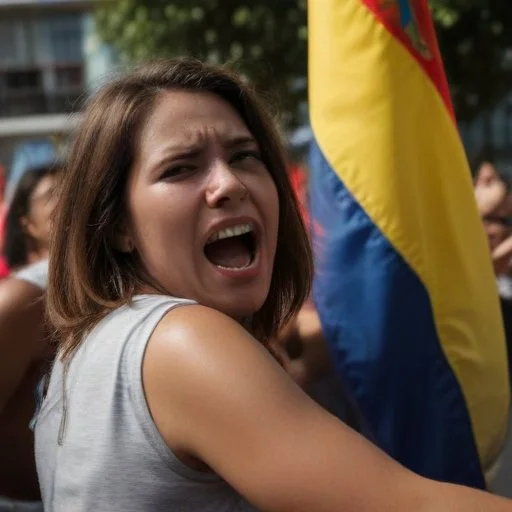
The attack was the culmination of a long-simmering power struggle between Guaidó and President Nicolás Maduro. Guaidó, as the head of the National Assembly, had declared himself interim president in January 2019, citing Maduro's illegitimate claim to power. The move was recognized by over 50 countries, including the United States, Canada, and much of Latin America. However, Maduro retained control of the military and key government institutions, leaving Venezuela with a de facto dual presidency.
The progovernment colectivos are a network of armed groups, often dressed in civilian clothing, who have been accused of carrying out violence on behalf of the Maduro regime. These shadowy forces have been instrumental in quelling opposition protests and intimidating political opponents. Their brazen attack on Guaidó and his supporters marked a dangerous escalation in the use of force against political rivals.
On the day of the attack, Guaidó was attending a rally in Barquisimeto, a city in northwest Venezuela. As he addressed a crowd of supporters, a group of colectivos suddenly appeared, firing shots into the air and at the crowd. Panicked, the crowd scattered, with many attempting to flee the scene. Despite the chaos, Guaidó remained defiant, later tweeting, "We will not be intimidated by violence and terror."
The attack sparked international outcry, with the European Union, the United States, and the Organization of American States condemning the violence. Human rights groups and opposition leaders slammed the Maduro regime for its role in perpetuating a culture of violence and impunity. Guaidó, meanwhile, vowed to continue his campaign for democratic reforms, undeterred by the attack.
The attack on Guaidó and his supporters is a stark reminder of the high stakes in Venezuela's ongoing power struggle. The country has witnessed countless protests, crackdowns, and human rights abuses since the crisis began. The incident in Barquisimeto serves as a bleak warning of the dangers faced by those demanding democratic reforms in a country torn apart by political and economic turmoil.
As Venezuela teeters on the brink of collapse, the world watches with bated breath, wondering what the future holds for this troubled nation. One thing is certain, however: the people of Venezuela will not be silenced by violence or intimidation. Their struggle for democracy and human rights will continue, no matter the cost.
Venezuela's political landscape has been shaped by a complex web of alliances and rivalries between various factions, including the military, political parties, and civil society organizations. The attack on Juan Guaidó and his supporters in Barquisimeto highlights the deepening political polarization in the country, where democratic institutions and norms are increasingly being eroded. As the crisis deepens, the international community is faced with difficult choices regarding how to engage with the Maduro regime and support the Venezuelan people.
The political implications of the attack are far-reaching, with many seeing it as a desperate attempt by the Maduro regime to cling to power. The incident has sparked a wave of international condemnation, with many calling for increased pressure on the regime to respect human rights and democratic principles. As the situation continues to unfold, the world waits with bated breath to see how the Venezuelan people will respond to this brazen attack on their democratic aspirations.
Juan Guaidó, the leader of the opposition, has emerged as a beacon of hope for many Venezuelans. Born in 1983, Guaidó rose to prominence as a student leader, later becoming a lawmaker and eventually the President of the National Assembly. His defiance in the face of the Maduro regime's brutality has earned him international recognition and admiration.
Guaidó's leadership style is characterized by his willingness to take risks and confront the regime head-on. Despite facing numerous threats and intimidation, he remains committed to his democratic ideals and is determined to restore democratic governance to Venezuela. His unwavering commitment to justice and human rights has inspired a generation of Venezuelans, who see him as a symbol of resistance against the regime's authoritarianism.
Venezuela's crisis has significant implications for the broader region and the global community. The country's strategic location, bordering several countries, including Colombia, Brazil, and Guyana, makes it a critical player in regional politics. The crisis has already sparked a refugee crisis, with millions fleeing to neighboring countries, and threatens to destabilize the entire region.
The international community is increasingly divided on how to respond to the crisis. The United States, Canada, and much of Latin America have recognized Guaidó as the legitimate president, while Russia, China, and other authoritarian regimes continue to back Maduro. The crisis has sparked a new era of great power rivalry, with regional and global powers vying for influence in the region.

The attack on Juan Guaidó and his supporters has significant economic implications for Venezuela, already reeling from an economic crisis. The incident has sparked concerns about the safety of investors and the viability of the country's economy, which is heavily dependent on oil exports. The crisis has already led to a sharp decline in oil production, further exacerbating the country's economic woes.
The economic costs of the crisis are mounting, with hyperinflation, food and medicine shortages, and widespread poverty becoming increasingly commonplace. The attack has also sparked concerns about the impact on the country's infrastructure, including the vital oil industry, which is critical to the country's economic survival.
Historians will look back on the attack on Juan Guaidó and his supporters as a critical turning point in Venezuela's crisis. The incident highlights the complex and contested nature of historical narratives, where competing versions of events are often shaped by political agendas and ideology.
The attack has sparked a renewed debate about the role of historical memory in shaping national identity and political discourse. As Venezuelans struggle to come to terms with their troubled past, the incident serves as a stark reminder of the need for a nuanced and balanced understanding of the country's complex history.