


The Dutch-Indonesian Round Table Conference, a pivotal event in modern history, marked the triumphant end of Indonesia's struggle for independence. On November 2, 1949, the Netherlands reluctantly agreed to transfer sovereignty of the Dutch East Indies, paving the way for the United States of Indonesia to take its rightful place as a sovereign nation.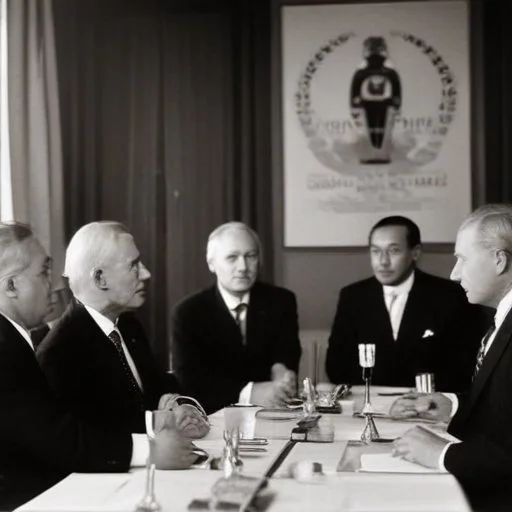
The Dutch East Indies, a prized colony of the Netherlands for centuries, had been a hotbed of resistance and strife. The Indonesian people had long been fighting for their freedom, and the Round Table Conference was the culmination of years of struggle. The conference, held in The Hague, brought together delegates from the Netherlands and Indonesia to negotiate the terms of the transfer of power.
The conference began on August 23, 1949, and lasted for several weeks, with intense negotiations taking place behind closed doors. The final agreement, signed on November 2, 1949, marked the end of Dutch colonial rule and the beginning of a new era for Indonesia.
The conference's outcome was nothing short of revolutionary. The transfer of sovereignty paved the way for Indonesia's independence, and the country was finally able to take its place on the world stage as a sovereign nation.
The Round Table Conference had a profound impact on Indonesian culture and society. The country's newfound independence sparked a sense of national pride, and the conference's outcome paved the way for the development of a unique Indonesian identity.
The conference was not without its controversies. Some critics argued that the agreement did not go far enough, and that the Netherlands should have relinquished control of the Dutch East Indies sooner. However, for many Indonesians, the conference represented a hard-won victory and a major step towards true independence.
The conference's impact can still be felt today. It paved the way for Indonesia's membership in the United Nations, and marked the beginning of a new era of cooperation between nations. The conference's outcome served as a beacon of hope for other colonized nations, inspiring them to fight for their own independence.
In the words of Sutan Sjahrir, "The Round Table Conference was a victory not just for Indonesia, but for all people who believe in the principles of freedom and equality."
The Round Table Conference set a precedent for future diplomatic negotiations, demonstrating the power of dialogue and cooperation in resolving conflicts. It also highlighted the importance of decolonization, paving the way for other nations to follow in Indonesia's footsteps.
In conclusion, the Dutch-Indonesian Round Table Conference was a pivotal event in modern history, marking the birth of a nation and inspiring a new era of international cooperation. Its legacy continues to inspire and motivate, serving as a testament to the power of diplomacy and determination.
Historians have long debated the significance of the Dutch-Indonesian Round Table Conference, with some arguing that it marked a triumphant end to Indonesia's struggle for independence, while others see it as a negotiated settlement that fell short of true independence.
Early historiography, such as the works of Indonesian nationalist historians like Mohammad Yamin, portrayed the conference as a major victory for the Indonesian people.
However, later historians, such as the Dutch historian J.J.P. de Jong, have taken a more critical approach, highlighting the conference's limitations and the compromises made by the Indonesian delegation.

The Round Table Conference not only marked Indonesia's transition to independence but also paved the way for the development of a unique national identity.
The conference's outcome inspired a new wave of cultural expression, as Indonesian artists, writers, and musicians began to explore themes of nationalism, freedom, and identity.
Sukarno's speeches during the conference, in particular, are seen as a defining moment in the nation's cultural history, as he articulated a vision of Indonesian identity that was distinct from Dutch colonial rule.The Dutch-Indonesian Round Table Conference took place against the backdrop of a rapidly changing global landscape, as the post-war era saw the rise of new superpowers and the decline of colonial empires.
The conference's outcome reflected the shifting balance of power, as the Netherlands, weakened by the war, was forced to relinquish control of its prized colony.
The United States, in particular, played a significant role in the conference, as it sought to promote decolonization and self-determination in the region.
Tan Malaka, a prominent Indonesian revolutionary, played a significant role in shaping the nation's struggle for independence.
A key figure in the Indonesian Communist Party, Malaka's radical ideology and tireless advocacy for independence helped galvanize popular support for the nationalist movement.
His influence can be seen in the conference's outcome, as the Indonesian delegation sought to push for greater autonomy and self-determination.The Dutch-Indonesian Round Table Conference was a masterclass in diplomacy, as delegates from both nations navigated the complex web of interests and alliances.
The conference's success was due in large part to the skillful negotiation of figures like Sutan Sjahrir and H.A. Logemann, who worked together to find common ground and broker a deal.
The conference's outcome demonstrates the power of diplomacy in resolving conflicts and achieving lasting peace.