


In a move that sent shockwaves across the Atlantic, Dwight D. Eisenhower, the first Supreme Allied Commander of NATO, tendered his resignation in 1952 to pursue a new calling – the presidency of the United States. This decision marked a significant turning point in the life of a man who had already etched his name in the annals of history as a renowned war hero and skilled diplomat.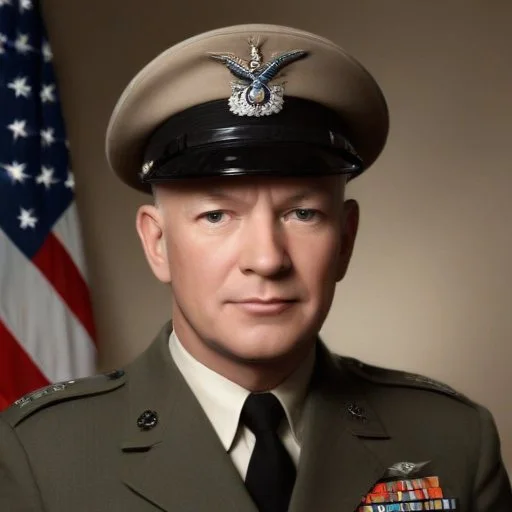
Before taking the reins of NATO, Eisenhower had already demonstrated his exceptional leadership skills during World War II, playing a pivotal role in the Allied victory as the Supreme Commander of the Allied Expeditionary Force. His success in this position earned him the respect and admiration of world leaders, cementing his position as a statesman of international repute.
Eisenhower's tenure as the first Supreme Allied Commander of NATO (1951-1952) was marked by his unwavering commitment to building a unified defense alliance in the face of the burgeoning Cold War. Under his leadership, NATO transformed from a fledgling organization into a robust defense pact, capable of deterring Soviet aggression. His vision for NATO's future, as outlined in his 1951 speech to the NATO Council, remains a testament to his foresight and diplomatic acumen.
Despite his success at NATO, Eisenhower's political ambitions beckoned. As the 1952 U.S. presidential election loomed, Eisenhower realized that his growing popularity and reputation as a statesman made him an attractive candidate for the Republican Party. After much contemplation, he made the difficult decision to resign from NATO, acknowledging that his continued presence as Supreme Commander would be incompatible with his political aspirations.
Eisenhower's resignation from NATO marked the end of an era, but his legacy continued to shape the organization's development. His departure paved the way for other notable leaders, including General Matthew Ridgway, who took over as the new Supreme Allied Commander. Eisenhower's commitment to NATO's principles and values remained unwavering, even as he assumed the highest office in the land.
In the words of Eisenhower himself, "Leadership is the art of getting someone else to do something you want done because he wants to do it." His departure from NATO may have marked the end of one chapter, but it heralded the beginning of another, as he went on to become the 34th President of the United States. Eisenhower's leadership legacy continues to inspire generations, reminding us that true leaders are those who empower others to achieve greatness.
Dwight D. Eisenhower: A Man of Unwavering Conviction
Eisenhower's leadership style was characterized by his unwavering conviction and ability to inspire trust in his subordinates. His success in WWII and his tenure as NATO's Supreme Allied Commander were testaments to his exceptional leadership skills.
Despite his many accomplishments, Eisenhower remained humble and grounded, earning him the respect and admiration of his peers and contemporaries. His commitment to public service and his country was unwavering, driving him to pursue the presidency.

The Political Landscape of 1952
The 1952 presidential election was a pivotal moment in American history, with the Cold War casting a long shadow over the political landscape. Eisenhower's decision to run for president was seen as a breath of fresh air, bringing a sense of stability and leadership to a tumultuous era.
The Republican Party saw Eisenhower as a unifying figure, capable of bridging the gap between the party's moderate and conservative factions. His candidacy was a calculated risk, but one that ultimately paid off, propelling him to the presidency.
The Geopolitical Context of NATO's Early Years
The early years of NATO were marked by the escalating tensions of the Cold War, with the Soviet Union's expansionist policies threatening the stability of Europe. Eisenhower's leadership of NATO was instrumental in shaping the alliance's response to this threat, focusing on collective defense and deterrence.
The creation of NATO was a direct response to the Soviet blockade of Berlin, highlighting the need for a unified Western response to Soviet aggression. Eisenhower's vision for NATO's future was instrumental in shaping the alliance's development, cementing its position as a cornerstone of European security.
Historiographical Perspectives on Eisenhower's NATO Legacy
Historians have long debated the significance of Eisenhower's tenure as NATO's Supreme Allied Commander, with some arguing that his leadership was instrumental in cementing the alliance's position as a bulwark against Soviet aggression.
Others have criticized Eisenhower's approach, suggesting that it was too focused on military build-up, and neglecting the need for diplomacy and dialogue with the Soviet Union. Regardless, Eisenhower's legacy continues to shape NATO's development, with his commitment to collective defense and deterrence remaining a cornerstone of the alliance's strategy.
The Economic Implications of Eisenhower's Departure from NATO
Eisenhower's departure from NATO had significant economic implications, as the alliance's military build-up and modernization efforts required substantial investment from its member states.
The United States, in particular, was instrumental in shouldering the burden of NATO's defense costs, with Eisenhower's presidency marked by increased military spending and a commitment to European security.