


The 1759 Levant earthquake, one of the deadliest seismic events in recorded history, left an indelible mark on the regions of the Levant and Arabian Peninsula, claiming the lives of up to 20,000 people and reshaping the cultural and economic fabric of the affected areas.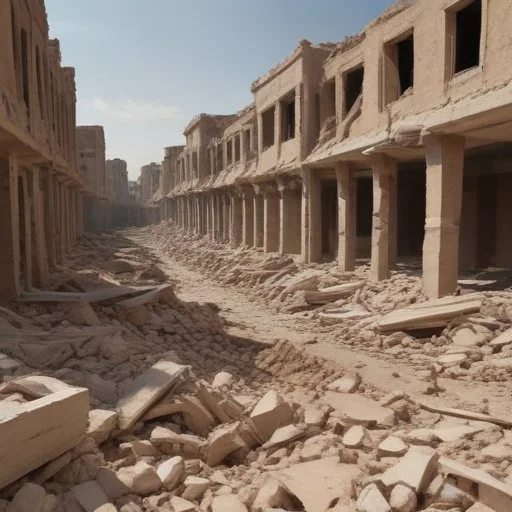
In the mid-18th century, the Levant and Arabian Peninsula were a hub of commercial and cultural activity, with the Ottoman Empire, the Safavid Empire, and various European powers vying for influence in the region. The earthquake struck at a time when the region was already reeling from the effects of war, drought, and economic instability.
The earthquake, which occurred on November 25, 1759, was a catastrophic event that lasted for nearly two minutes. Its epicenter was located in the Bekaa Valley, Lebanon, and its impact was felt across a vast area, including modern-day Syria, Jordan, Israel, Palestine, and parts of Saudi Arabia and Iraq.
The earthquake was witnessed by several prominent figures of the time, including the French consul in Aleppo, Claude-Alexandre de Bonneval, who wrote a detailed account of the disaster.
The earthquake struck at around 4:00 pm local time, catching many people off guard as they were preparing for evening prayers.
The 1759 Levant earthquake had far-reaching consequences for the region, including:
The earthquake had a profound impact on the cultural and social fabric of the region, leading to a renewed focus on:
The 1759 Levant earthquake remains one of the most significant seismic events in recorded history, serving as a powerful reminder of the fury of nature and the importance of disaster preparedness and mitigation.
As we reflect on this devastating event, we are reminded of the words of the great Arabic poet, Ahmad Shawqi: "The earthquake is a warning to humanity, a reminder of the fragility of our existence and the power of nature."
The earthquake's legacy continues to shape the region to this day, serving as a testament to the resilience and determination of the people who call the Levant and Arabian Peninsula home.
The 1759 Levant earthquake can be compared to other devastating earthquakes in history, such as the 1755 Lisbon earthquake, which also had far-reaching consequences for the affected regions. Both earthquakes highlighted the importance of disaster preparedness and led to significant changes in building codes and emergency response measures.
Unlike the Lisbon earthquake, however, the 1759 Levant earthquake occurred in a region with multiple empires and powers vying for influence, which complicated the relief efforts and had significant implications for the regional balance of power.
In terms of its impact on urban planning, the 1759 Levant earthquake can be compared to the 1908 Messina earthquake, which also led to a major overhaul of building codes and urban planning principles in the affected regions.

The 1759 Levant earthquake had a profound impact on the cultural and social fabric of the region, leading to a renewed focus on traditional building practices and artistic motifs.
In the aftermath of the earthquake, many artists and craftsmen were commissioned to create works that commemorated the disaster, including intricate stone carvings and miniature paintings.
The earthquake also led to a resurgence of interest in traditional music and dance forms, as people sought to find solace and comfort in familiar cultural practices.
Claude-Alexandre de Bonneval, the French consul in Aleppo, was a key eyewitness to the 1759 Levant earthquake. His detailed account of the disaster provides valuable insights into the experiences of those who lived through the earthquake.
De Bonneval's writings reveal a man of great curiosity and compassion, who was deeply concerned about the welfare of the people affected by the disaster.
Through his writings, de Bonneval also provides a unique perspective on the social and cultural dynamics of the region at the time, offering a fascinating glimpse into the lives of ordinary people living in the Levant and Arabian Peninsula.

The 1759 Levant earthquake had a significant impact on the environment, triggering landslides, mudflows, and flash floods that altered the regional topography.
The earthquake also led to a rapid depletion of natural resources, as trees and other vegetation were destroyed or uprooted, leading to soil erosion and desertification.
In the aftermath of the earthquake, many communities were forced to adapt to a new environmental reality, developing innovative agricultural practices and water management systems to cope with the changed landscape.
The 1759 Levant earthquake occurred at a time of great geopolitical tension in the region, with the Ottoman Empire, the Safavid Empire, and European powers vying for influence.
The earthquake weakened the Ottoman Empire's grip on the region, creating a power vacuum that was swiftly filled by European powers, who saw an opportunity to expand their influence.
In the aftermath of the earthquake, the regional balance of power was irrevocably altered, setting the stage for a new era of colonialism and imperial rivalry in the Levant and Arabian Peninsula.