


The northwestern region of Iran was struck by a devastating earthquake, measuring 6.5 on the Richter scale, leaving a trail of destruction and despair in its wake. This catastrophic event claimed the lives of at least 261 people, injured over 1,300, and sparked widespread outrage over the government's slow response to the crisis.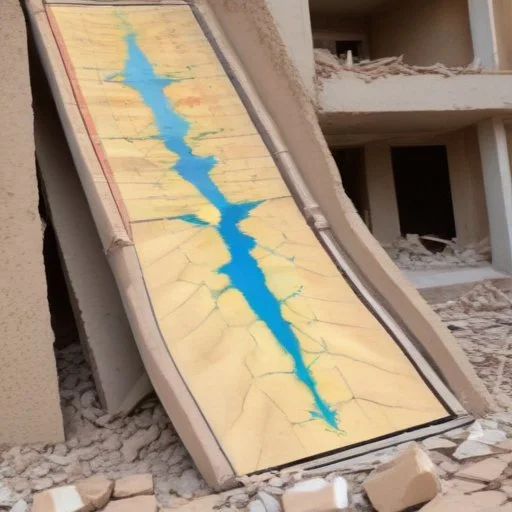
The seismically active region of northwestern Iran has a history of powerful earthquakes, making it a high-risk area. The country's location on the Eurasian tectonic plate, bordering the Arabian and Turkish plates, increases its susceptibility to earthquakes. Despite this, the region's infrastructure and emergency response systems were woefully unprepared for a disaster of this magnitude.
The earthquake struck without warning, catching residents off guard and reducing entire neighborhoods to rubble. The temblor's impact was exacerbated by the region's poorly constructed buildings, many of which were unable to withstand the intense seismic activity. As the dust settled, the full extent of the destruction became clear, with entire communities left without access to basic necessities like shelter, food, and medicine.
The government's slow response to the crisis sparked widespread anger and criticism, with many accusing officials of being indifferent to the plight of the affected populations. The delay in deploying aid and rescue teams, as well as the lack of transparency in the relief efforts, fueled the public's frustration and mistrust. The earthquake became a symbol of the government's failure to protect its citizens, and the peoples' sense of abandonment was palpable.
The earthquake had far-reaching consequences, from the loss of human life and infrastructure to the long-term economic and social impacts on the region. The disaster highlighted the need for improved emergency preparedness and response mechanisms, as well as more stringent building codes and enforcement. The international community responded with aid and support, but the road to recovery was long and arduous for the people of northwestern Iran.
The earthquake had a profound impact on the cultural and social fabric of the region. Traditional communities were displaced, and the social cohesion that once bound them together was severely tested. The tragedy brought out both the best and worst in people, with stories of courage, resilience, and solidarity emerging alongside accounts of corruption and exploitation. In the aftermath of the disaster, the people of northwestern Iran came together to rebuild and recover, their spirits unbroken by the tragedy that had befallen them.
One survivor, Fatima, recounted the horror of being trapped beneath the rubble of her family's home. "I thought it was the end," she said. "But then I heard my brother's voice, calling out to me. He saved my life that day." Another resident, Ali, spoke of the sense of community that developed in the aftermath of the disaster. "We came together to help each other, to share what little we had. It was a terrible time, but it showed us the strength of our community."
The northwestern Iran earthquake served as a wake-up call for the country's authorities, prompting a re-evaluation of emergency response systems and disaster preparedness measures. The tragedy led to significant reforms, including the establishment of new building codes and the creation of more effective relief mechanisms. The earthquake also raised awareness about the importance of disaster risk reduction and management, sparking a national conversation about the need for resilience and preparedness in the face of natural disasters.
The northwestern region of Iran has a long history of powerful earthquakes, with the earliest recorded quake dating back to the 7th century BC. The region's unique geology, nestled between the Eurasian, Arabian, and Turkish tectonic plates, has created a hotbed of seismic activity. In the 19th century, a series of devastating earthquakes struck the region, prompting the Persian Empire to establish a network of seismic monitoring stations.
One of the most significant earthquakes in the region's history occurred in 1840, when a magnitude 7.4 quake struck the city of Tabriz, killing an estimated 10,000 people. The quake led to a major overhaul of the region's building codes, with the introduction of stricter construction regulations designed to mitigate the impact of future earthquakes.

Fatima's story is one of resilience and hope in the face of tragedy. A 25-year-old textile worker, Fatima was trapped beneath the rubble of her family's home for over 12 hours before being rescued. Her bravery and determination inspired her community, and she went on to become a leading advocate for improved emergency response systems in Iran.
Ali, a 32-year-old engineer, was instrumental in coordinating the relief efforts in the aftermath of the earthquake. His expertise in disaster management and his ability to mobilize volunteers and resources played a crucial role in the recovery of his community. His selfless efforts earned him recognition from the Iranian government, which honored him with the country's highest civilian award.
The earthquake had a profound impact on the cultural fabric of northwestern Iran. The disaster brought attention to the region's rich cultural heritage, prompting a renewed sense of pride and identity among the local population. The government, recognizing the importance of preserving cultural artifacts, launched a comprehensive program to restore and protect historical sites and monuments damaged during the quake.
The earthquake also led to a resurgence of traditional music and art forms, as local artists sought to express their emotions and experiences through creative expression. The event inspired a new generation of artists, writers, and musicians, who drew inspiration from the tragedy and its aftermath.
The earthquake had a devastating impact on the regional economy, with estimated losses totaling over $1 billion. The disaster led to a significant decline in agricultural production, with many farmers losing their livelihoods due to damaged irrigation systems and disrupted supply chains.
The Iranian government responded with a comprehensive economic stimulus package, investing heavily in infrastructure development and providing financial support to affected businesses and farmers. The package helped to jumpstart the local economy, with the region experiencing a gradual recovery in the years following the disaster.
The earthquake sparked widespread criticism of the Iranian government's response to the crisis. Opposition groups accused the government of being slow to respond and inadequate in its relief efforts, sparking protests and demonstrations across the country.
The government, led by President Hassan Rouhani, faced intense pressure to reform its emergency response systems and improve its disaster preparedness measures. The earthquake led to a major overhaul of the country's crisis management infrastructure, with the government establishing a new national emergency management agency to coordinate response efforts.