


The El Salvador earthquake of 2001 is infamous for being one of the most destructive natural disasters to hit the Central American nation, claiming the lives of at least 944 people and leaving countless more displaced. Measuring a staggering 7.6 on the Richter magnitude scale, this powerful quake unleashed a trail of devastation, landslides, and floods across the country.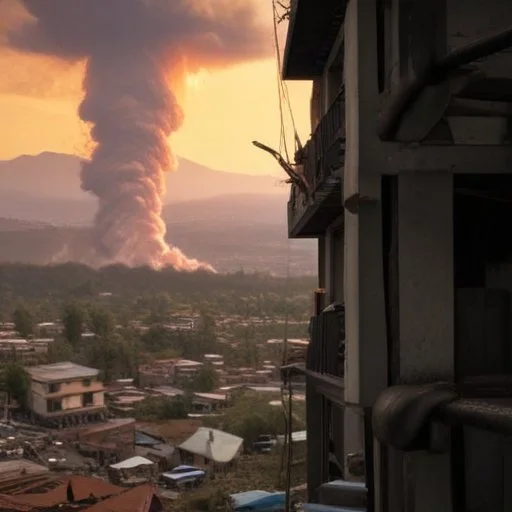
El Salvador, a country prone to seismic activity, had experienced several significant earthquakes in the past. However, the 2001 quake was unprecedented in its severity, exposing the vulnerability of the nation's infrastructure and emergency response systems.
On January 13, 2001, at 11:34 am local time, the earthquake struck, with its epicenter located approximately 65 miles southwest of the capital city, San Salvador. The quake was felt as far away as Guatemala, Honduras, and Nicaragua, causing widespread panic and destruction.
In the aftermath of the disaster, the country was left reeling, with entire communities reduced to rubble, and essential services such as electricity, water, and communication severely disrupted.
| Date | Event |
|---|---|
| January 13, 2001 | Earthquake strikes El Salvador at 11:34 am local time |
| January 14, 2001 | International aid efforts begin, with teams and supplies arriving from around the world |
| January 20, 2001 | El Salvador declares a national emergency, mobilizing military and civilian personnel to aid in relief efforts |
The El Salvador earthquake of 2001 had a profound impact on the country, leading to:
The earthquake had a profound impact on the social and cultural fabric of El Salvador, with:
Amidst the devastation, stories of resilience, courage, and community emerged, inspiring a nation to rebuild and recover. The earthquake served as a catalyst for change, prompting El Salvador to reassess its priorities and work towards a safer, more resilient future.
The El Salvador earthquake of 2001 served as a wake-up call for the region, prompting a renewed focus on disaster preparedness and mitigation. The disaster led to improved emergency response systems, infrastructure, and community resilience, ultimately saving lives and reducing the impact of future natural disasters.
The El Salvador earthquake of 2001 was not an isolated event, but rather part of a larger pattern of seismic activity in the region. The country's location on the boundary between the Caribbean and Cocos tectonic plates makes it prone to earthquakes. In the decades leading up to the 2001 quake, El Salvador experienced several significant earthquakes, including a 6.6 magnitude quake in 1986 and a 5.8 magnitude quake in 1999. These events, while devastating in their own right, pale in comparison to the destruction wrought by the 2001 earthquake.
The 2001 earthquake was also part of a larger global trend of increased seismic activity in the late 20th and early 21st centuries. The 1990s saw a number of major earthquakes, including the 1994 Northridge earthquake in California and the 1995 Kobe earthquake in Japan. This increase in seismic activity has been attributed to a variety of factors, including changes in the Earth's crust and the movement of tectonic plates.
The 2001 earthquake was a wake-up call for El Salvador and the international community, highlighting the need for greater investment in disaster preparedness and mitigation. The quake served as a catalyst for changes in building codes, emergency response procedures, and disaster risk reduction strategies, ultimately saving lives and reducing the impact of future earthquakes.
President Francisco Flores was a key figure in the aftermath of the 2001 earthquake, playing a crucial role in coordinating the disaster response and relief efforts. His leadership during this time was marked by a sense of calm and determination, as he worked tirelessly to mobilize military and civilian personnel, and to secure international aid for the affected communities.
Flores' efforts were instrumental in securing over $100 million in aid from international organizations and governments around the world. His commitment to rebuilding and recovery helped to inspire a sense of national unity and solidarity in the face of disaster, and paved the way for long-term reconstruction and development in El Salvador.
The 2001 earthquake had a profound impact on the social and cultural fabric of El Salvador, revealing deep-seated issues of poverty, inequality, and social injustice. In the aftermath of the disaster, community-led initiatives emerged, as people came together to rebuild and restore damaged neighborhoods and infrastructure.
The earthquake also highlighted the importance of cultural heritage and preservation, as many of El Salvador's cultural landmarks and historical sites were damaged or destroyed. Efforts to preserve and restore these sites have helped to promote a sense of national identity and cultural pride, and have served as a symbol of resilience and recovery in the face of disaster.

The 2001 El Salvador earthquake was not an isolated event, but rather part of a larger pattern of natural disasters in Central America. In the years leading up to the quake, countries such as Honduras, Nicaragua, and Guatemala experienced their own devastating natural disasters, including Hurricane Mitch in 1998 and a series of earthquakes in 2000.
The 2001 earthquake was distinct from these other events, however, in terms of its severity and impact. The quake's 7.6 magnitude was significantly stronger than many of the other earthquakes in the region, and its effects were felt across a wider area. This comparison highlights the need for a regional approach to disaster preparedness and mitigation, one that takes into account the unique challenges and vulnerabilities of each country in the region.
The economic impact of the 2001 earthquake was significant, with estimated losses totaling over $1.5 billion. The quake disrupted critical infrastructure, including roads, bridges, and communication networks, and had a devastating effect on the country's economy.
The international community played a critical role in supporting El Salvador's recovery, providing hundreds of millions of dollars in aid and assistance. This support enabled the country to begin the process of rebuilding and recovery, and paved the way for long-term economic growth and development.