


On a fateful day in 1857, the East India Company made the unprecedented decision to dissolve the 34th Regiment of Bengal Native Infantry, citing "disloyalty and mutiny" as the reason. This drastic measure was sparked by the courageous rebellion of Sepoy Mangal Pandey, a mere spark that would ignite the flames of resistance, ultimately contributing to the War of Indian Independence.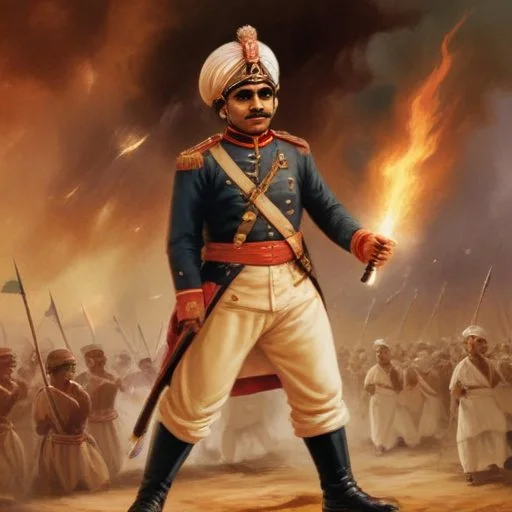
In the mid-19th century, India was a cauldron of simmering discontent, with the British East India Company's exploitation of Indian resources and people reaching a boiling point. The once-loyal Indian army, comprised of sepoys like Mangal Pandey, had grown weary of the Company's oppressive policies and mistreatment. As tensions escalated, the Stage was set for a hero to emerge, one who would dare to challenge the British authority.
Mangal Pandey, a low-ranking sepoy from the 34th Regiment, made history by openly challenging the British on March 29, 1857. Incensed by the Company's policies and the introduction of greased cartridges, which were deemed religiously offensive, Pandey refused to obey orders and attacked his British sergeant. This act of defiance, though ultimately unsuccessful, inspired others to follow in his footsteps.
The disbandment of the 34th Regiment sent shockwaves throughout the Indian subcontinent, galvanizing public opinion against the British. The event marked a turning point in the Indian independence movement, inspiring countless others to take up the mantle of resistance. The bravery of Mangal Pandey and the subsequent disbandment of the regiment paved the way for future rebels, ultimately contributing to the demise of British colonial rule in India.
Mangal Pandey's rebellion and the disbandment of the 34th Regiment have had a lasting impact on Indian culture and society. Pandey's courage has inspired generations of Indians, cementing his place as a national hero. His legacy continues to inspire stories, songs, and artworks, ensuring that the flames of defiance ignited by his bravery will never fade.
"My religion is my own, my caste is my own, I will not exchange these for anything in the world." - Mangal Pandey
The disbandment of the 34th Regiment serves as a powerful reminder of the human spirit's capacity for resistance and courage. As we reflect on this pivotal moment in history, we are reminded that even the smallest acts of defiance can spark a revolution, inspiring future generations to continue the fight for freedom and justice.
Mangal Pandey was born in 1827 in Akbarpur, a small village in the northern Indian state of Uttar Pradesh. Little is known about his early life, but it is believed that he came from a humble background and was raised in a devout Hindu family.
Pandey's decision to join the British East India Company's army was likely motivated by a desire to secure a stable income and improve his family's prospects. He enlisted in the 34th Regiment of Bengal Native Infantry in 1849, where he quickly rose through the ranks to become a respected and trusted sepoy.

The British East India Company's exploitation of India was not an isolated phenomenon. In the mid-19th century, European powers were engaged in a frenzy of colonial expansion, with Britain, France, and other nations vying for control of territories and resources around the world.
The Indian subcontinent was a prized jewel in the British crown, with its fertile plains, rich natural resources, and strategic location making it a crucial hub for trade and commerce.
In this context, the East India Company's oppressive policies and treatment of Indian sepoys like Mangal Pandey were symptomatic of a broader pattern of colonialism and imperialism.
Mangal Pandey's rebellion has become an enduring symbol of Indian resistance against colonial rule. His bravery has inspired generations of Indians, and he is celebrated as a national hero in India.
In popular culture, Pandey's image has been immortalized in films, literature, and art. He has been portrayed as a champion of Indian independence, a martyr who gave his life for the freedom of his country.
The cultural impact of Pandey's rebellion extends beyond India, serving as a beacon of inspiration for anti-colonial movements around the world.

Among the most fascinating and elusive historical artifacts related to Mangal Pandey is his personal diary. Believed to be written in Hindi, the diary is thought to contain Pandey's thoughts, feelings, and reflections on his experiences as a sepoy in the British East India Company's army.
Despite extensive searches, the diary remains lost to history, its whereabouts unknown. Its discovery could provide invaluable insights into Pandey's motivations, personality, and experiences, offering a unique window into the mind of a key figure in Indian history.
The disbandment of the 34th Regiment of Bengal Native Infantry was a watershed moment in the Indian Rebellion of 1857, a widespread uprising against British colonial rule.
The rebellion was marked by violent clashes, sieges, and massacres, with Indian sepoys and civilians fighting against British forces across the Indian subcontinent.
The rebellion ultimately failed, but it marked a turning point in the Indian independence movement, galvanizing public opinion against British rule and paving the way for future struggles for freedom and self-determination.