


In a groundbreaking move, Egypt and Israel embarked on a new chapter in their tumultuous history by establishing full diplomatic relations in 1980, a gesture that symbolized a significant shift from hostility to cooperation. This monumental event marked the first time an Arab state had formally recognized the State of Israel, sending ripples of hope across the war-torn region.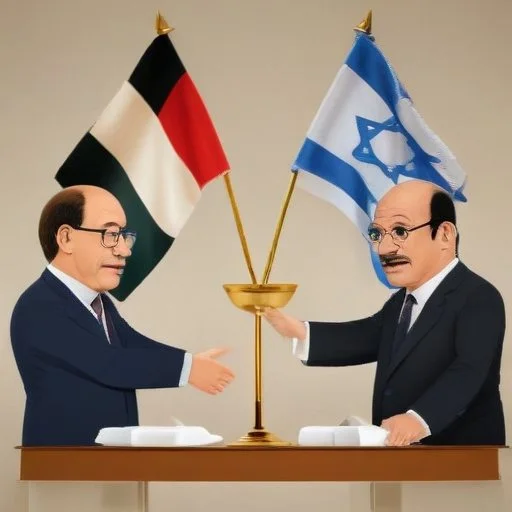
The daring initiative was the culmination of secret negotiations between Israeli Prime Minister Menachem Begin and Egyptian President Anwar El-Sadat, two visionary leaders who dared to challenge the status quo. Their bravery and determination to forge a lasting peace enabled the two nations to transcend their bitter past and forge a new path forward.
The establishment of full diplomatic relations between Egypt and Israel had far-reaching consequences, including:
This breakthrough also inspired a new era of diplomacy in the Middle East, encouraging other Arab states to re-evaluate their stance towards Israel.
The establishment of diplomatic relations between Egypt and Israel had a profound impact on the cultural and social fabric of both nations. It:
While the establishment of diplomatic relations between Egypt and Israel was hailed as a historic breakthrough, it was not without controversy. Some critics argued that:
Despite these concerns, the majority of Egyptians and Israelis welcomed the new era of cooperation, recognizing the immense potential for mutual benefit and regional stability.
The courage and conviction of Anwar El-Sadat and Menachem Begin serve as a powerful reminder of the impact that visionary leadership can have on shaping the course of history. Their legacy continues to inspire generations of leaders, policymakers, and ordinary citizens to strive for peace and cooperation in the face of adversity.
This historic milestone reminds us that even in the most intractable conflicts, there is always hope for a better future, one built on mutual respect, understanding, and a shared commitment to peace.
Anwar El-Sadat: A Visionary Leader
Anwar El-Sadat, the third President of Egypt, was a charismatic leader who dared to challenge the status quo. Born in 1918, El-Sadat was a devout Muslim and a patriot who played a crucial role in the country's struggle for independence. His diplomatic efforts to establish relations with Israel were driven by a deep desire to bring peace and prosperity to the region.
El-Sadat's willingness to engage with Israel's leadership was met with skepticism and even hostility by some in the Arab world. However, he remained resolute, convinced that peace was the only way forward. His courage and conviction earned him the Nobel Peace Prize in 1978, which he shared with Israeli Prime Minister Menachem Begin.
El-Sadat's leadership was marked by a series of bold initiatives, including the nationalization of the Suez Canal and the introduction of economic reforms. His diplomatic efforts also extended beyond the Middle East, as he sought to strengthen ties with the United States and other Western nations.
Today, Anwar El-Sadat is remembered as a hero and a symbol of hope in the Middle East. His legacy continues to inspire generations of leaders, policymakers, and ordinary citizens to strive for peace and cooperation in the face of adversity.

The Economic Dividend of Peace
The establishment of diplomatic relations between Egypt and Israel in 1980 had a profound impact on the economies of both nations. The normalization of relations paved the way for increased trade and investment, as businesses on both sides of the border seized opportunities for mutually beneficial cooperation.
One of the most significant benefits of peace was the boost to tourism. As tensions eased, tourists began to flock to both countries, drawn by their rich cultural heritage and natural beauty. This influx of visitors generated significant revenue, creating new jobs and stimulating economic growth.
The peace treaty also enabled the two nations to cooperate on major infrastructure projects, such as the construction of the Arab-Israeli gas pipeline. This joint venture not only reduced energy costs but also fostered greater regional integration.
Today, the economic benefits of peace continue to flow, with bilateral trade between Egypt and Israel valued at over $1 billion annually. The normalization of relations has also facilitated cooperation on regional issues, such as water management and environmental protection.
Cultural Exchange and Understanding
The establishment of diplomatic relations between Egypt and Israel marked a significant turning point in the cultural exchange between the two nations. As formal relations were established, cultural institutions, artists, and intellectuals from both countries began to engage in a vibrant dialogue.
This cultural exchange was characterized by a richness and diversity that reflected the complex history and heritage of both nations. From the ancient pyramids of Giza to the vibrant streets of Tel Aviv, artists, musicians, and writers from Egypt and Israel drew inspiration from each other's traditions.
One of the most significant outcomes of this cultural exchange was the creation of joint cultural institutions, such as the Egyptian-Israeli Cultural Center in Cairo. This center served as a hub for cultural activities, hosting exhibitions, concerts, and performances that showcased the best of both cultures.
Today, the cultural exchange between Egypt and Israel continues to flourish, with artists, intellectuals, and ordinary citizens from both nations drawing inspiration from each other's rich cultural heritage.

A New Era of Diplomacy
The establishment of diplomatic relations between Egypt and Israel in 1980 marked a significant shift in the region's political dynamics. The move was seen as a bold initiative by two leaderships that dared to challenge the status quo and forge a new path forward.
For Egypt, the normalization of relations with Israel marked a significant departure from its traditional role as a leader of the Arab world. The move was seen as a pragmatic decision, driven by a desire to focus on domestic economic development and regional stability.
For Israel, the establishment of diplomatic relations with Egypt marked a major breakthrough, as it ended its decades-long diplomatic isolation in the region. The move also paved the way for increased cooperation on security issues, as both nations sought to address the threats posed by regional instability.
Today, the normalization of relations between Egypt and Israel is seen as a model for regional diplomacy, demonstrating the power of courageous leadership and creative diplomacy in resolving long-standing conflicts.
A Geopolitical Sea Change
The establishment of diplomatic relations between Egypt and Israel in 1980 marked a significant shift in the region's geopolitical landscape. The move was seen as a bold initiative by two nations that dared to challenge the status quo and forge a new path forward.
The normalization of relations between Egypt and Israel had far-reaching implications for regional geopolitics, as it created a new axis of cooperation between two major powers. The move also sent a powerful signal to other Arab states, encouraging them to re-evaluate their stance towards Israel.
Today, the normalization of relations between Egypt and Israel is seen as a cornerstone of regional stability, as both nations cooperate on a range of issues, from security and counter-terrorism to economic development and environmental protection.
The move also paved the way for increased cooperation between Israel and other Arab states, as they began to recognize the mutual benefits of peace and cooperation. As a result, the region has witnessed a significant improvement in regional stability, as nations have come together to address common challenges and seize new opportunities.