


In a bold and unauthorized move, Egyptian forces stormed Larnaca International Airport in Cyprus on February 19, 1978, in an attempt to intervene in a hijacking. The mission, however, would end in disaster, with 15 Egyptian commandos killed and their aircraft destroyed by the Cypriot National Guard and Police forces.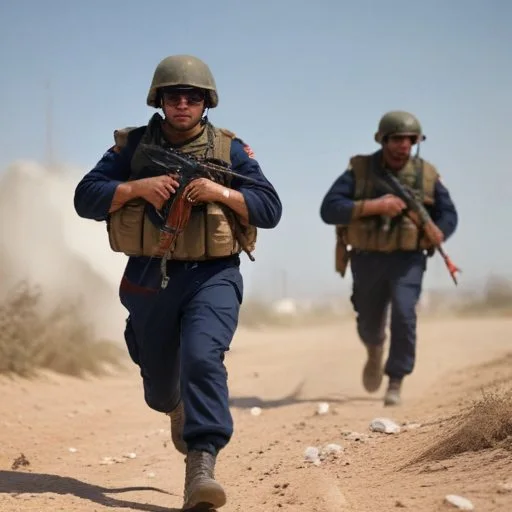
The hijacking that sparked the Egyptian intervention was a dramatic incident in which a Boeing 737, operated by Cyprus Airways, was seized by a group of hijackers. The plane, carrying 15 passengers and crew members, was diverted to Larnaca International Airport, where the hijackers demanded the release of 12 prisoners held in Cyprus.
In response to the hijacking, Egyptian President Anwar El-Sadat authorized a team of 15 commandos to raid the airport and rescue the hostages. However, this decision was made without consulting or obtaining permission from the Cypriot authorities, a move that would prove fatal.
The Egyptian commandos, dressed in civilian clothes and armed with automatic weapons, landed at Larnaca International Airport in a C-130 Hercules transport plane. Their plan was to storm the hijacked aircraft, free the hostages, and eliminate the hijackers.
But the Cypriot National Guard and Police forces were not about to let the Egyptians take matters into their own hands. As the Egyptian commandos disembarked from their plane, they were met with a fierce resistance from the Cypriot security forces.
A intense battle ensued, with both sides exchanging gunfire. The Cypriot forces, however, had the advantage of knowing the terrain and were better equipped to handle the situation. In the end, all 15 Egyptian commandos were killed, and their aircraft was destroyed.
The botched rescue mission led to a significant deterioration in relations between Egypt and Cyprus. The Cypriot government condemned the Egyptian invasion, calling it a "flagrant violation of sovereignty." The incident also drew international criticism, with the United States and the United Kingdom expressing their disapproval.
The hijacking crisis itself was eventually resolved through negotiations, with the hijackers releasing the hostages in exchange for the release of the 12 prisoners.
The Larnaca International Airport raid serves as a stark reminder of the importance of respecting sovereignty and the dangers of unilateral action. It also highlights the bravery and determination of the Cypriot security forces in protecting their country's integrity.
In conclusion, the Larnaca International Airport raid was a dramatic and ill-fated attempt to intervene in a hijacking crisis. While it ended in tragedy, it also served as a valuable lesson in the importance of respecting sovereignty and the need for international cooperation in the face of crisis.
The 1978 Larnaca International Airport raid was not an isolated incident, but rather part of a larger trend of hijackings and rescue missions that plagued the aviation industry in the 1970s. In the years leading up to the raid, hijackings had become increasingly common, with groups such as the Palestine Liberation Organization (PLO) and the Japanese Red Army carrying out brazen attacks on commercial airliners.
In response to this growing threat, governments and security agencies around the world began to develop specialized counter-terrorism units, designed to respond quickly and effectively to hijacking scenarios. The Egyptian commandos who carried out the Larnaca raid were part of this broader trend, and their mission was seen as a test of Egypt's ability to project power and protect its citizens in the face of terrorist threats.
Despite the failure of the raid, the incident marked an important turning point in the development of counter-terrorism tactics and strategies. In the aftermath of the raid, security agencies around the world began to rethink their approach to hijackings, placing greater emphasis on negotiation, communication, and coordination with local authorities.

Anwar El-Sadat, the President of Egypt at the time of the Larnaca raid, was a complex and controversial figure. A decorated war hero and veteran of the 1973 Yom Kippur War, El-Sadat was known for his bold and sometimes reckless decision-making style.
El-Sadat's decision to authorize the Larnaca raid was characteristic of his leadership style, which often prioritized bold action over careful planning and consultation. While the raid was widely condemned by the international community, El-Sadat remained defiant, insisting that the mission had been necessary to protect Egyptian lives and interests.
Despite the controversy surrounding the raid, El-Sadat is remembered as a key figure in Middle Eastern politics, and his legacy continues to shape Egyptian and regional politics to this day.
The Larnaca International Airport raid bears striking similarities to other high-profile rescue missions, including the 1976 Entebbe Airport raid carried out by Israeli commandos. Like the Larnaca raid, the Entebbe raid was a daring and unauthorized operation that ended in mixed results, with Israeli forces successfully rescuing most of the hostages, but at a significant cost in lives and political capital.
Both the Larnaca and Entebbe raids highlight the risks and challenges involved in carrying out high-stakes rescue missions, and the importance of careful planning, coordination, and communication with local authorities.
Despite these similarities, the Larnaca raid remains a unique and important event in the history of counter-terrorism, offering valuable lessons and insights for security agencies and policymakers around the world.
The Larnaca International Airport raid took place during a period of heightened tensions in the Middle East, with the Cold War rivalry between the United States and the Soviet Union casting a long shadow over regional politics.
The raid was seen as a proxy battle between Arab nationalist and communist forces, with Egypt, backed by the United States, facing off against Cyprus, a Soviet-aligned state. This geopolitical context helped to fuel the crisis, as both sides sought to use the hijacking and the subsequent raid to score propaganda points and gain strategic advantage.
Despite the local circumstances of the raid, the incident had far-reaching implications for regional and global politics, highlighting the dangers of unchecked nationalism and the importance of diplomatic cooperation in the face of crisis.
The Larnaca International Airport raid raises important philosophical and ideological questions about the nature of sovereignty, national identity, and the use of force in international relations.
The Egyptian government's decision to authorize the raid, without consulting or obtaining permission from Cypriot authorities, sparked a heated debate about the limits of national sovereignty and the responsibility of states to protect their citizens.
The raid also highlights the tension between competing ideologies of national security and human rights, with the Egyptian government's perceived need to protect its citizens clashing with the Cypriot government's duty to protect its own sovereignty and territorial integrity.