


On March 24, 1980, a senseless act of violence shook the very foundations of El Salvador, leaving an indelible mark on the nation's history. As Archbishop Óscar Romero celebrated Mass in San Salvador's Metropolitan Cathedral, a lone gunman burst into the sacred space, firing a single shot that would silence the courageous champion of human rights forever.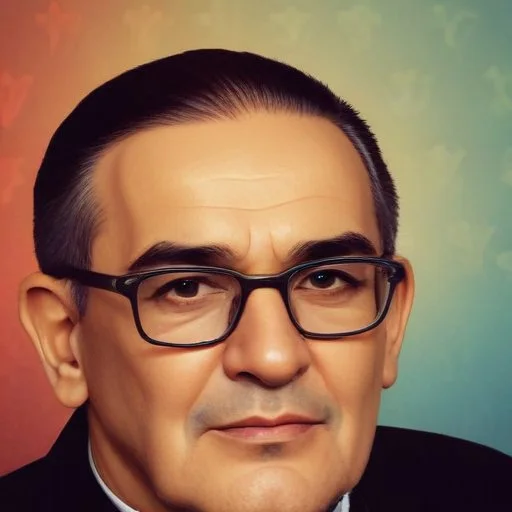
Born on August 15, 1917, in Ciudad Barrios, El Salvador, Romero was ordained as a priest in 1942. His dedication to serving the poor and marginalized earned him the reputation as a fierce advocate for social justice. As the country plunged into a brutal civil war, Romero's voice became a beacon of hope, calling for an end to the violence and oppression.
Romero's unwavering commitment to the downtrodden was shaped by his relationships with influential figures, including:
The days leading up to Romero's assassination were marked by escalating tensions:
Romero's murder sent shockwaves throughout El Salvador, prompting widespread outrage and protests. The event:
Romero's influence extends far beyond the boundaries of El Salvador, inspiring:
The complexities of Romero's legacy are reflected in the diverse reactions to his assassination:
Romero's compelling oratory has left an indelible mark on the world, as seen in quotes such as:
As we reflect on the life and legacy of Óscar Romero, we are reminded that even in the face of adversity, courage and conviction can inspire a brighter future. His sacrifice serves as a beacon of hope, illuminating the path towards justice, equality, and human rights for all.
The martyrdom of Óscar Romero sparked a wave of artistic and literary works, cementing his status as a cultural icon. Filmmakers, authors, and musicians drew inspiration from his courageous stance against oppression, creating a rich tapestry of creative expressions.
From the award-winning film "Romero" (1989) to the poem "The Martyr of El Salvador" by MichaelSpiers-Jones, Romero's legacy has been immortalized in various art forms.
In music, Romero's message of hope and defiance has been echoed in songs like "Romero Had a Dream" by John McCutcheon and "Óscar Romero" by the Irish band, The Dublin Gospel Choir.

Father Rutilio Grande, a close friend and mentor to Óscar Romero, was brutally murdered in 1977, sparking a chain reaction of events that would ultimately lead to Romero's own assassination.
Born in 1928, Grande was a Jesuit priest who dedicated his life to serving the poor and marginalized. His unwavering commitment to social justice earned him the respect and admiration of the people, as well as the ire of the oppressive government.
Grande's murder served as a catalyst for Romero's transformation from a moderate priest to a passionate advocate for human rights, cementing their bond as two champions of the oppressed.
The assassination of Óscar Romero took place amidst a backdrop of political turmoil in El Salvador, where a brutal civil war had been raging since the 1970s.
The ruling military government, backed by the United States, was accused of gross human rights violations, including torture, forced disappearances, and extrajudicial killings.
In response, various opposition groups, including left-wing guerrilla organizations, emerged to challenge the government's authority, leading to a bloody conflict that would claim the lives of thousands of civilians.

The Cold War era in which Romero's assassination occurred played a significant role in shaping the geopolitical landscape of El Salvador.
The United States, fearful of the spread of communism in Central America, provided military and economic aid to the Salvadoran government, while the Soviet Union supported the leftist opposition groups.
This proxy war dynamic created a toxic environment in which human rights were sacrificed for political expediency, ultimately contributing to the tragic events that befell Óscar Romero.
Historians have approached Óscar Romero's legacy from various angles, reflecting the complexity of his role in El Salvador's turbulent history.
Some have portrayed Romero as a hero of the people, whose courageous stance against oppression inspired a generation of activists and advocates for social justice.
Others have viewed him as a nuanced figure, caught between his loyalty to the Catholic Church and his commitment to the liberation of the poor, highlighting the tensions between faith and politics.