


In June 1993, Nigeria witnessed a historic moment that would ultimately become a turning point in its tumultuous political history – an election that was won by Moshood Kashimawo Olawale Abiola, only to be annulled by the military government of Ibrahim Babangida.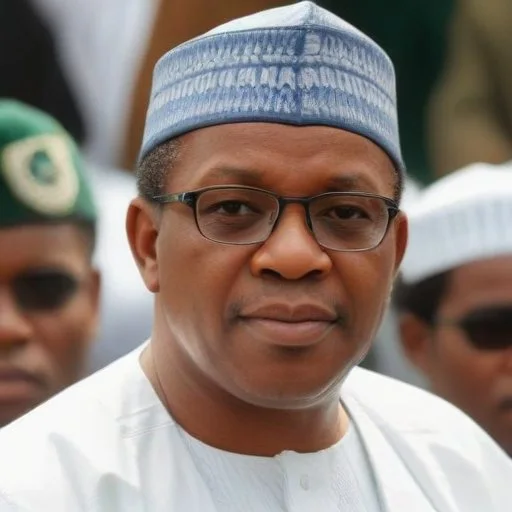
This dramatic series of events would leave an indelible mark on the country, sparking widespread protests, international condemnation, and a lingering sense of what could have been.
Moshood Abiola, a successful entrepreneur and philanthropist, had built a reputation as a champion of social justice and democracy. His entry into politics was seen as a beacon of hope for a nation tired of military rule.
Abiola's campaign, built on a platform of reform and progress, resonated with Nigerians who yearned for a return to civilian rule. His rival, Bashir Tofa, represented the old guard, and Abiola's victory was seen as a decisive rejection of the status quo.
But just as Abiola's supporters were celebrating his victory, General Ibrahim Babangida, the military head of state, dropped a bombshell – the election results were null and void. Citing irregularities and unrest, Babangida's regime claimed that the election was flawed, and a new date would be set.
The decision sent shockwaves across the nation, sparking protests, riots, and international condemnation. The world watched in disbelief as Nigeria's nascent democracy was brutally crushed.
The annulment of the election had far-reaching consequences, plunging Nigeria into a dark period of political instability and human rights abuses. The hopes of a democratic transition were dashed, and the country was forced to endure another decade of military rule.
The international community, including the United States and the United Kingdom, condemned the annulment, imposing sanctions on the Nigerian government. But it was too little, too late – the damage had been done.
Despite the setback, Abiola's courage and conviction inspired a generation of Nigerians to continue fighting for democracy and human rights. His legacy serves as a reminder of the power of the human spirit, even in the face of overwhelming adversity.
In 1998, Abiola died in detention, his dreams of a democratic Nigeria unrealized. But his sacrifice will never be forgotten – a testament to the enduring power of the human quest for freedom and justice.
Moshood Abiola's Early Life and Business Ventures
Before entering politics, Moshood Abiola built a business empire that spanned various sectors, including publishing, oil, and construction. Born on August 24, 1937, in Abeokuta, Nigeria, Abiola was the 23rd child of a poor Muslim family.
Abiola's entrepreneurial spirit was evident from an early age. He started selling firewood at the age of nine and later worked as a clerk in a bakery. His big break came when he was awarded a contract to supply catering services to the Nigerian Army.
His business acumen and philanthropic efforts earned him numerous awards and recognition, including the prestigious Nigerian national honor, the Grand Commander of the Order of the Niger.
The Geopolitical Context of Nigeria's 1993 Election
In the early 1990s, Nigeria was at a crossroads, struggling to transition from military rule to democracy. The country's oil-rich economy was plagued by corruption and mismanagement, and the international community was keenly watching the elections as a barometer of Nigeria's commitment to democracy.
The United States, in particular, had significant interests in Nigeria, with the country being a major oil supplier. The election was thus seen as a critical test of Nigeria's ability to consolidate democracy and ensure stability in the region.
The annulment of the election would have far-reaching consequences, straining Nigeria's relations with the international community and setting back the country's democratic progress.A Tale of Two Elections: Comparing Nigeria's 1993 Election to Other African Countries
The 1993 Nigerian election stood out from other elections in Africa at the time, with its annulment sparking widespread protests and international condemnation. In contrast, countries like Benin and Ghana were successfully transitioning to democracy, with free and fair elections.
The Nigerian election was also unique in that it was won by a civilian candidate, Moshood Abiola, who was not affiliated with the military government. This was in contrast to countries like Zambia, where the incumbent president, Frederick Chiluba, won the election.
The annulment of the Nigerian election highlighted the country's struggle to consolidate democracy, despite its rich natural resources and strategic location.
The Cultural Significance of the 1993 Election
The 1993 election had a profound impact on Nigerian culture, with Abiola's campaign and subsequent annulment inspiring a generation of Nigerians to fight for democracy and human rights.
The election also sparked a creative explosion, with artists, writers, and musicians using their work to critique the military government and advocate for democratic reforms.
The election and its aftermath have been immortalized in Nigerian literature, with writers like Wole Soyinka and Ken Saro-Wiwa writing extensively about the period.The Economic Consequences of the Annulled Election
The annulment of the 1993 election had significant economic consequences, with the country's economy experiencing a downturn in the aftermath of the crisis.
The international community imposed sanctions on Nigeria, which led to a decline in foreign investment and a depreciation of the naira, the Nigerian currency.
The economic crisis was further exacerbated by the government's mismanagement of the economy, with corruption and nepotism rampant.