


As the news of King George VI's passing spread, Elizabeth's royal tour of Africa was cut short, and she hastily returned to London to assume her new responsibilities. The young queen's sudden rise to power was met with a mix of emotions – shock, grief, and anticipation – as the world wondered what the future held for the newly crowned monarch.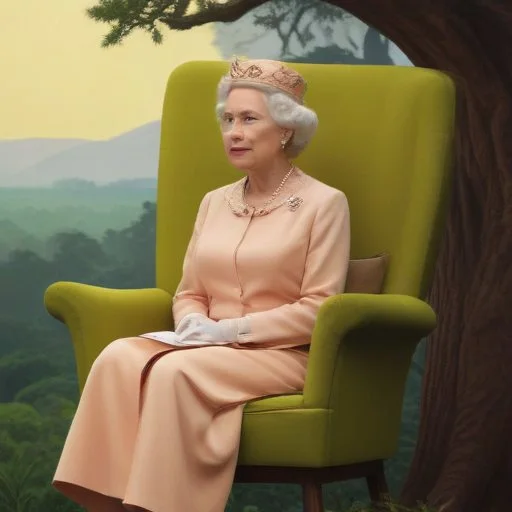
Today, as we reflect on this pivotal moment, we are reminded that even in the most unexpected circumstances, greatness can emerge, and that the course of history can be forever altered by the actions of one individual.
Elizabeth's accession to the throne was not without its challenges. In the aftermath of King George VI's death, the young queen faced a daunting task in establishing her authority and navigating the complexities of royal protocol.
One of the earliest tests of her mettle came in the form of a royal tour of the Commonwealth, which she embarked upon in 1953. This grueling journey, which spanned over six months, took her to numerous countries, including Australia, New Zealand, and South Africa.
The tour was a resounding success, with Elizabeth winning over hearts and minds across the Commonwealth. Her dedication to duty and her ability to connect with people from all walks of life earned her widespread acclaim and cemented her position as a beloved monarch.

Elizabeth II's remarkable life has been shaped by a series of events, experiences, and relationships that have contributed to her unique personality and approach to leadership.
Born on April 21, 1926, Princess Elizabeth Alexandra Mary Windsor was the first child of Prince Albert, Duke of York (later King George VI), and his wife, Elizabeth Bowes-Lyon.
Her early years were marked by a strong sense of duty and a deep respect for tradition, instilled in her by her parents and her upbringing at Buckingham Palace.
In the early 1950s, Africa was a continent in flux, with many countries struggling to achieve independence from colonial rule. Kenya, where Elizabeth received the news of her father's death, was a British colony, and the royal visit was seen as an opportunity to strengthen ties between the two nations.
The British Empire, which once spanned a quarter of the globe, was facing unprecedented challenges in the post-war era. As the sun began to set on the empire, Elizabeth's accession marked a new chapter in the complex and often fraught relationship between Britain and its colonies.

The cultural impact of Elizabeth's accession was felt far beyond the borders of Britain. In the decades that followed, she became an icon of British culture, symbolizing an era of stability and continuity in a world undergoing rapid change.
In the arts, Elizabeth's patronage has been instrumental in promoting British talent and preserving the nation's cultural heritage. Her support for institutions such as the Royal Shakespeare Company and the National Gallery has helped to foster a vibrant cultural scene.
In popular culture, the queen has been the subject of numerous films, books, and documentaries, cementing her status as a global icon.
Elizabeth II's reign has been marked by a profound sense of duty and a commitment to serving the nation. This steadfast dedication to her role has been underpinned by a strong sense of Christian faith, which has guided her throughout her life.
In a world where power and privilege often come hand in-hand with moral ambiguity, Elizabeth's tenure has been characterized by a strong moral compass, shaped by her Christian values and her sense of responsibility to her people.
This unwavering commitment to her duties has earned her widespread respect and admiration, inspiring generations of people around the world.