


The February 15, 1996 attack on the Embassy of the United States in Athens, Greece, remains an infamous chapter in the country's turbulent history of urban guerrilla warfare. On that fateful morning, an antitank rocket, launched by the Revolutionary Organization 17 November, struck the embassy's façade, causing significant damage and sending shockwaves throughout the international community.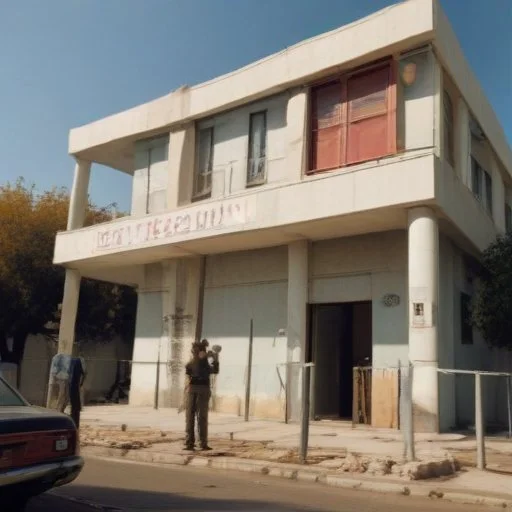
The late 20th century saw Greece grappling with various forms of political extremism, fueled by the lingering embers of the Cold War. The Revolutionary Organization 17 November, a Marxist-Leninist group, emerged as a prominent force in this era of political upheaval. Founded in the late 1970s, the organization drew inspiration from the ideals of the Greek Communist Party and the legacy of the anti-Nazi resistance.
The dawn of February 15, 1996, marked a turning point in the history of the Embassy of the United States, Athens. At approximately 6:30 am, an antitank rocket, fired from a nearby location, struck the embassy's façade. The blast caused extensive damage to the building, shattering windows, and leaving a trail of debris in its wake. Fortunately, the attack did not result in any fatalities, although several embassy personnel suffered minor injuries.
The Revolutionary Organization 17 November, led by the enigmatic Alexandros Giotopoulos, claimed responsibility for the attack. Giotopoulos, a charismatic figure with a strong anti-American bent, would later become the subject of an international manhunt. The Greek authorities, under intense pressure from the US government, launched a comprehensive investigation to apprehend the perpetrators.
The attack on the Embassy of the United States, Athens, had far-reaching consequences for Greece's relations with the international community. The incident led to a significant increase in security measures at diplomatic missions worldwide, as well as a renewed focus on combating urban guerrilla warfare. The Greek government, under pressure from the US, implemented a series of measures to crack down on domestic terrorism, including the establishment of a specialized anti-terrorist unit.
The attack on the embassy sparked a heated debate within Greek society, with some hailing the perpetrators as heroes and others condemning the act as a senseless act of violence. The incident also highlighted the lingering anti-American sentiment within certain segments of Greek society, fueled by historical grievances and perceived US interference in Greek domestic affairs.
The attack on the embassy generated widespread condemnation from the international community, with many viewing it as a grave breach of diplomatic protocol. The Greek government faced criticism for its perceived tolerance of radical left-wing groups, with some accusing the authorities of being soft on domestic terrorism. The incident also raised questions about the effectiveness of Greek intelligence agencies in monitoring and preventing such attacks.
In conclusion, the attack on the Embassy of the United States, Athens, on February 15, 1996, remains a pivotal episode in Greece's struggle against urban guerrilla warfare. The incident serves as a poignant reminder of the enduring threat posed by political extremism and the need for sustained cooperation between nations in combating terrorism.
The Greek political landscape of the 1990s was marked by a resurgence of left-wing radicalism, which was fueled by the country's tumultuous past and its complex relationships with Western powers. The legacy of the Greek Civil War (1946-1949) and the subsequent authoritarian regimes had created a sense of disillusionment among many Greeks, who saw the United States as an imperial power interfering in their domestic affairs.
In this context, the Revolutionary Organization 17 November emerged as a militant response to what was perceived as American imperialism. The group's ideology was rooted in Marxist-Leninist theory, which emphasized the need for armed struggle against capitalism and imperialism.
The 1990s also saw a significant shift in Greece's foreign policy, as the country began to distance itself from its traditional Western allies and sought to strengthen its ties with Eastern European nations. This new orientation was reflected in Greece's response to the Yugoslav Wars, where it adopted a more neutral stance than many other Western countries.

Alexandros Giotopoulos, the enigmatic leader of the Revolutionary Organization 17 November, remains a fascinating figure in modern Greek history. Born in 1944, Giotopoulos was radicalized during his university days, where he became involved in left-wing activism.
Giotopoulos's charisma and leadership skills quickly propelled him to the top of the Revolutionary Organization 17 November, where he oversaw a series of high-profile attacks against American and Greek targets. His anti-American rhetoric and calls for armed struggle resonated with many disaffected Greeks, who saw him as a hero and a symbol of resistance.
Giotopoulos's eventual capture and conviction in 2002 marked the end of an era for the Revolutionary Organization 17 November, but his legacy continues to inspire and influence radical left-wing groups in Greece.
The attack on the American Embassy in Athens had a profound impact on Greek popular culture, where it sparked a heated debate about the role of the United States in Greek affairs. The incident also highlighted the complexities of Greek identity, which has long been shaped by the country's tumultuous history and its relationships with Western powers.
In the aftermath of the attack, many Greek artists and intellectuals began to explore the themes of resistance, imperialism, and national identity in their work. The incident also inspired a wave of anti-American protests and demonstrations, which further polarized Greek society.
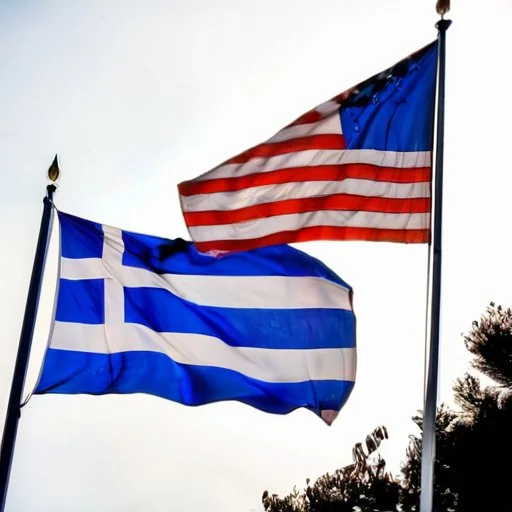
The Greek government's response to the attack on the American Embassy was marked by a mix of condemnation and ambivalence. While the authorities publicly denounced the attack, many Greeks saw the incident as a justified response to American interference in their domestic affairs.
The government's handling of the crisis was severely criticized by the US, which accused Greece of being soft on domestic terrorism. This criticism led to a significant deterioration in Greek-American relations, which would take years to repair.
The incident also highlighted the need for greater cooperation between Greek and American authorities in combating terrorism, which led to the establishment of a joint anti-terrorist task force in the aftermath of the attack.
Historians have long debated the significance of the Revolutionary Organization 17 November and its role in modern Greek history. Some see the group as a manifestation of Greece's turbulent past, which has been marked by civil war, military dictatorships, and foreign interventions.
Others view the Revolutionary Organization 17 November as a symbol of resistance against imperialism and capitalism, which has inspired a new generation of left-wing activists in Greece.
The attack on the American Embassy has also been seen as a turning point in Greece's relations with the West, which marked a shift towards greater cooperation and integration with European institutions.