


In a last-ditch effort to salvage the crumbling Austro-Hungarian Empire, Emperor Charles I issued a proclamation on October 16, 1918, relinquishing his powers as Emperor of Austria, but not his title. This calculated move aimed to appease the growing nationalist movements and stave off the inevitable collapse of the empire.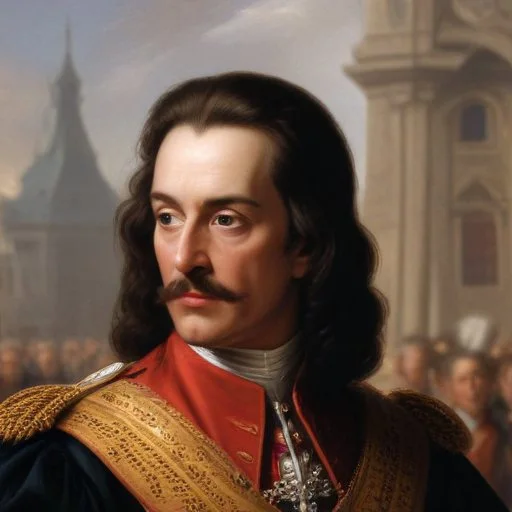
The Austro-Hungarian Empire was a patchwork of disparate ethnic and linguistic groups, held together by the fragile threads of imperial authority. As nationalist sentiment surged across the empire, Charles I's attempts to reform and centralize power only served to fuel the flames of dissent. The proclamation marked a belated recognition of the empire's failure to accommodate the diverse aspirations of its constituent nations.
The proclamation had far-reaching consequences. As the empire disintegrated, Charles I was forced into exile, leaving behind a legacy of failed attempts to preserve the old order. The once-mighty empire was reduced to a mere shadow of its former self, its constituent nations and territories fragmenting into independent states.
Charles I's proclamation may have been a futile attempt to cling to power, but it also marked a turning point in European history. As the empire crumbled, the continent was forever changed, and the reverberations of that seismic event continue to shape our world today.
The Austro-Hungarian Empire's precarious position in the midst of World War I set the stage for Charles I's reluctant abdication. As the war effort faltered, the empire's diverse ethnic and linguistic groups began to question their allegiance to the crown. The Russian Revolution's success in 1917 further fueled the fires of discontent, inspiring nationalist movements across the empire to demand greater autonomy and eventual independence.
The empire's geography, stretching across Central and Eastern Europe, made it difficult to maintain control over its disparate territories. As the war drained the empire's resources, its grip on power began to slip, creating an environment in which nationalist sentiment could flourish.

Emperor Charles I, born in 1887, ascended to the throne in 1916 following the death of his uncle, Franz Joseph. Initially, Charles I was seen as a reformer, eager to modernize the empire and address the grievances of its constituent nations. However, his inexperience and indecisiveness ultimately contributed to the empire's downfall.
Charles I's personality was marked by a strong sense of duty and a desire to preserve the empire. Despite his efforts, he was unable to stem the tide of nationalist sentiment and was eventually forced into exile.
The Austro-Hungarian Empire's collapse had a profound impact on the social fabric of its constituent nations. The rise of nationalist sentiment led to a redefinition of identity and belonging, as previously loyal subjects of the empire began to identify with their respective nation-states.
The empire's dissolution also led to a significant shift in the social hierarchy, as the old aristocracy gave way to a new class of nationalist leaders and politicians. This transformation would have far-reaching consequences, shaping the course of European history in the decades to come.

The economic consequences of the Austro-Hungarian Empire's collapse were severe and far-reaching. The empire's dissolution led to a fragmentation of its economy, as previously integrated industries and markets were disrupted.
The loss of imperial authority also led to a decline in international trade, as the newly independent nations struggled to establish their own economic systems. The economic instability that followed would contribute to the rise of extremist ideologies in the interwar period.
Historians have long debated the significance of Charles I's reluctant abdication, with some viewing it as a last-ditch attempt to preserve the empire, while others see it as a cynical ploy to cling to power.
Recent scholarship has emphasized the importance of considering the abdication within the broader context of nationalist sentiment and imperial decline. By examining the event through a variety of lenses, historians can gain a more nuanced understanding of the complex factors that contributed to the empire's downfall.