


The Prague uprising, a bold and courageous act of resistance, marks a pivotal moment in Czech history. On May 5, 1945, as the Second World War drew to a close, Czech resistance fighters, backed by Soviet forces, rose up against their Nazi occupiers, liberating the capital city of Prague.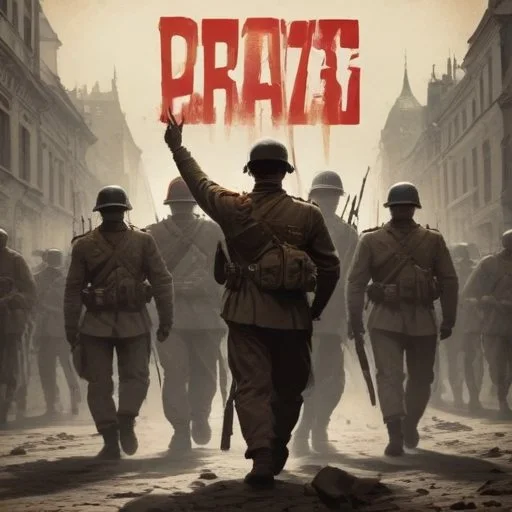
In the early 1940s, Czechoslovakia was invaded and occupied by Nazi Germany, plunging the country into darkness and oppression. The Czech people, however, refused to be defeated, and a determined resistance movement began to form. Led by figures such as Josef Smrkovský and František Sláma, the resistance fighters waged a guerrilla war against their oppressors, sabotaging German operations and disrupting supply lines.
As Soviet forces advanced on Prague in early May 1945, the Czech resistance saw an opportunity to strike a decisive blow against the Nazi occupiers. On May 5, at 6 pm, the uprising began, with Czech fighters, armed with whatever weapons they could find, taking to the streets to confront the remaining German forces.
Over the next three days, fierce battles raged across the city, with Czechs and Soviets fighting side by side against the weakened but still formidable German army. As the uprising gained momentum, the German forces, realizing their situation was hopeless, began to surrender.
The successful uprising marked a turning point in European history, as it marked the beginning of the end of the Second World War. With Prague liberated, the German army was forced to surrender, and the war in Europe finally drew to a close on May 8, 1945.
This momentous occasion is still celebrated today in the Czech Republic, with May 8th declared a national holiday. The holiday serves as a poignant reminder of the bravery and sacrifice of the Czech people, who fought against overwhelming odds to regain their freedom and independence.
The Prague uprising has had a profound impact on Czech culture and society. It has inspired countless works of art, literature, and music, and has become an integral part of the country's national identity. The uprising has also served as a symbol of hope and defiance, inspiring future generations to stand up against oppression and fight for their rights.
The Prague uprising is a testament to the bravery and resilience of the Czech people, who refused to be defeated by the forces of oppression. Today, the holiday serves as a powerful symbol of freedom and resistance, reminding us of the importance of standing up against tyranny and fighting for our rights.
In the words of Czech historian, František Wiendl, "The Prague uprising was a beacon of hope in a time of darkness, a shining example of the human spirit's ability to overcome even the greatest of challenges."
The Prague Uprising was a culmination of years of underground resistance against the Nazi occupation. In the early 1940s, small groups of Czech patriots began to form, determined to resist the German invaders. These early resistance fighters, often armed with nothing more than pistols and homemade bombs, carried out daring acts of sabotage and disruption, targeting German supply lines and infrastructure.
As the war dragged on, the resistance movement grew in strength and organization. Led by figures such as Josef Smrkovský and František Sláma, the Czech resistance began to coordinate its efforts with the Soviet Union, planning a major uprising to coincide with the Red Army's advance on Prague.
The planning and preparation for the uprising were meticulous. Czech resistance fighters, many of whom were former army officers, used their knowledge of the city's layout and German troop deployments to plan a series of strategic attacks. Meanwhile, teams of couriers and messengers worked tirelessly to coordinate the efforts of the various resistance groups, ensuring that the uprising would be a unified and decisive blow against the Nazi occupiers.
Josip Horak: The Unsung Hero of the Prague Uprising
Josip Horak was a Czech resistance fighter who played a crucial role in the Prague Uprising. A skilled radio operator, Horak was responsible for maintaining contact between the Czech resistance and the Soviet Union, providing vital intelligence on German troop movements and coordinating the Red Army's advance on Prague.
Horak's bravery and quick thinking were instrumental in the success of the uprising. When German forces discovered the location of the Czech resistance's secret radio transmitter, Horak single-handedly fought off a group of Nazi soldiers, allowing his comrades to escape and continue the fight.
Honored as a hero of the Czech Republic, Horak's legacy serves as a testament to the bravery and sacrifice of the Czech people during the Second World War.
The Prague Uprising was not an isolated event, but rather part of a broader wave of resistance that swept across Europe in the final years of the Second World War. From the French Resistance to the Polish Home Army, ordinary citizens across the continent rose up against their Nazi occupiers, fighting for freedom and independence.
In many ways, the Prague Uprising was a microcosm of this broader resistance movement. Like their counterparts in other occupied countries, the Czech resistance fighters were driven by a desire for national liberation and a determination to resist the Nazi occupation.
Yet, the Prague Uprising was also unique in its own right. The Czech resistance was notable for its high degree of organization and coordination, as well as its close ties to the Soviet Union. This collaboration with the Red Army proved crucial in the ultimate success of the uprising.
The Prague Uprising in Czech Literature and Art
The Prague Uprising has had a profound impact on Czech culture, inspiring a wealth of literary and artistic works. From novels and poetry to music and film, the uprising has been commemorated and remembered in a wide range of creative forms.
One of the most famous works inspired by the uprising is The Uprising, a novel by Czech writer and resistance fighter, Jan Drda. Published in 1946, the novel provides a gripping and authoritative account of the uprising, drawing on Drda's own experiences as a resistance fighter.
In addition to literature, the Prague Uprising has also inspired a range of artistic works, including sculptures, paintings, and monuments. These works serve as a powerful reminder of the bravery and sacrifice of the Czech people during the Second World War.
The Geopolitical Context of the Prague Uprising
The Prague Uprising took place against the backdrop of a rapidly shifting geopolitical landscape. As the Second World War drew to a close, the alliances and rivalries that had shaped the conflict were beginning to give way to new forms of cooperation and competition.
In the months leading up to the uprising, the Soviet Union and the United States were engaged in a series of intense diplomatic negotiations, as they sought to divide up the spoils of victory and establish a new post-war order. Meanwhile, the Czech resistance was keenly aware of the unfolding geopolitical situation, recognizing that their struggle for independence was closely tied to the broader struggle for European liberation.
The Prague Uprising was thus a key moment in the complex and often contentious process of shaping the post-war world order.