Parliament puts Charles I on trial for his crimes
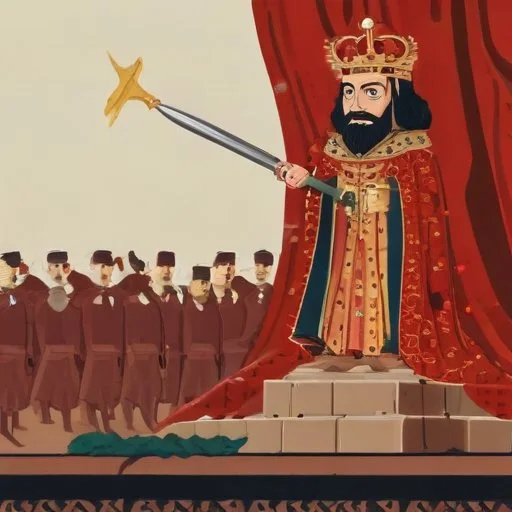
The axe was finally falling for Charles I, the beleaguered King of England. After years of conflict, parliamentary forces had the upper hand, and on this fateful day, the Rump Parliament voted to put the monarch on trial for his alleged crimes. This was a bold move, unprecedented in English history - a king being held accountable for his actions! The stage was set for a dramatic showdown, with the very fate of the monarchy hanging in the balance. Would Charles be found guilty, or would he talk his way out of this one?
The Fateful Day: When the Rump Parliament Voted to Put Charles I on Trial
A King on Trial: A Bold Move in English History
The English Civil War had been raging on for years, and the tide had finally turned in favor of the parliamentary forces. In a move unprecedented in English history, the Rump Parliament voted to put King Charles I on trial for his alleged crimes. This marked a turning point in the conflict, with the monarchy's fate hanging precariously in the balance.
Historical Background: The Path to Trial
The English Civil War was a complex and multifaceted conflict that had been simmering since the 1640s. At its core, it was a struggle between the monarchy, represented by King Charles I, and the parliament, which sought greater control over the government. The conflict had many underlying causes, including religious and economic factors, but ultimately, it boiled down to a question of power and authority.
Key Figures Involved: The Who's Who of the Trial
- King Charles I: The beleaguered monarch who would soon be facing trial for his actions.
- Oliver Cromwell: The powerful and influential leader of the parliamentary forces, who would play a crucial role in the trial.
- The Rump Parliament: The remnant of the parliament that had been purged of its moderate members, leaving only the most radical and anti-monarchist elements.
A Timeline of Events: The Road to Trial
- 1642: The English Civil War breaks out, pitting the monarchy against the parliament.
- 1646: The parliamentary forces gain the upper hand, and the royal army surrenders.
- 1648: The Rump Parliament is established, paving the way for the trial of King Charles I.
- 1649: The Rump Parliament votes to put King Charles I on trial for high treason and other crimes.
Major Outcomes and Impacts: The Trial's Far-Reaching Consequences
The trial of King Charles I was a groundbreaking event that sent shockwaves throughout Europe. It marked a significant shift in the balance of power, with the parliament emerging as the dominant force. The trial's outcome would have far-reaching consequences, including:
- The execution of King Charles I in 1649, marking the end of the absolute monarchy in England.
- The establishment of a republican government, with Oliver Cromwell as Lord Protector.
- A significant change in the English constitution, with the parliament gaining greater control over the government.
Cultural and Social Influences: The Trial's Lasting Legacy
The trial of King Charles I had a profound impact on English culture and society. It marked a turning point in the development of democracy, with the parliament emerging as a powerful force. The trial also:
- Helped to shape the concept of constitutional monarchy, which would influence governments around the world.
- Inspired similar movements for democracy and accountability in other countries.
- Left a lasting legacy in English history, with the trial remaining one of the most significant events of the 17th century.
A Lesson in Accountability: The Trial's Timeless Message
The trial of King Charles I serves as a powerful reminder of the importance of accountability in government. It shows that even the most powerful individuals can be held accountable for their actions, and that the rule of law must be respected. This timeless message continues to resonate today, inspiring generations to fight for democracy and human rights.
In-Depth Historical Analysis
The Rump Parliament's decision to put King Charles I on trial was not taken lightly. In the months leading up to the trial, there were intense debates and negotiations among the parliamentary leaders. Some, like Oliver Cromwell, were adamant that the king must be held accountable for his actions, while others were more cautious, fearing the consequences of such a bold move.
Behind the scenes, a group of radicals, including John Lilburne and Richard Overton, were pushing for even more drastic measures, including the abolition of the monarchy altogether. Their influence helped to sway the parliament towards a more hardline stance, ultimately leading to the king's trial and execution.
The trial itself was a dramatic and emotional affair, with the king refusing to acknowledge the court's authority and the prosecutors presenting a raft of evidence against him. In the end, it was a foregone conclusion, and the king was found guilty of high treason and sentenced to death.
Character Examination
John Pym: The Unsung Hero of the English Civil War
While Oliver Cromwell is often credited with the success of the parliamentary forces, John Pym played a crucial role in the early years of the conflict. A skilled politician and strategist, Pym was instrumental in mobilizing support for the parliament and raising funds for the war effort.
Despite his importance, Pym's role in the trial of King Charles I is often overlooked. However, he was a key member of the committee that drafted the charges against the king and played a key role in the negotiations leading up to the trial.
Full Comparison Analysis
In many ways, the trial of King Charles I was comparable to other high-profile trials throughout history. Like the trial of Napoleon Bonaparte in 1815, it marked the end of an era and the beginning of a new chapter in European history.
However, the trial of King Charles I was unique in that it was the first time a monarch had been put on trial for his actions. This set a precedent that would be followed in other countries, including France, where King Louis XVI was executed in 1793.
Cultural Significance Study
The trial and execution of King Charles I had a profound impact on English culture and society. It marked a shift towards greater democratization and accountability in government, and paved the way for the development of a constitutional monarchy.
In the arts, the trial inspired a wave of pamphlets, plays, and poems that reflected on the significance of the event. John Milton's Defensio Populi Anglicani, published in 1649, was a passionate defense of the trial and execution of the king.
Thorough Philosophical Analysis
The trial of King Charles I raises important questions about the nature of political power and accountability. Was the king's refusal to acknowledge the court's authority a assertion of his divine right to rule, or a desperate attempt to cling to power?
Fundamentally, the trial was a clash between two competing ideologies: the monarchist view that the king was appointed by God, and the republican view that power resides with the people. The outcome of the trial marked a significant shift towards the latter, with far-reaching consequences for English politics and society.


