


In the sweltering summer of 1607, a historic milestone was reached when English colonists established James Fort, paving the way for the earliest permanent English settlement in the Americas – Jamestown, Virginia. This pioneering feat marked the beginning of a new chapter in American history, forever changing the course of humanity.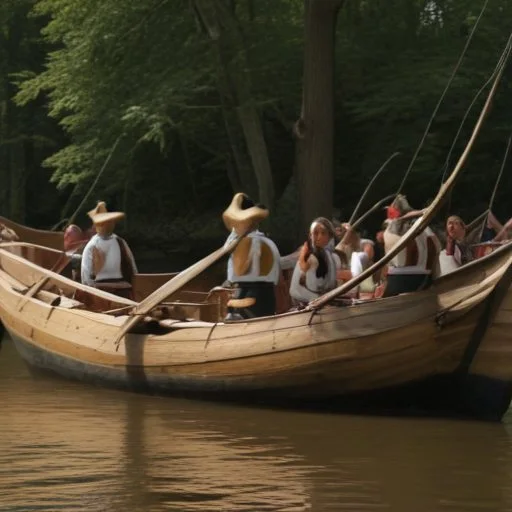
The journey to James Fort was not for the faint of heart. Three ships, the Susan Constant, Godspeed, and Discovery, battled treacherous seas and unpredictable weather, carrying 104 brave English colonists who dared to dream of a new life. Led by the seasoned Captain Christopher Newport, the voyage was funded by the Virginia Company of London, who hoped to strike gold and uncover untold riches in the New World.
As the ships sailed up the James River, the colonists were met with a vastly different landscape than they had anticipated. Swampy lands and dense forests stretched as far as the eye could see, a far cry from the promised land of riches and glory. Instead, they encountered Native American tribes, who would become their neighbors, friends, and sometimes foes.
In honor of King James I, the colonists named their new home James Fort, a humble outpost that would eventually evolve into Jamestown. The settlement was a beacon of hope for the English, a symbol of their determination to establish a foothold in the New World. As the first permanent English settlement in the Americas, Jamestown would face its fair share of challenges, but its residents were resolute in their pursuit of a new life.
Behind every great achievement stands a cast of characters who made it possible. In the case of Jamestown, Captain Christopher Newport, Captain John Smith, and Reverend Robert Hunt were instrumental in the settlement's success. These brave men, along with the 104 colonists, persevered through unimaginable hardships, laying the groundwork for generations to come.
Jamestown's significance extends far beyond its humble beginnings as a small English settlement. It represents the first chapter in American history, a testament to the bravery and resilience of those who dared to venture into the unknown. Today, Jamestown is a symbol of hope, freedom, and the unwavering human spirit.
As we reflect on the history of Jamestown, we are reminded that even in the face of adversity, humanity has the power to persevere, to adapt, and to thrive. The pioneers of Jamestown may have faced unimaginable challenges, but their legacy continues to inspire generations, shaping the course of American history forever.
The English colonization of Jamestown was not a sudden event, but rather the culmination of centuries of exploration and colonization attempts by various European powers. The Spanish, Portuguese, and French had all established colonies in the Americas, and the English were eager to stake their claim. The Virginia Company of London, which funded the Jamestown expedition, was granted a charter by King James I to establish a settlement in the New World.
Despite the challenges they faced, the Jamestown settlers persevered, and their determination paved the way for future English colonies. The settlement's success was a significant milestone in English history, marking the beginning of England's rise as a major colonial power.
The Jamestown settlement also had a profound impact on the indigenous peoples of the region. The arrival of the English led to the displacement and marginalization of the Native American tribes, who had lived in the area for centuries. The Powhatan Confederacy, a powerful alliance of Algonquian-speaking tribes, was particularly affected by the English presence.

Reverend Robert Hunt: The Forgotten Hero
While Captain Christopher Newport and Captain John Smith are often credited with the success of the Jamestown settlement, Reverend Robert Hunt played a crucial role in the colony's survival. As the first chaplain of the settlement, Hunt provided spiritual guidance and comfort to the colonists during their darkest moments.
Hunt was a compassionate and pragmatic leader who worked tirelessly to mediate conflicts between the English and the Native Americans. His efforts helped to establish a temporary peace between the two groups, allowing the settlers to focus on building their new home.
Despite his significant contributions, Hunt's legacy has been largely overshadowed by his more famous contemporaries. Nevertheless, his dedication to the Jamestown settlement and its people should not be forgotten.
The Jamestown settlement has often been compared to other early European colonies in the Americas, such as Roanoke and Plymouth. While these colonies share some similarities, they also have distinct differences.
Unlike Roanoke, which was abandoned after the colonists disappeared, Jamestown was able to survive and eventually thrive. This was due in part to the settlers' ability to adapt to their new environment and establish trade relationships with the Native Americans.
In contrast to Plymouth, which was established over a decade later, Jamestown was primarily a commercial venture, driven by the Virginia Company's desire for profit. This led to conflicts with the Native Americans, who were not interested in the English colonists' mercantile pursuits.
The Jamestown settlement was not an isolated event, but rather part of a larger geopolitical landscape. The English colonization of the Americas was driven by a desire to challenge Spanish and Portuguese dominance in the New World.
The Virginia Company's charter, granted by King James I, was a deliberate attempt to establish an English foothold in North America, thereby weakening Spanish and Portuguese claims to the region.
The settlement's success was closely tied to the emergence of England as a major colonial power, which would go on to play a significant role in shaping global politics for centuries to come.
The Virginia Company's Charter: A Document of Historical Significance
In 1606, the Virginia Company of London was granted a charter by King James I, authorizing them to establish a settlement in the New World. This document, known as the Virginia Company's Charter, is a significant artifact of American history.
The charter outlined the company's goals, including the establishment of a English settlement, the conversion of Native Americans to Christianity, and the exploitation of natural resources. It also established the framework for the company's governance and financing.
Today, the Virginia Company's Charter is housed at the British Library, providing a valuable insight into the early history of English colonization in America.