


In 1993, a momentous event took place in the Horn of Africa, marking a significant milestone in the struggle for self-governance. Eritreans, fueled by a 30-year struggle for autonomy, flocked to the polls to cast their ballots in a UN-monitored referendum, declaring their independence from Ethiopia with an overwhelming 99.8% majority.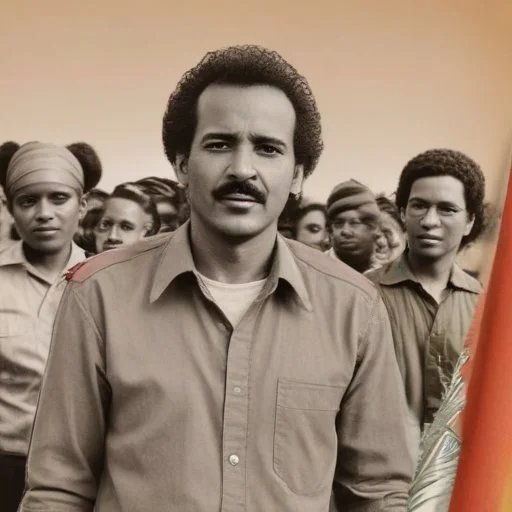
The roots of Eritrea's struggle for independence date back to the 1940s, when the Ethiopian Empire annexed the region. The Eritrean people, who had their own distinct language, culture, and identity, were subjected to Ethiopian rule, leading to widespread discontent and calls for autonomy. The resistance movement gained momentum in the 1960s, with the Eritrean Liberation Front (ELF) and the Eritrean People's Liberation Front (EPLF) emerging as key players in the fight for independence.
In the late 1980s, the EPLF, led by Isaias Afwerki, launched a decisive military campaign against the Ethiopian government, culminating in the capture of Asmara, the capital city, in 1991. The subsequent collapse of the Ethiopian regime paved the way for a transitional government, which facilitated the 1993 referendum. The UN-monitored vote was a culmination of years of diplomacy and negotiation, with the international community recognizing the Eritrean people's right to self-determination.
The referendum's outcome marked a triumphant moment for the Eritrean people, as they finally achieved their long-sought independence. The nation celebrated its freedom, with Afwerki, now President of Eritrea, declaring, "This is a victory for the Eritrean people, who have fought for their freedom and independence for over 30 years."
The struggle for independence had a profound impact on Eritrean culture and society. The resistance movement fostered a sense of national identity and unity, as people from diverse backgrounds came together to fight for a common cause. The nation's independence also paved the way for the preservation and promotion of Eritrean arts, literature, and music.
The referendum and subsequent independence were not without controversy. Some critics argued that the vote was marred by irregularities and human rights abuses. However, the international community generally recognized the legitimacy of the process, and Eritrea's independence was widely celebrated.
The Eritrean struggle for independence serves as a testament to the power of determination and resilience. As Afwerki said, "We will never be silenced, we will never be oppressed." The nation's unwavering quest for freedom inspires generations to come, demonstrating that even the most seemingly insurmountable obstacles can be overcome with collective effort and perseverance.
The 1993 referendum and Eritrea's independence have left an indelible mark on the Horn of Africa and beyond. As a beacon of hope and a symbol of self-determination, Eritrea's story continues to inspire nations and communities around the world, reminding us that the struggle for freedom is always worth fighting for.
The enigmatic figure of Isaias Afwerki, Eritrea's first president, played a pivotal role in the country's struggle for independence. Born in 1946, Afwerki was instrumental in shaping the Eritrean People's Liberation Front (EPLF), which he co-founded in the 1970s. His leadership skills, tactical genius, and unwavering commitment to the cause earned him the respect and admiration of his people.
Afwerki's legacy extends beyond his military prowess. He was a skilled diplomat who navigated the complex web of international politics, securing crucial support from countries like the United States and Ethiopia. His vision for a unified, independent Eritrea continues to inspire generations.
Afwerki's leadership style was marked by a unique blend of authoritarianism and charisma, which helped maintain unity among the Eritrean people during the long struggle for independence.
The Eritrean struggle for independence had a profound impact on the nation's cultural identity. The resistance movement fostered a sense of unity among the nine ethnic groups, promoting a shared sense of purpose and belonging. The EPLF's emphasis on education and cultural preservation helped preserve Eritrean arts, literature, and music.
The nation's independence also paved the way for the promotion of Tigrinya, Arabic, and English as official languages, reflecting the country's rich linguistic diversity.Cultural icons like Mohamed Abdella and Bereket Mengistab emerged during this period, contributing to the nation's rich cultural heritage. Their works continue to inspire Eritrean artists, writers, and musicians today.
The 1993 referendum marked a significant shift in Eritrea's political landscape. The EPLF's military victory and subsequent transition to a democratic government set a precedent for other African nations struggling for independence. The country's constitutional framework, adopted in 1997, enshrines principles of democracy, human rights, and the rule of law.
The Eritrean government's commitment to self-reliance and regional integration has fostered strong ties with neighboring countries, particularly Ethiopia.Afwerki's leadership has been marked by a strong emphasis on national security and sovereignty, often leading to tensions with the international community. However, his leadership has also ensured stability and continuity in the face of regional uncertainty.
The roots of Eritrea's struggle for independence date back to the early 20th century, when Italian colonialism sought to exert control over the region. The 1940s saw the rise of Ethiopian imperialism, which annexed Eritrea and sparked a wave of resistance.
The 1960s and 1970s witnessed a surge in nationalist sentiment, as Eritrean intellectuals and activists began to organize against Ethiopian rule. The Eritrean Liberation Front (ELF) and the EPLF emerged as key players in the fight for independence.
The 1980s saw a significant escalation in the conflict, as the EPLF launched a series of successful military campaigns against the Ethiopian government.
The 1993 referendum was not only a triumph for Eritrea but also a harbinger of change in the Horn of Africa. The region, long characterized by conflicts and rivalries, was rebalancing its power dynamics. Eritrea's independence sent ripples throughout the region, inspiring other nations to re-examine their own paths to self-determination.
The international community's recognition of Eritrea's independence marked a significant shift in global politics, as the world began to acknowledge the legitimacy of nationalist movements.
The Eritrean example has inspired other African nations to demand greater autonomy and self-governance, reshaping the continent's political landscape.