


In the quiet town of Chuschi, Ayacucho, Peru, the evening of May 17, 1980, would forever be etched in the nation's collective memory as the beginning of a brutal internal conflict. It was on this fateful eve, just hours before the presidential elections, that the Maoist guerrilla group, Shining Path, launched a brazen attack on a polling station, shattering the fragile peace and setting the stage for a decades-long insurgency.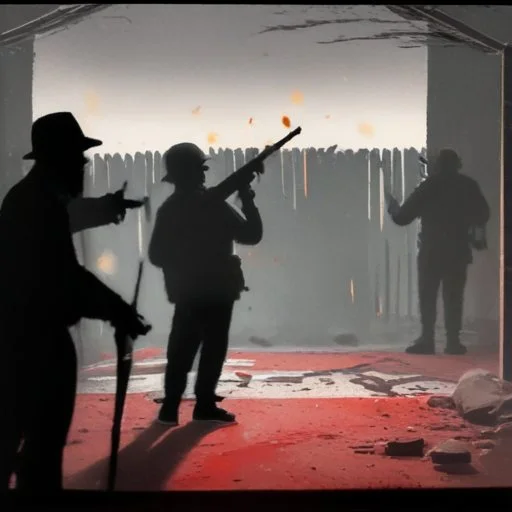
The Shining Path, founded in the 1960s, was a radical left-wing organization rooted in Maoist ideology. Led by Abimael Guzmán, a charismatic and enigmatic figure, the group sought to overthrow the Peruvian government and establish a communist state. Their extreme ideology was fueled by anti-imperialist and anti-capitalist sentiments, which they believed justified the use of violence to achieve their goals.
The attack on the polling station in Chuschi was a deliberate attempt to disrupt the democratic process and create chaos. The Shining Path militants, armed with grenades and machine guns, stormed the polling station, killing several people, including a policeman and a civilian, and wounding many more. The attack was carefully timed to coincide with the eve of the presidential elections, aiming to undermine the legitimacy of the electoral process and create a sense of uncertainty and fear among the population.
The internal conflict in Peru, sparked by the Shining Path's attack on Chuschi, would claim the lives of over 70,000 people, mostly civilians, and displacing hundreds of thousands more. The conflict left deep scars on the nation, causing widespread human suffering, economic devastation, and a fragile peace that would take decades to rebuild.
The conflict had a profound impact on Peruvian society, exacerbating existing social and economic inequalities. The Shining Path's radical ideology appealed to some marginalized groups, particularly in rural areas, who felt disillusioned with the government and the political elite. However, the group's violent methods and authoritarian ideology ultimately alienated many of its initial supporters, leading to a deep-seated mistrust of the government and a sense of disillusionment among the population.
The Shining Path's attack on Chuschi marked the beginning of a dark chapter in Peruvian history, one that would be characterized by violence, fear, and division. The conflict would leave a lasting impact on the nation, shaping its politics, society, and culture for decades to come. Today, Peru continues to grapple with the legacy of the conflict, seeking to rebuild and reconcile, but also to confront the scars of a painful past.
Abimael Guzmán, also known as "Presidente Gonzalo," was the enigmatic leader of the Shining Path. Born in 1934, Guzmán was a philosophy professor who became increasingly radicalized by the poverty and inequality he saw in Peru. He believed that violence was necessary to overthrow the government and establish a communist state. Guzmán's charisma and ideology attracted many followers, who saw him as a hero and a visionary. Despite his brutal methods, Guzmán remained a mythic figure, revered by some and feared by others.
The Shining Path's ideology was rooted in the Peruvian peasant movement of the 1960s. The movement, led by figures such as Hugo Blanco, sought to address the deep-seated social and economic inequalities faced by Peru's rural poor. The Shining Path's founders, including Guzmán, were influenced by this movement and saw themselves as the vanguard of a broader revolution. This historical context is essential to understanding the Shining Path's appeal to many marginalized Peruvians.
In the 1960s, Peru's rural poor faced extreme poverty, lack of education, and limited access to healthcare. The peasant movement sought to address these issues through land reform and social justice. The Shining Path's ideology built upon this foundation, promising a more radical and violent approach to achieving social change.
The Shining Path's insurgency had a profound impact on Peruvian literature. Many writers, such as Mario Vargas Llosa and Alfredo Bryce Echenique, addressed the conflict in their work. The Shining Path's brutality and the government's human rights abuses inspired a new generation of writers, who sought to chronicle the conflict and its impact on Peruvian society.
One notable example is the work of Peruvian writer, Laura Ríos. Her novel, The Year of the Cat, explores the experiences of a young woman living in Lima during the height of the insurgency. Ríos' work is a powerful testament to the human cost of the conflict and the ways in which it affected ordinary Peruvians.

The Shining Path's attack on the polling station in Chuschi was not only a violent act but also a deliberate attempt to undermine Peruvian democracy. The group's ideology saw democracy as a bourgeois illusion, designed to maintain the power of the ruling elite. By attacking the electoral process, the Shining Path aimed to discredit the government and pave the way for a revolution.
The attack on Chuschi marked a turning point in Peruvian politics, as the government was forced to confront the threat posed by the Shining Path. The conflict would eventually lead to a state of emergency, curfews, and human rights abuses. The Shining Path's attack on democracy had far-reaching consequences, shaping the political landscape of Peru for decades to come.
The Shining Path's insurgency had a devastating impact on Peru's economy. The conflict led to a decline in foreign investment, as investors became wary of the country's stability. The group's attacks on economic infrastructure, such as roads, bridges, and factories, further exacerbated the economic downturn.
Between 1980 and 1992, Peru's GDP declined by over 20%, and the country's poverty rate increased from 45% to over 60%. The conflict also led to a significant increase in government spending on security and defense, diverting resources away from social programs and infrastructure development. The economic cost of the Shining Path's insurgency was immense, with long-term consequences for Peru's economic development.