


The Kashmiri Pandit exodus is an unfortunate chapter in the history of Indian-administered Kashmir, marked by the forced migration of hundreds of thousands of Pandits from the Valley due to escalating insurgency and Islamic militancy in the late 1980s and early 1990s. This tragic event is known for the brutal killing, threats, and intimidations that forced the Pandits to abandon their ancestral homes, leaving behind their belongings, memories, and a way of life that had been an integral part of the Valley's fabric for centuries.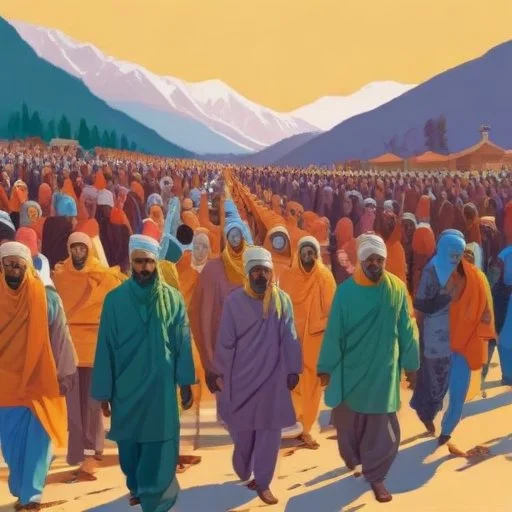
The Kashmir Valley, once a symbol of communal harmony, had been home to the Kashmiri Pandits, a Hindu community, and Muslims for centuries. The two communities had coexisted peacefully, engaging in cultural and social exchange, until the late 1980s when the Valley began to simmer with Islamic militancy. The rise of separatist groups, fueled by Pakistan's support, led to a surge in terrorist activities, targeting the Kashmiri Pandits.
The Jammu and Kashmir Liberation Front (JKLF), a separatist organization, was at the forefront of the insurgency. Its leaders, including Yasin Malik and Shabir Shah, advocated for Kashmir's independence from India, often resorting to violent means to achieve their goals. Pakistan, then ruled by General Zia-ul-Haq, actively supported these separatist groups, further fueling the militancy.
The Kashmiri Pandit exodus led to the displacement of over 350,000 Pandits from the Valley, with many forced to live in refugee camps in Jammu, Delhi, and other parts of India. The community suffered immense human, cultural, and economic losses, with their cultural heritage and traditions under threat.
The exodus marked the end of an era, where the Kashmiri Pandits, known for their rich cultural heritage, were forced to leave behind their ancestral homes, temples, and cultural institutions. The Valley, once a hub of literary and artistic activities, was suddenly deprived of its most creative and intellectual minds.
The Indian government faced criticism for its handling of the crisis, with many accusing it of failing to protect the Kashmiri Pandits. The event also raised questions about the identity of the Kashmiri Pandits, with many asking whether they were Kashmiris first or Hindus.
"We were not just victims of militancy, we were victims of a system that failed us." - Anonymous Kashmiri Pandit refugee
Raj Kumar Pandit, a Kashmiri Pandit, recalls, "I was forced to flee my home in the dead of night, leaving behind my belongings and memories. It was a painful journey, but I knew I had to survive to tell the tale."
The Kashmiri Pandit exodus serves as a reminder of the devastating consequences of ethnic and religious violence. It highlights the need for governments to address the root causes of such conflicts and protect the rights of minority communities.
Despite facing unimaginable hardships, the Kashmiri Pandits have shown remarkable resilience, rebuilding their lives and preserving their cultural heritage in exile. Their story serves as an inspiration to communities around the world facing similar challenges.
The Kashmiri Pandit exodus is a poignant reminder of the devastating consequences of ethnic and religious violence. It is a story of loss, pain, and resilience, one that must be remembered and learned from, to ensure that such tragedies are never repeated.
Yasin Malik, a prominent leader of the Jammu and Kashmir Liberation Front (JKLF), played a significant role in the Kashmiri Pandit exodus. Born in 1966, Malik was a charismatic figure who rose to prominence in the late 1980s as a separatist leader. His ideology was shaped by his experiences as a student leader and his subsequent involvement in the Kashmir insurgency.
Malik's leadership style was marked by his ability to mobilize masses and orchestrate protests and demonstrations. However, his methods were often criticized for being violent and militant, leading to accusations of human rights abuses and targeted killings of Kashmiri Pandits.
Malik's role in the exodus remains controversial, with some hailing him as a freedom fighter and others condemning him as a terrorist. Despite his involvement in the violence, Malik has since advocated for peaceful resolution of the Kashmir conflict and has been involved in various peace initiatives.

The Kashmiri Pandit exodus resulted in the loss of a rich cultural heritage that had been an integral part of the Valley's fabric for centuries. The community's cultural institutions, including temples, libraries, and educational centers, were either destroyed or abandoned.
The exodus also led to the dispersal of Kashmiri Pandit artists, writers, and intellectuals, causing a significant loss of cultural and artistic talent. The community's unique traditions, such as the Kashmiri Pandit cuisine, music, and craftsmanship, were also threatened as a result of the exodus.
Despite these challenges, the Kashmiri Pandit community has made efforts to preserve its cultural heritage in exile. Cultural organizations and community groups have been established to promote and preserve the community's traditions and customs.
, {EIR