


On this fateful day in 1493, Christopher Columbus, the visionary Italian explorer, sailed into the bustling port of Lisbon, Portugal, aboard his trusty ship Nia, marking the successful completion of his groundbreaking voyage to the New World. This momentous event would forever change the course of history, as Columbus' tales of untold riches, exotic islands, and uncharted territories sparked a frenzy of interest and investment in future expeditions.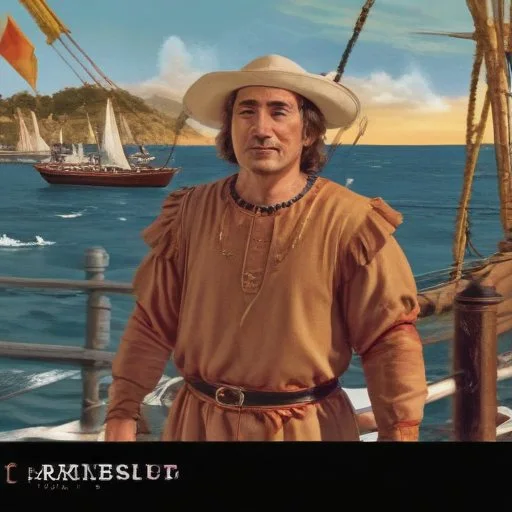
In August 1492, Columbus set sail from the port of Palos, Spain, with a fleet of three ships: the Santa Maria, the Pinta, and the Nia. Backed by the Spanish monarchs, King Ferdinand and Queen Isabella, Columbus embarked on a perilous journey to reach the East Indies by sailing west across the Atlantic. Instead, he stumbled upon the Bahamas, marking the first European contact with the indigenous Taino people.
Columbus' journey took him to various islands in the Caribbean, including Hispaniola (present-day Haiti and the Dominican Republic), where he established a settlement and left behind a contingent of men. The explorer's journals described the lush landscapes, teeming with exotic flora and fauna, and the warm hospitality of the native populations.
Columbus' triumphant return to Lisbon sparked a wave of excitement and curiosity throughout Europe. The news of his discoveries spread like wildfire, captivating the imagination of monarchs, merchants, and adventurers alike. The Portuguese, in particular, were eager to capitalize on Columbus' findings, and soon, expeditions led by explorers like Vasco da Gama and Ferdinand Magellan set sail to chart new territories.
Columbus' voyage opened up the Americas to European colonization, which would have far-reaching consequences for the indigenous populations, the environment, and the global economy. The age of exploration had begun, and the world would never be the same again.
While Columbus' achievement is undeniable, his legacy has been marred by controversy and criticism. The explorer's treatment of the indigenous populations, his role in the transatlantic slave trade, and the devastating impact of European colonization on native cultures have sparked heated debates and calls for reevaluation.
Columbus was a complex figure, driven by a mix of motives, including the pursuit of wealth, the spread of Christianity, and the desire for fame and recognition. His voyages, though marked by tragedy and exploitation, also brought about unprecedented cultural exchange and the transfer of ideas, crops, and technologies between the Old and New Worlds.
As I reflect on Columbus' journey, I am reminded of the power of human curiosity and the allure of the unknown. Though flawed, Columbus' achievement serves as a testament to human resilience, adaptability, and the boundless potential of the human spirit.
As Columbus sailed into Lisbon, he brought with him exotic spices, fruits, and other delicacies from the New World. Today, we can savor the flavors of that era by trying traditional dishes from the Caribbean, such as conch fritters, jerk chicken, and mango salsa, which blend African, European, and indigenous influences.
Recipe: Mango Salsa
Combine all ingredients in a bowl and mix well. Serve with tortilla chips or use as a topping for grilled meats or fish.
Columbus' return to Lisbon marked the beginning of a new era in world history, one that would be shaped by the convergence of cultures, the exchange of ideas, and the pursuit of discovery. As we reflect on this momentous event, we are reminded of the boundless potential of human exploration and the importance of acknowledging the complexities of our shared past.
In the years leading up to his historic voyage, Columbus spent extensive time studying the works of ancient Greeks, including Aristotle and Eratosthenes, who had proposed the idea of a spherical Earth. He was also influenced by the writings of Marco Polo, which sparked his interest in the Silk Road and the riches of the East Indies. These intellectual pursuits laid the groundwork for Columbus' bold proposal to the Spanish monarchs, which ultimately secured funding for his expedition.
Columbus' journey was not just about reaching the New World; it was also about proving a scientific theory. By sailing west across the Atlantic, Columbus aimed to demonstrate the feasibility of a new trade route to Asia, which would give European merchants a competitive edge in the spice trade. Although he stumbled upon the Americas instead, Columbus' voyage marked a significant milestone in the development of modern geography and cartography.
In the aftermath of Columbus' return, European cartographers scrambled to update their maps and charts to reflect the new discoveries. The Waldseemüller map, created in 1507, is one such example, showcasing the New World and its various territories. This cartographic revolution not only reflected the changing understanding of the world but also fueled further exploration and colonization.
Christopher Columbus was a man of strong convictions and unwavering determination. Born in Genoa, Italy, Columbus was raised in a family of wool weavers and began his maritime career at a young age. He later moved to Portugal, where he married into a noble family and became acquainted with the Portuguese royal court. Despite his modest beginnings, Columbus harbored grand ambitions, driven by a fierce competitiveness and an insatiable desire for fame and recognition.
Columbus was also a skilled navigator and cartographer, with a deep understanding of astronomy and mathematics. He spent years studying the movements of the stars and planets, using this knowledge to chart his course across the Atlantic. His expertise in celestial navigation allowed him to make accurate calculations of his position and course, even in the face of uncertain weather conditions.
The Columbian Exchange, a term coined by historian Alfred Crosby, refers to the widespread transfer of plants, animals, and culture between the Old and New Worlds following Columbus' voyage. This exchange had a profound impact on the demographics, economies, and ecosystems of both hemispheres. The introduction of European crops like wheat, sugarcane, and coffee to the Americas led to the emergence of new agricultural systems, while the transfer of New World crops like maize, potatoes, and tomatoes to Europe revolutionized the diet and cuisine of the Old World.
The Columbian Exchange also facilitated the spread of diseases, which decimated indigenous populations lacking immunity to European diseases like smallpox and measles. This had a devastating impact on native cultures, leading to significant population decline and cultural disruption.
The economic impact of Columbus' voyage was immediate and far-reaching. The New World's abundance of natural resources, including gold, silver, and precious gems, sparked a gold rush that attracted investors and entrepreneurs from across Europe. The establishment of trade routes and the exchange of goods led to the emergence of new economic systems, including the development of mercantilism and the growth of international trade.
The influx of New World silver and gold into European economies also led to a period of inflation, as the increased money supply chased a limited number of goods. This, in turn, spurred economic growth, urbanization, and the emergence of new social classes.
Columbus' voyage took place against the backdrop of a rapidly shifting geopolitical landscape. The fall of Constantinople to the Ottoman Empire in 1453 had disrupted traditional trade routes, prompting European powers to seek alternative ways to access the riches of the East Indies. The Spanish monarchs, fresh from their victory over the Moors, were eager to expand their empire and secure a foothold in the New World.
The Portuguese, who had established a strong presence in West Africa, were also vying for control of the Atlantic trade routes. The Treaty of Tordesillas, signed in 1494, divided the New World between Spain and Portugal, reflecting the complex diplomatic landscape of the time.