


The Fall of Acre, a pivotal event in the late 13th century, marks the demise of the Crusader presence in the Holy Land, bringing an end to nearly two centuries of Christian military campaigns in the region. This decisive battle, fought in 1291, witnessed the surrender of the last remaining Crusader stronghold, Acre, to the Mamluk Sultanate, thereby cementing Muslim rule over the Holy Land.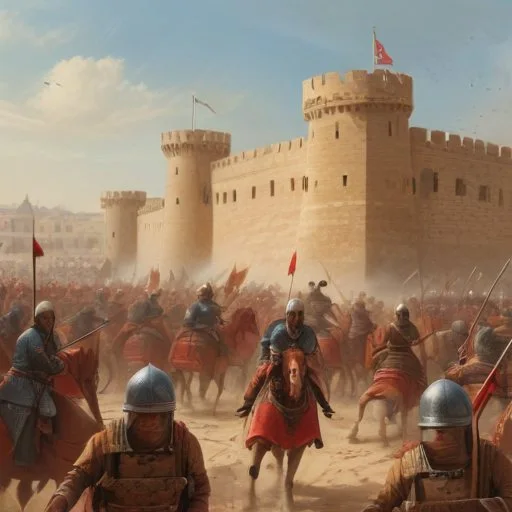
In the wake of the First Crusade, launched in 1095, Christian forces established a foothold in the Holy Land, with the Kingdom of Jerusalem emerging as the premier Crusader state. Over time, the Crusaders' grip on the region began to wane, exacerbated by internal conflicts, external pressures, and the steady consolidation of Muslim power. By the late 13th century, Acre, situated on the northern coast of modern-day Israel, remained the sole Crusader bastion in the Holy Land.
In April 1291, Mamluk Sultan al-Ashraf Khalil, determined to expunge the Crusader presence from the region, laid siege to Acre. The Mamluk army, comprising tens of thousands of soldiers, enveloped the city, subjecting it to a relentless barrage of catapults, trebuchets, and other siege engines. Despite being vastly outnumbered, the Crusaders, led by King Henry II of Cyprus and a coterie ofTemplar and Hospitaller knights, mounted a valiant defense.
After a protracted and brutal siege, the Mamluks breached Acre's defenses on May 18, 1291. The Crusaders, exhausted and depleted, were unable to stem the tide of the Mamluk onslaught. As the city walls were stormed, the defenders were either slain or forced to flee, leaving Acre to fall into Mamluk hands. The Sultan, determined to eradicate any vestige of Crusader influence, ordered the systematic destruction of the city, including its iconic walls, churches, and fortifications.
The Fall of Acre marked the definitive end of the Crusader era in the Holy Land, precipitating a seismic shift in the regional balance of power. The Mamluk Sultanate emerged as the dominant force in the region, while the Christian kingdoms of Europe were forced to reevaluate their strategies in the face of this crushing defeat. The Fall of Acre also precipitated a decline in the prestige and influence of the military orders, such as the Templars and Hospitallers, which had played a pivotal role in the Crusader movement.
The Fall of Acre had far-reaching cultural and social implications, both in the Middle East and in Europe. In the aftermath of the siege, many Crusaders were either killed, imprisoned, or forced to flee, leading to a diaspora of Christian communities from the Holy Land. This exodus, in turn, contributed to the emergence of a distinct Templar and Hospitaller identity in Europe, as these military orders adapted to their new roles as defenders of the faith in the West.
The Fall of Acre serves as a poignant reminder of the tumultuous and often brutal nature of medieval politics and warfare. This pivotal event, marking the conclusion of the Crusader era, has left an indelible mark on the collective consciousness of both the Middle East and Europe, underscoring the shifting tides of power and influence that have shaped the region's history.
The Fall of Acre in 1291 shares striking similarities with the Fall of Constantinople in 1204. Both events mark the culmination of a centuries-long struggle between Christian and Muslim forces, with the latter ultimately emerging victorious. Both Acre and Constantinople were strategic strongholds, crucial for the survival of their respective empires. The breaches of Acre's walls and Constantinople's Theodosian Walls by the Mamluks and the Crusaders, respectively, serve as poignant reminders of the fragile nature of even the most formidable defenses.
In both instances, the losing side was plagued by internal divisions, weakened by power struggles and rivalries. The Crusader Kingdom of Jerusalem, just like the Byzantine Empire, was torn apart by factionalism and infighting, allowing their enemies to exploit these vulnerabilities.

Sultan al-Ashraf Khalil, the Mamluk leader who orchestrated the Fall of Acre, was a shrewd and ambitious strategist. Born into a slave-soldier caste, Khalil rose through the ranks of the Mamluk army, earning a reputation for his cunning and bravery. His diplomatic prowess was matched only by his military genius, as he forged crucial alliances with neighboring emirs and Sultanates to isolate the Crusader stronghold.
Khalil's unwavering resolve to expel the Crusaders from the Holy Land was driven by a deep-seated sense of religious and cultural conviction. He saw the Crusaders as usurpers, profaning the sacred lands of Islam, and their removal as a sacred duty.
The Fall of Acre had a profound impact on Islamic art and architecture, as the Mamluks incorporated elements of Crusader architecture into their own buildings. The Sultan's efforts to erase the physical presence of the Crusaders resulted in the creation of a unique fusion style, blending Islamic motifs with Gothic and Romanesque influences.
In the aftermath of Acre's fall, Mamluk architects incorporated ornate stone carvings, intricate calligraphy, and arabesque patterns into their mosque designs, creating a distinctive Ayyubid-Mamluk style that echoed the grandeur of the ancient Islamic Empire.

The Fall of Acre marked the ascendance of the Mamluk Sultanate as a dominant force in the Middle East. This slave-soldier caste, originating in Egypt, had risen to power during the 13th century, leveraging their military prowess to supplant the Ayyubid dynasty.
As the Mamluks expanded their territories, they forged strategic alliances with neighboring emirs and Sultanates, creating a complex web of regional powers that would shape the geopolitics of the Middle East for centuries to come. The Fall of Acre cemented the Mamluks' position as the primary guardians of Islamic interests in the region, paving the way for their eventual rise as a major world power.
Historians have long debated the underlying causes of the Fall of Acre, with some attributing it to the inherent weaknesses of the Crusader Kingdom of Jerusalem, while others blame the internal divisions and power struggles that plagued the Crusader states.
Scholars such as Ibn al-Furat and Jean de Joinville offer varying accounts of the siege, emphasizing the role of Mamluk military prowess, the impact of Muslim-Christian diplomacy, and the symbolic significance of Acre as a bastion of Christian civilization. The multiplicity of perspectives underscores the complexity of this pivotal event, defying reduction to a single narrative or explanation.