


The Fall of Saigon, also known as the Liberation of Saigon, marks the end of the Vietnam War and the reunification of North and South Vietnam under communist rule. On April 30, 1975, South Vietnamese President Dng Vn Minh surrendered unconditionally to the North Vietnamese Army, bringing a close to a brutal conflict that had ravaged the country for decades.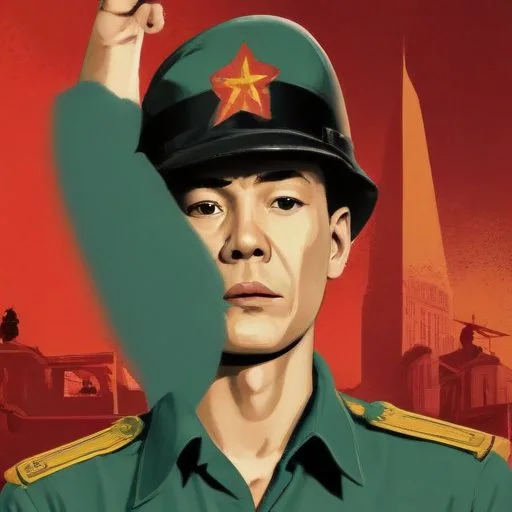
The Vietnam War was a complex and multifaceted conflict that involved the United States, South Vietnam, and North Vietnam. The war was sparked by the Vietnam War's predecessor, the First Indochina War, which ended in 1954 with the signing of the Geneva Accords. The Accords divided Vietnam into North and South, with the North becoming a communist state and the South remaining anti-communist.
The conflict escalated in the early 1960s as the North, backed by China and the Soviet Union, began to provide military support to the communist insurgency in the South. The United States, fearing a communist takeover, began to provide military aid to the South and eventually deployed ground troops in 1965. The war raged on for over a decade, claiming millions of lives and causing widespread destruction.
In 1975, the North Vietnamese Army launched a major offensive against the South, capturing key cities and territories. The South Vietnamese army, plagued by corruption, poor leadership, and dwindling morale, was unable to stem the tide.
On April 30, 1975, communist forces breached the gates of the Presidential Palace in Saigon, marking the end of the war. President Minh surrendered unconditionally, and the North Vietnamese Army took control of the city. The fall of Saigon was met with jubilation in the North and despair in the South.
The Fall of Saigon marked the end of the Vietnam War and the reunification of North and South Vietnam under communist rule. The war claimed the lives of over 3 million people, including 58,000 American soldiers, and left the country devastated.
The event also had significant global implications, marking a major defeat for the United States and a victory for communist forces. The war had a profound impact on American society, leading to widespread protests and disillusionment with the government.
The Fall of Saigon had a profound impact on Vietnamese culture and society. The war had disrupted traditional ways of life, and the reunification of the country led to a period of Reconstruction and rebuilding.
The event also had a significant impact on American culture, influencing music, film, and literature. The war was the subject of many iconic songs, including "What's Going On" by Marvin Gaye and "Fortunate Son" by Creedence Clearwater Revival.
One of the most iconic images of the Fall of Saigon is the photograph of a UH-1 Iroquois helicopter taking off from the roof of the American Embassy, carrying the last evacuees to safety. The photograph, taken by Hubert van Es, has become a symbol of the war's chaotic final days.
Many Vietnamese citizens have shared personal accounts of the Fall of Saigon, including stories of frantic escapes, lost loved ones, and the trauma of war.
The Fall of Saigon serves as a powerful reminder of the devastating consequences of war. The event has inspired numerous charitable organizations and initiatives, dedicated to supporting refugees and rebuilding communities affected by conflict.
The bravery and resilience of the Vietnamese people during the war serve as a testament to the human spirit, inspiring future generations to work towards peace and reconciliation.
General Văn Tiếu Nguyễn, the commander of the North Vietnamese Army, was a seasoned military strategist who played a crucial role in the Fall of Saigon. Born in 1922, Nguyễn joined the communist forces at the age of 19 and quickly rose through the ranks, earning the respect of his comrades and the fear of his enemies.
Nguyễn's military tactics were instrumental in the defeat of the South Vietnamese Army, and his leadership inspired confidence in his troops. Despite his tough exterior, Nguyễn was known to be a humble and compassionate leader, beloved by his soldiers.
After the war, Nguyễn continued to serve in the Vietnamese government, eventually becoming the Minister of Defense. He died in 2001, but his legacy as a brilliant military strategist and a hero of the Vietnamese people lives on.

The Fall of Saigon had a profound impact on Vietnamese culture, leading to a period of Reconstruction and rebuilding. The war had disrupted traditional ways of life, and the reunification of the country led to a renewed focus on cultural heritage.
The event also had a significant impact on American culture, influencing music, film, and literature. The war was the subject of many iconic songs, including "What's Going On" by Marvin Gaye and "Fortunate Son" by Creedence Clearwater Revival.
In the years following the war, Vietnamese artists began to explore the themes of war, peace, and reconciliation, leading to a flourishing of art, literature, and music. The Fall of Saigon remains a powerful symbol of the human cost of war and the resilience of the human spirit.
The economic cost of the Vietnam War was staggering, with estimates suggesting that the United States spent over $111 billion on the conflict. The war also had a significant impact on the Vietnamese economy, which was devastated by the destruction of infrastructure and the loss of human capital.
The Fall of Saigon marked the beginning of a period of economic reconstruction, as the Vietnamese government worked to rebuild the country's infrastructure and stimulate economic growth. The event also led to a shift in global economic dynamics, as the United States' defeat marked a decline in its economic influence.
In the years following the war, Vietnam began to open up to the global economy, leading to rapid economic growth and industrialization. Today, Vietnam is one of the fastest-growing economies in the world, with a GDP of over $241 billion.

The Fall of Saigon was a pivotal event in the Cold War, marking a significant defeat for the United States and a victory for communist forces. The event was seen as a blow to American prestige and a boost to Soviet influence in the region.
The war had significant implications for global geopolitics, leading to a shift in the balance of power in Southeast Asia. The event also led to a reassessment of American foreign policy, with a greater focus on diplomacy and a reduced reliance on military intervention.
In the years following the war, the United States and Vietnam began to normalize relations, with the two countries establishing diplomatic ties in 1995. Today, the United States is one of Vietnam's largest trading partners, and the two countries enjoy a strong strategic partnership.
Historians have long debated the significance of the Fall of Saigon, with some viewing it as a tragic defeat for democracy and others seeing it as a liberatory moment for the Vietnamese people.
Scholars have also explored the event's implications for our understanding of the Vietnam War, with some arguing that it marked a turning point in the conflict and others seeing it as a culmination of earlier mistakes.
Recent historiographical trends have emphasized the importance of Vietnamese perspectives on the war, highlighting the agency and experiences of Vietnamese people during this period. This shift in focus has led to a more nuanced understanding of the event and its ongoing impact on Vietnamese and American societies.