


Fanni Kaplan's attempted assassination of Vladimir Lenin on August 30, 1918, is remembered as one of the most pivotal moments in Russian history. This brazen attack, coupled with the earlier murder of Moisei Uritsky, unleashed the brutal Red Terror, a wave of violence and repression that would shake the foundations of the fledgling Soviet state.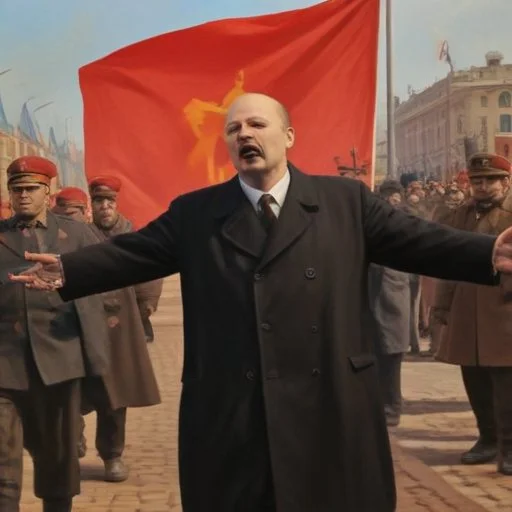
Russia was in the midst of a chaotic revolution, with various factions vying for power. The Bolsheviks, led by Lenin, had seized control, but their grip was tenuous at best. Amidst this turmoil, Kaplan, a young anarchist and anti-Bolshevik, saw an opportunity to strike a decisive blow.
On that fateful day, Lenin was scheduled to address a gathering of factory workers in Moscow. Kaplan, disguised as a peasant, blended in with the crowd, her handgun concealed beneath her clothes. As Lenin emerged from the factory, Kaplan approached him, her finger tightening around the trigger. Three shots rang out, and Lenin stumbled, seriously injured.
The attack on Lenin, coupled with the murder of Uritsky just days earlier, sent shockwaves through the Bolshevik ranks. Lenin's close ally, Yakov Sverdlov, declared that "the bourgeois counter-revolution" was behind the attacks, and that the time for mercy was over. Thus began the Red Terror, a campaign of repression and executions that would claim countless lives and shape the course of Soviet history.
"The bourgeoisie will stop at nothing, including the most desperate and despicable methods, to overthrow the Soviet government and restore their power." - Vladimir Lenin, in response to the attack
According to eyewitnesses, Kaplan remained defiant even after her arrest, proclaiming that she had acted alone and that her actions were justified. This bravery in the face of certain death earned her a degree of sympathy from her captors, but it was not enough to spare her from the firing squad.
The Red Terror marked a decisive shift in the Soviet Union's trajectory, away from revolutionary idealism and towards authoritarianism. This period of repression and violence would have a profound impact on Russian society, fostering a climate of fear and mistrust that would persist for decades to come.
Kaplan's handgun, a German-made Browning, is now on display at the Lenin Museum in Moscow, serving as a grim reminder of the event that changed the course of history.
The attempted assassination of Lenin and the subsequent Red Terror cemented the Bolsheviks' grip on power, paving the way for the Soviet Union's rise as a global superpower. This event serves as a stark reminder of the dangers of political extremism and the devastating consequences of unchecked violence.
Fanni Kaplan's life remains shrouded in mystery, with many aspects of her biography disputed or unknown. Born in 1890 to a Jewish family in Ukraine, Kaplan was drawn to anarchism and radical politics from an early age.
Despite her involvement in the revolutionary movement, Kaplan's exact motivations for the attempted assassination of Lenin remain unclear. Some historians suggest that she was driven by a desire for revenge against the Bolsheviks, who had imprisoned and tortured her earlier in the year.
Kaplan's personality and character have been the subject of much speculation. Eyewitnesses describe her as calm and composed, even in the face of capture and interrogation. Her bravery and defiance in the face of certain death have become legendary, earning her a degree of sympathy from even her enemies.

The Red Terror's impact on Russian culture and society was profound and far-reaching. The campaign of repression and violence unleashed a wave of fear and paranoia that permeated every aspect of Soviet life.
Artists, writers, and intellectuals were particularly vulnerable to persecution, with many forced to flee or go into hiding. The Stalinist regime's control over creative expression would persist for decades, stifling innovation and dissent.
The Red Terror also had a lasting impact on the Russian psyche, fostering a climate of mistrust and suspicion that would persist long after the events of 1918. It would take decades for the Soviet Union to recover from the trauma inflicted during this period.
In the hours and days following the assassination attempt, Moscow was gripped by chaos and uncertainty. Lenin's injuries were severe, and his survival was far from certain.
The Bolshevik leadership was thrown into disarray, with Sverdlov and other senior officials scrambling to maintain control. The attack on Lenin had exposed theparty's vulnerabilities, and the consequences of failure were dire.
As news of the attempt spread, protest and unrest erupted across Russia. Anti-Bolshevik sentiment was on the rise, and the government's grip on power was tenuous at best. It was in this atmosphere of uncertainty that the Red Terror was born.
The attempt on Lenin's life had a profound impact on his mental and emotional state. Already prone to bouts of paranoia and isolation, Lenin became increasingly reclusive and suspicious in the aftermath of the attack.
His injuries and the subsequent assassination of other senior Bolsheviks further reinforced Lenin's belief in the existence of a bourgeois counter-revolution. This paranoia would drive his decision-making, leading to the implementation of increasingly repressive policies.
The Red Terror was, in part, a manifestation of Lenin's growing paranoia and authoritarianism. The event marked a decisive shift in his leadership style, paving the way for the Soviet Union's descent into totalitarianism.
The attempted assassination of Lenin was not an isolated event. Across Europe and beyond, revolutionary movements were gaining momentum, and violence was increasingly seen as a legitimate means of achieving political change.
In Germany, the Spartacist uprising was underway, while in Italy, anarchist and socialist groups were waging a guerrilla war against the state. The global revolutionary movement was in flux, and the Russian Revolution was at its epicenter.
The Red Terror was, in part, a response to this global wave of revolutionary violence. The Bolsheviks saw themselves as part of a broader international struggle, and their actions were shaped by this perception of a global revolutionary imperative.