


Ferdinand Magellan's expedition, which set sail from Sanlcar de Barrameda, Spain, on September 20, 1519, would go on to achieve the impossible – becoming the first to circumnavigate the globe. This perilous journey, undertaken by a diverse crew of approximately 270 men, would rewrite the maps, challenge the understanding of the world, and leave an indelible mark on human history.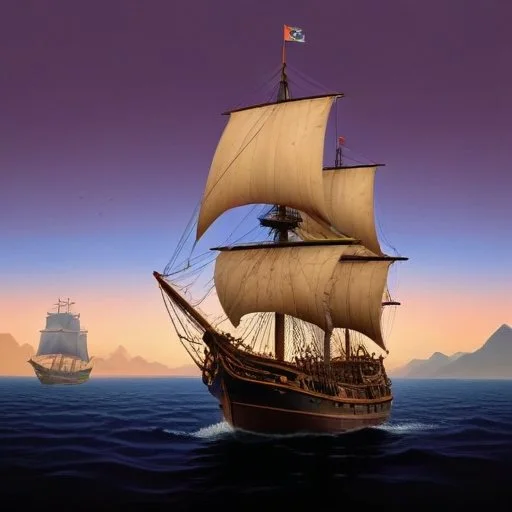
Magellan's voyage was driven by the lure of the Spice Islands of Maluku, Indonesia, a region renowned for its rich resources of cloves, nutmeg, and cinnamon. The Portuguese explorer, fueled by ambition and a thirst for adventure, sought to reach these islands by navigating west across the Atlantic, a route that would prove to be a treacherous and uncharted path.
Magellan's armada consisted of five ships: the Trinidad, the Victoria, the Santiago, the San Antonio, and the Concepcion. The crew, a melting pot of experienced sailors, soldiers, and adventurers, hailed from various nations, including Portugal, Spain, Italy, and Greece. Among them was a young Antonio Pigafetta, who would later chronicle the expedition's journey, providing valuable insights into the trials and triumphs of the voyage.
The expedition faced numerous challenges as they sailed across the Atlantic, braving treacherous storms, mutinies, and the debilitating effects of scurvy. The crew's resolve was tested as they navigated the treacherous Strait of Magellan at the tip of South America, a narrow and icy passage that would claim the lives of many.
In 1520, a mutiny led by Juan de Cartagena and Luis de Mendoza threatened to derail the expedition. Magellan, determined to assert his authority, quashed the rebellion, but not before being wounded in the ensuing battle. This pivotal event would ultimately lead to the death of Cartagena and the execution of Mendoza.
After three long years at sea, the Victoria, the sole remaining ship, limped back into the port of Sanlcar de Barrameda on September 6, 1522, with a mere 18 survivors, including the expedition's chronicler, Antonio Pigafetta. The successful completion of the circumnavigation marked a monumental achievement, one that would redefine the boundaries of human exploration and inspire future generations of adventurers.
Magellan's expedition opened up new trade routes, facilitating the exchange of goods and ideas between the East and the West. The voyage also sparked a wave of interest in cartography, inspiring cartographers to create more accurate maps and paving the way for future explorers. The legacy of Ferdinand Magellan's daring expedition continues to captivate and inspire us to this day, serving as a testament to human resilience, determination, and the unquenchable thirst for discovery.
Antonio Pigafetta: The Chronicler of the Expedition
Antonio Pigafetta, a young Italian nobleman, joined Magellan's expedition as a volunteer. He would later become the expedition's chronicler, recording the journey's events in his journal. Pigafetta's writings provide valuable insights into the daily life of the crew, the challenges they faced, and the discoveries they made.
As a skilled cartographer and navigator, Pigafetta played a crucial role in the expedition's success. He was one of the few members of the crew who could navigate using celestial bodies, a skill that proved essential during their journey.
Pigafetta's journal is not only a testament to his remarkable writing skills but also a treasured historical document. It provides a unique perspective on the expedition, offering a glimpse into the minds and experiences of the men who braved the unknown.

The Cultural Significance of Magellan's Expedition
Magellan's expedition had a profound impact on the cultural landscape of Europe and beyond. The discovery of new lands, peoples, and resources sparked a wave of interest in exploration and cultural exchange.
The expedition's success also contributed to the rise of Renaissance humanism, as scholars and intellectuals sought to understand the natural world and humanity's place within it.
The cultural significance of Magellan's expedition extends beyond Europe, as it facilitated the exchange of ideas, goods, and customs between the East and the West. This exchange had a profound impact on the development of art, literature, and architecture, shaping the cultural landscape of modern civilization.
The Geopolitical Context of the Expedition
The early 16th century was a time of intense rivalry between European powers, with Spain, Portugal, and other nations vying for dominance in the New World. Magellan's expedition was, in part, a response to this rivalry, as Spain sought to establish a new trade route to the Spice Islands.
The expedition took place against the backdrop of Ottoman expansion in the East, which threatened Europe's access to the lucrative spice trade. Magellan's journey was, therefore, a strategic move by Spain to secure a foothold in the region.
The success of the expedition marked a significant shift in the global balance of power, as Spain emerged as a dominant force in the New World.
Historical Interpretations of Magellan's Expedition
Historians have long debated the motivations behind Magellan's expedition, with some viewing it as a heroic quest for discovery and others as a brutal exercise in colonial exploitation.
Some scholars have argued that Magellan's expedition marked the beginning of European colonialism, while others have seen it as a symbol of human curiosity and exploration.
Recent historiographical perspectives have sought to nuance our understanding of the expedition, highlighting the complex relationships between the explorers and the indigenous peoples they encountered.
Technological Innovations of the Expedition
Magellan's expedition relied on several technological innovations, including the astrolabe, the quadrant, and the cross-staff. These navigation tools enabled the crew to chart their course and navigate the treacherous waters of the Atlantic and Pacific.
The expedition's success also depended on advances in shipbuilding and rigging, which allowed the vessels to withstand the harsh conditions of the open sea.
The expedition's technological innovations paved the way for future explorers, setting the stage for further discoveries and the development of new navigation tools.