


Ferdinand Magellan's expedition is renowned for being the first to successfully circumnavigate the globe, opening up a new era of maritime exploration and trade. This perilous journey, which began on September 20, 1519, was a testament to human endurance and the insatiable curiosity to chart the unknown.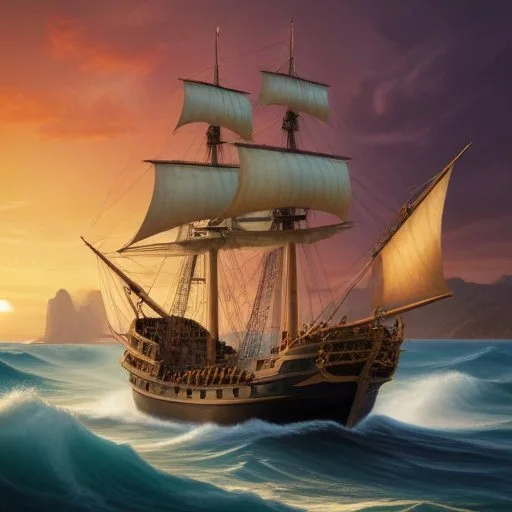
In the early 16th century, European powers were vying for dominance in the spice trade, a lucrative business that fueled the economy of nations. Magellan, a Portuguese explorer, had a vision to find a new trade route to the Spice Islands of Indonesia, which would give the Spanish crown a competitive edge over its European rivals.
Financed by King Charles I of Spain, Magellan's fleet of five ships – the Trinidad, Victoria, Santiago, San Antonio, and Concepción – set sail from Seville, Spain, on September 20, 1519. The crew of approximately 270 men was a diverse mix of experienced sailors, soldiers, and scholars from various European countries.
Juan Sebastián Elcano, a skilled navigator and cartographer from the Basque region, played a crucial role in the expedition. As Magellan's second-in-command, Elcano was instrumental in plotting the course and navigating the treacherous waters of the Pacific Ocean.
Magellan's expedition had far-reaching consequences, including:
Magellan's expedition had a profound impact on the cultural and social landscape of the time. The voyage:
Magellan's expedition was not without controversy. The voyage was marred by:
Magellan's famous words, "I shall not return until I have sailed around the world," reflect his unwavering determination and courage in the face of adversity.
Antonio Pigafetta, a Venetian scholar and sailor on the Victoria, kept a detailed journal of the expedition. His accounts provide a unique insight into the daily struggles and triumphs of the crew.
Magellan's expedition paved the way for future explorers, such as Juan Sebastián Elcano's own voyages, and inspired a new era of maritime exploration and trade.
Juan Sebastián Elcano was hailed as a hero upon his return to Spain, and was granted a coat of arms featuring a globe and the motto Primus circumdedisti me ("You were the first to encircle me").
Magellan's daring voyage, though marked by tragedy and controversy, remains an extraordinary achievement in the annals of human exploration. It opened up new horizons, fueled the imagination, and continues to inspire generations to this day.
Juan Sebastián Elcano, a skilled navigator and cartographer from the Basque region, was not initially chosen to lead the expedition. However, after Magellan's death, Elcano rose to the challenge, demonstrating exceptional leadership skills and navigational expertise. His bravery and determination ultimately led to the successful circumnavigation of the globe.
Elcano's background in the merchant marine and his experience in the Spanish navy prepared him for the challenges of the expedition. His ability to communicate with the crew and make bold decisions in times of crisis earned him the respect and admiration of his fellow sailors.
Despite being overshadowed by Magellan's larger-than-life personality, Elcano's contributions to the expedition cannot be overstated. His legacy as a pioneering explorer and navigator has endured, inspiring generations of sailors and adventurers.

Magellan's expedition had a profound impact on the cultural landscape of the 16th century. The voyage facilitated the transfer of ideas, customs, and technologies between the Old and New Worlds, forever altering the course of human history.
The introduction of European customs, language, and technology to indigenous populations had far-reaching consequences. The fusion of cultures, though often marked by conflict and exploitation, also led to the creation of new cultural practices and traditions.
The expedition's impact on art, literature, and music was also significant. The stories of Magellan's voyage inspired works such as Shakespeare's The Tempest, fostering a new era of creative expression.
Magellan's expedition opened up new trade routes, sparking a era of economic growth and competition. The establishment of Spanish colonies in the Americas and the Philippines created new markets and opportunities for trade.
The spice trade, in particular, was revolutionized by the expedition. The discovery of the Strait of Magellan and the establishment of a new route to the Spice Islands of Indonesia gave the Spanish crown a significant advantage over its European rivals.
However, the Spanish crown's monopolization of the spice trade also led to economic rivalries with other European powers, contributing to an era of intense competition and conflict.

Antonio Pigafetta, a Venetian scholar and sailor on the Victoria, kept a detailed journal of the expedition, known as the Diario. This remarkable document provides a unique insight into the daily struggles and triumphs of the crew.
The Diario is an invaluable historical resource, offering firsthand accounts of the expedition's challenges, including the mutinies, storms, and encounters with indigenous populations.
Pigafetta's observations on the flora, fauna, and cultures of the regions they visited are also breathtaking in their detail and accuracy, showcasing his skills as a scholar and naturalist.
Magellan's expedition had significant political implications, as it established Spanish dominance in the Americas and the Philippines. The expedition's success bolstered the Spanish crown's reputation as a major world power, solidifying its position in the complex web of European politics.
The voyage also led to a significant shift in the balance of power, as European nations jostled for dominance in the newly discovered regions. The Spanish crown's claims to the Americas and the Philippines sparked a series of conflicts and treaties, shaping the course of international relations for centuries to come.